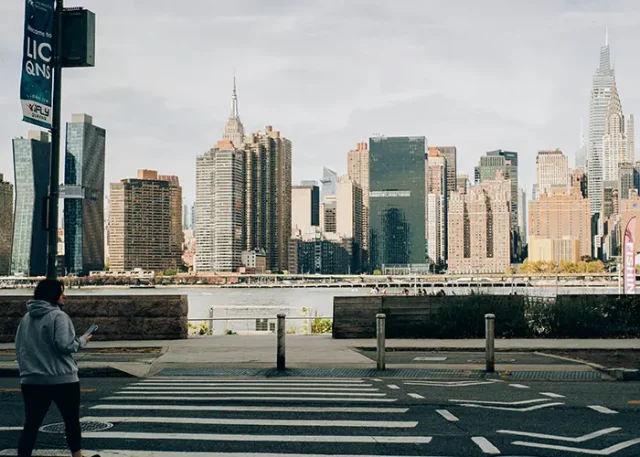
If you really want to understand America, start in the Northeast. It’s where the past and future meet — where every street corner has a plaque, but every skyline points forward.
Here, history isn’t trapped in museums; it walks beside you, woven into the food, the music, and the conversations that spill from cafés at night. Each city, from Boston to Philadelphia, adds its own accent to the same enduring story.
Boston: The Beginning of Ideas
Boston feels old, but not tired. Its red-brick streets and leafy squares hold the ghosts of revolutionaries, philosophers, and poets, yet the air is alive with new ideas. The city walks confidently between eras — its skyline rising above church steeples, its cafés filled with the soft chatter of students and the glow of laptops.
Start your day along the Freedom Trail, where the history of America’s independence is written in brick and bronze. The path winds past historic meeting houses, markets, and the echoes of long-ago debates that shaped a nation’s identity.
Then, step into the city’s modern heart — the Seaport District. Glass towers glint above the water, restaurants buzz with creative energy, and galleries spill light onto the pavements at dusk. Boston’s genius lies in this contrast: history and innovation walking arm in arm.
For travellers moving southward, securing a train ticket from Boston to New York is a step into the next chapter. The journey links two worlds — the scholarly calm of Boston and the restless brilliance of New York — a few hours of reflection between the old and the new.
New York City: The City That Never Stands Still
There’s no silence in New York — only rhythm. The city moves like a heartbeat, pulsing through subway tunnels, across bridges, and into every borough. It’s loud, impatient, and endlessly fascinating.
For first-time visitors, Manhattan is an orchestra of movement. Yellow taxis streak through the avenues, street vendors call out their specials, and somewhere, always, someone is playing jazz on a corner. Yet amid the rush, you find stillness — a moment in Central Park where sunlight filters through the leaves, or a quiet view of the skyline from Brooklyn Bridge just after dawn.
Art lovers wander the halls of MoMA and the Met; foodies chase flavours through Chinatown, Harlem, or the East Village. Each neighbourhood tells its own story, and together they create the mosaic that is modern America.
New York’s magic lies not in perfection but in possibility. It’s a city that never stops building — not just upwards, but forward.
Philadelphia: The Cradle of Independence
If New York is the country’s pulse, Philadelphia is its memory. Its cobbled streets still echo with the footsteps of those who imagined a republic from scratch. Yet this is no museum piece — it’s a living city, where murals splash colour across old brick and chefs reinterpret comfort food into art.
The historic district feels like walking through a well-thumbed book — Independence Hall, the Liberty Bell, and the modest brick buildings that shaped America’s identity. But just a few streets away, a new story unfolds. Breweries, galleries, and music venues fill converted warehouses. The city feels confident in its mix of grit and grace.
Travelling onward by the Philadelphia to New York train connects two sides of the same narrative: the philosophical beginnings of America’s democracy and its bold, ever-evolving present. The journey is short, but it feels symbolic — a line between reflection and reinvention.
Washington, D.C.: Power and Perspective
A few hours south, Washington, D.C. stands both stately and serene. The wide avenues, lined with monuments and cherry trees, carry an undeniable gravitas. Yet beneath the marble and grandeur, there’s warmth — in neighbourhood cafés, weekend markets, and the quiet art scenes that thrive beyond Capitol Hill.
Museums here are free, open to all — a rare gesture that feels like an invitation to curiosity. The Smithsonian, the National Gallery, the African American History Museum — together they tell a story that’s still being written, one of struggle, vision, and resilience.
At sunset, the city softens. The Lincoln Memorial glows amber against the sky, joggers trace the paths around the Reflecting Pool, and the Potomac shimmers like glass. Washington’s beauty lies in its restraint — dignified, hopeful, and contemplative.
The Smaller Stops and Coastal Calm
Beyond the big names, the Northeast hides a gentler rhythm. In towns like Providence, Newport, and Mystic, the pace slows to a stroll. Wooden harbours creak with the tide, and the air smells faintly of salt and old timber.
New England’s coastline offers a serenity that feels worlds away from the cities. Lighthouses stand like quiet sentinels against the Atlantic, and seafood shacks serve meals so fresh they need no embellishment.
It’s easy to forget, amid the region’s grandeur, that simplicity is part of its charm. Sometimes the most memorable moments come from the small things — a sunset over the harbour, the laughter of strangers in a roadside diner, the comfort of a local accent.

A Region of Contrasts
The Northeast is a study in balance. It’s where history is never far from innovation, and progress grows from memory rather than replacing it. The universities of Boston still shape tomorrow’s thinkers; New York’s energy still fuels the creative world; Philadelphia’s pride still inspires.
What ties these cities together isn’t proximity — it’s purpose. Each carries its own idea of America, yet together they form a shared identity: ambitious, restless, resilient.
Even the journeys between them tell stories. The trains that glide along the coast — past towns, bridges, and rivers — are threads in a larger tapestry. They remind you that connection here isn’t only geographical; it’s cultural, emotional, human.
Conclusion: Where the Past and Future Meet
Travelling through the Northeast isn’t just about movement; it’s about continuity. You walk through history that still feels alive — not behind glass, but underfoot. You taste the modern in the traditional, and find calm in the chaos.
From the red-brick calm of Boston to the glass and steel skyline of New York, from Philadelphia’s revolutionary pride to Washington’s quiet dignity, the region’s strength lies in its conversation between eras.
What lingers most isn’t the monuments or the museums, but the feeling that America’s story — like the Northeast itself — is always unfinished, always moving. It’s a place that invites you to keep travelling, not to reach an ending, but to witness a country still learning how to balance its history with its hunger for what comes next.