In 2026, AI video tools are no longer niche — they’ve become essential for creative professionals across filmmaking, marketing, social media, education, and immersive storytelling. Whether you’re aiming for cinematic quality, viral social clips, or efficient iteration cycles, there’s a platform tailored to your needs. Below are seven must-use AI video tools worth your attention this year. Each recommendation is written with exactly the same depth to help you compare capabilities at a glance.
1. Pollo AI
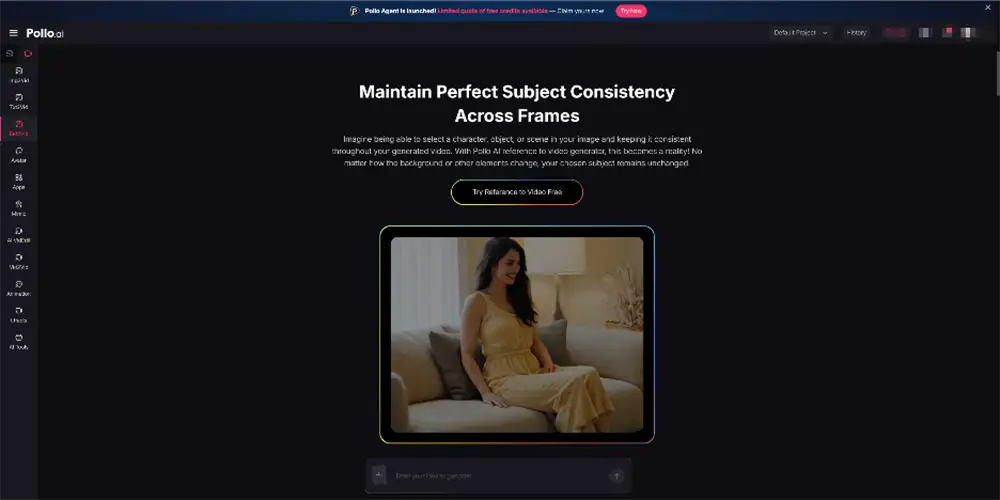
Pollo AI has rapidly emerged as a go-to platform that combines generative video, image-to-video motion, and intelligent editing into a single ecosystem. What sets it apart for creative professionals is the Reference to Video capability, which helps keep objects, characters, and visual styles consistent across a video sequence.
Many AI video tools struggle with continuity: different shots can feel like they were generated by different systems, with shifting colors, mismatched characters, or inconsistent backgrounds. Pollo AI Reference to Video solves this by allowing you to anchor a visual style to one or multiple reference images, characters, or shots, so the AI maintains that look throughout the sequence. This is a huge advantage for creative storytellers, brands, and directors who want a cohesive look across scenes without manual frame-by-frame editing.
Beyond consistency, Pollo AI supports text-to-video, image-to-video, video conversion into other styles, photo-to-avatar animation, and even text-prompt based video editing. All of these make it a compelling centerpiece for professionals who want both control and speed in experimental or production workflows.
2. Pixverse AI
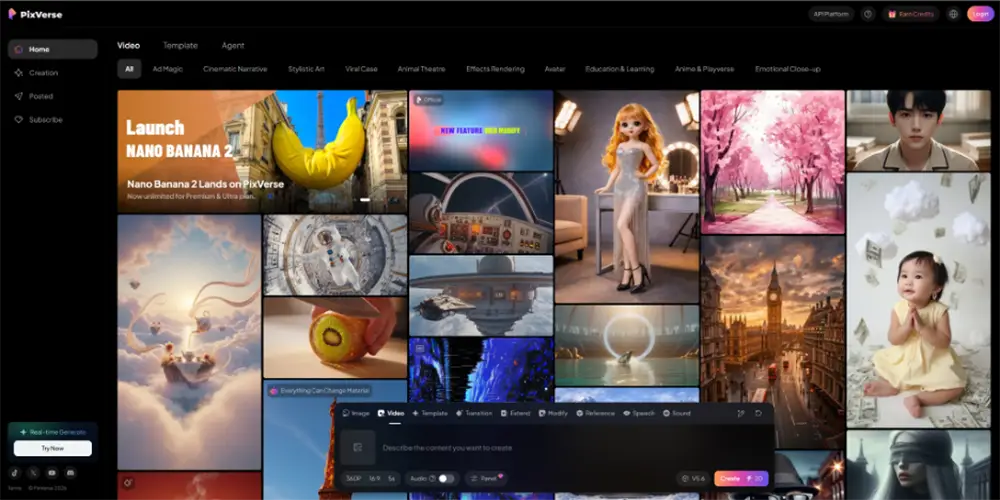
Pixverse AI is another standout platform that balances creative flexibility with high-quality outputs. At its core, Pixverse turns text prompts and static images into cinematic video clips, complete with smooth motion, realistic transitions, and support for multiple resolutions.
The latest iterations of Pixverse generation models go further by letting you specify both the starting and ending frames of a video, enabling precise control over how transitions and scenes unfold. This means you can design a narrative arc from frame A to frame B, and the AI will interpolate the video frames in between. Creatives can generate short narrative pieces that feel complete and intentional, a capability that was historically only possible with traditional production tools.
Pixverse’s strengths include cinematic motion, keyframe control, and integrated audio that matches visuals and effects. Whether you’re producing short form for TikTok/Instagram or concept visuals for pitches and storytelling, Pixverse offers a professional-grade toolkit that’s surprisingly easy to use.
3. Runway ML
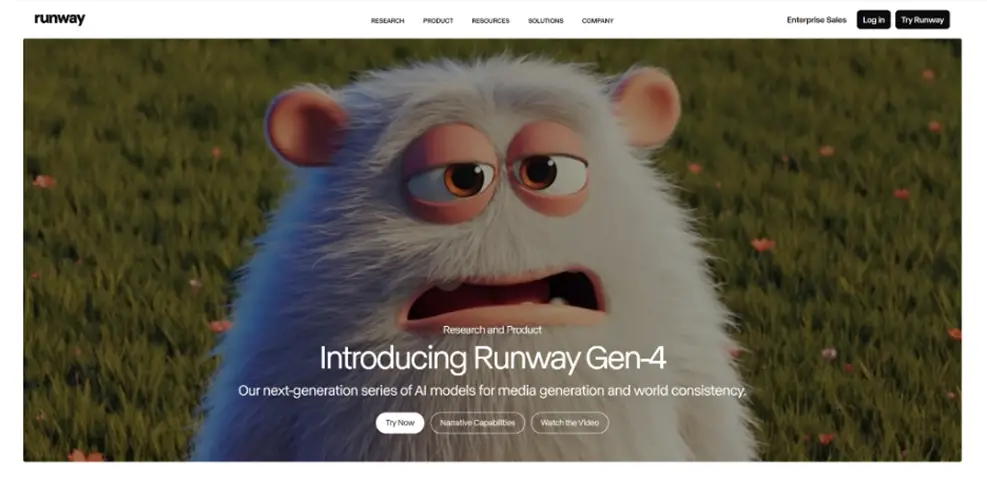
Runway’s Gen-4 series remains a staple for creative professionals seeking deeper control over motion, style, and composition. The platform’s video generation models combine text-to-video and image-conditioned workflows with features like camera movement simulation, multi-character consistency, and style transfer from reference images.
Runway is often cited by creators for its balance of creative precision and flexible editing tools, letting you tweak shots, adjust camera effects, and refine outputs without leaving the environment. Other AI systems tend to generate first, edit later — Runway often blends generation and editing into a more unified workflow suitable for filmmakers, animators, and post-production teams.
4. Google Veo
Google Veo is part of the newest wave of large-scale AI video models — and one of the few tools offering native audio synthesis alongside visuals. With Veo 3/3.1, you can generate videos with synchronized environmental sound, dialogue, and effects based on input prompts.
The capability to include audio contextually during generation, rather than editing in separate passes, helps Veo stand out for cinematic and narrative-driven content. For creative professionals producing demo reels, immersive product storytelling, or narrative teasers, Veo’s ability to generate both visuals and sound makes it a strong choice in 2026.
5. Sora 2
Sora 2 continues to be one of the most talked-about AI video solutions, especially for realistic physics, motion coherence, and scene continuity. Integrated into larger productivity suites like Microsoft Copilot and available in pro tiers, Sora’s advancements over earlier models make it valuable for creators who need technically reliable, story-centric video generation.
While Sora’s focus isn’t purely on aesthetic stylization, its strength lies in balancing realism with scene dynamics, making it suitable for narrative sequences, educational content, and cinematic teasers that require believable motion patterns.
6. Kling AI
Kling AI is one of the strongest performers for creators who want high-resolution, longer-length video generation with smooth human movement and character consistency. Across user communities, Kling is praised for its ability to sustain stylistic continuity across several minutes of footage — a rare feat in generative tools — making it a solid option for social campaigns, branded ads, and character-driven pieces.
Its relative accessibility and adjustable generation parameters mean creative professionals can often iterate quickly without sacrificing visual quality.
7. LTX Studio
LTX Studio combines AI generation with more manual creative control, appealing to filmmakers and designers who want to bridge AI generation with traditional storyboard workflows. Built by Lightricks, LTX lets you generate scenes from text, craft storyboards, and control framing and camera direction — all within a single creative suite.
For professionals accustomed to traditional editing software, LTX’s hybrid approach is liberating: you can generate a rough sequence with AI and refine it with manual adjustments on the timeline, creating a bridge between automated generation and hands-on refinement.
Final Take
AI video tools in 2026 have evolved from experimental generators to professional creative suites capable of supporting real production needs. Tools like Pollo AI and Pixverse AI are notable for how they bring consistency and narrative control to generative workflows — from maintaining character continuity to defining keyframe-based transitions. Meanwhile, platforms like Runway, Sora, Veo, Kling, and LTX each solve distinct creative problems, whether it’s cinematic motion, audio integration, realism, longer-form outputs, or manual refinement.
For creative professionals looking to stay ahead in 2026, adopting the right mix of these tools can drastically speed up production, enhance storytelling quality, and help your work stand out in a saturated digital landscape.