Toronto never remains unchanged for long. New restaurants emerge in former warehouses, ambitious public spaces reshape the waterfront and once-overlooked neighborhoods develop some of the city’s most interesting shopping and dining scenes.
Recent additions have given travelers even more reasons to return, from a vast new waterfront park to the arrival of intimate luxury hotels and contemporary food halls. At the same time, Toronto’s established museums, markets, cultural districts and lakefront attractions remain essential parts of any first visit.
Here is what is new—and what is still worth making time for—during a Toronto getaway.
Discover Toronto’s New Waterfront Landscape
One of the most significant changes to Toronto is unfolding east of downtown in the Port Lands.
Biidaasige Park opened its first sections in 2025 on Ookwemin Minising, Toronto’s newly created island. A further 10 acres of public space opened in July 2026, bringing the portions completed to date to approximately 60 acres.
The park is part of a much larger transformation that redirected the Don River and introduced new wetlands, wildlife habitat and flood protection. Visitors can explore walking and cycling paths, riverfront overlooks, picnic areas and landscaped spaces planted with thousands of trees and shrubs.
Canoe Cove and an expanded water’s-edge promenade are among the newer additions. Together, they offer a different view of Toronto—one shaped by naturalized riverbanks and open space rather than the familiar downtown skyline.
Because the surrounding district is still developing, visitors should consult Waterfront Toronto for current access information, programming and transportation advice.
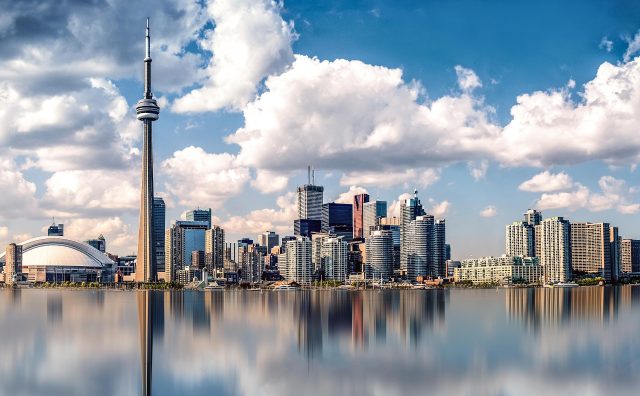
Elsewhere along the waterfront, travelers can continue west through the Distillery District, Sugar Beach and Harbourfront before catching a ferry to the Toronto Islands. The islands remain one of the best places to photograph the skyline, rent a bicycle or escape the downtown crowds for a few hours.
Explore The Well and Wellington Market
The Well has created a new center of activity on the western edge of Toronto’s downtown core.
Located near Front Street and Spadina Avenue, the large mixed-use development combines restaurants, shopping, offices, residences and public gathering spaces beneath a dramatic glass canopy. Its open-air design makes it feel more like a new urban neighborhood than a conventional shopping center.
Food is one of the main attractions. The development’s Wellington Market brings together more than 50 merchants offering everything from casual meals and baked goods to cocktails and gourmet products. It is especially useful when traveling with a group because everyone can choose something different without making separate reservations.
The Well also contains sit-down restaurants, cafés, shops and seasonal cultural programming. Its location makes it easy to combine with the CN Tower, Rogers Centre, TIFF Lightbox or a walk through the Entertainment District.
While it is certainly possible to spend an afternoon browsing, The Well works best as part of a larger exploration of the west side of downtown. From here, continue toward King West, Queen West or the independent shops and nightlife around Ossington Avenue.
Revisit St. Lawrence Market
St. Lawrence Market has been a Toronto institution for generations, but its surrounding district has received a significant update.
The redeveloped St. Lawrence Market North building welcomed the Saturday Farmers’ Market back to its permanent home in 2025. The modern building sits across Front Street from the historic South Market, which continues to house its familiar collection of food vendors, specialty merchants and prepared-food counters.
Visitors can begin with breakfast or an early lunch inside the South Market, browse the farmers’ market when it is operating and then walk into Old Toronto. Nearby highlights include the Flatiron Building, Berczy Park, the Cathedral Church of St. James and the pedestrian streets of the Distillery Historic District.
The market is busiest around lunchtime and on Saturday mornings. Arriving early offers more time to speak with vendors and explore before the surrounding streets fill with visitors.
Experience Toronto Through Its Neighborhoods
Toronto’s defining attractions may appear on postcards, but its personality is found in its neighborhoods.
Kensington Market remains one of the best places to experience the city’s multicultural character. Vintage shops, specialty grocers, cafés, murals and informal restaurants occupy a compact collection of streets beside Chinatown. It is a neighborhood designed for wandering rather than following a strict itinerary.
Farther west, Queen Street West offers independent shopping, galleries and street art. Graffiti Alley remains a popular stop, while Ossington Avenue has developed into one of the city’s most concentrated dining and nightlife districts.
In the east, Leslieville combines neighborhood restaurants, bakeries and vintage shops along Queen Street East. Continue toward the Beaches for waterfront walking paths, parks and a more residential view of Toronto.
Yorkville provides a contrasting experience with luxury boutiques, polished restaurants and some of the city’s most prestigious hotels. It is also close to the Royal Ontario Museum and the Bata Shoe Museum.
Travelers interested in exploring more of the city’s cultural identity can read our guide to Toronto’s diverse neighborhoods and cultural attractions.
Make Time for Toronto’s Cultural Institutions
Toronto’s major museums remain essential, but changing exhibitions give repeat visitors a reason to return.
The Royal Ontario Museum brings together natural history, world cultures, art and archaeology beneath its distinctive Michael Lee-Chin Crystal. The museum is undergoing the multiyear OpenROM transformation, which will eventually introduce a reimagined main floor, a new atrium and additional public programming. The museum remains open during the work, although visitors should check which galleries and entrances are available.
The Art Gallery of Ontario holds an extensive collection spanning Canadian, Indigenous, European, African and contemporary art. Its Frank Gehry-designed spaces are part of the experience, particularly the sweeping Galleria Italia overlooking Dundas Street.
Film enthusiasts should explore the year-round program at TIFF Lightbox, while performing arts fans can look for productions at the Royal Alexandra Theatre, Princess of Wales Theatre, Four Seasons Centre for the Performing Arts and Meridian Hall.
Toronto’s cultural calendar is equally important. The Toronto International Film Festival fills the city with premieres and industry events each September, while Nuit Blanche transforms public spaces with contemporary art installations in the fall. Summer brings Pride Toronto, neighborhood street festivals and the Canadian National Exhibition. Dates change annually, so consult the Destination Toronto events calendar before finalizing a trip.
Eat Your Way Around the City
Toronto’s food scene is difficult to summarize because its greatest strength is range.
Travelers can move from dim sum and noodle shops to Caribbean bakeries, Tibetan momo counters, Italian trattorias, contemporary tasting menus and late-night Middle Eastern restaurants without leaving the city. Toronto rewards diners who choose restaurants by neighborhood and culinary tradition rather than relying exclusively on lists of famous names.
Kensington Market and Chinatown work well for a self-guided food crawl. Gerrard Street East is known for South Asian flavors, while Scarborough, Markham and North York offer an enormous range of Chinese, Indian, Middle Eastern and Southeast Asian restaurants.
Travelers looking for destination dining can consult the current MICHELIN Guide Toronto selection, which includes starred restaurants, Bib Gourmand choices and inspector-recommended establishments across Toronto and the surrounding region.
Reservations are recommended for acclaimed restaurants, particularly from Thursday through Saturday. However, some of the city’s most memorable meals can still be found in casual neighborhood establishments where advance planning is unnecessary.
Rediscover Toronto’s Classic Attractions
Not everything worthwhile needs to be new.
The CN Tower continues to provide the city’s most recognizable view, with observation levels, a revolving restaurant and the seasonal EdgeWalk experience. At its base, Ripley’s Aquarium of Canada is particularly popular with families and useful on rainy or cold days.
The Distillery Historic District combines Victorian industrial architecture with galleries, shops and restaurants. It becomes especially busy during seasonal events, but quieter weekday mornings reveal more of the district’s historic character.
Casa Loma offers an elaborate early-20th-century mansion, decorated rooms and city views, while the Hockey Hall of Fame celebrates Canada’s most famous sport through memorabilia and interactive exhibits.
Visitors with more time can also plan an excursion beyond the city. Niagara Falls can be visited independently or as part of an organized tour, although staying overnight allows travelers to see the falls after many day visitors have departed. Our guide explains how to plan a day trip to Niagara Falls from Toronto.
Where to Stay in Toronto
Choosing the right neighborhood can significantly improve a Toronto visit.
Nobu Hotel Toronto
Opened in 2025, Nobu Hotel Toronto occupies the upper floors of a downtown tower in the Entertainment District. With only 36 rooms and suites, it offers a more private experience than many of the city’s large luxury hotels. The property is also home to Nobu Toronto Restaurant and is within walking distance of theaters, Rogers Centre and the CN Tower. Read more about the opening and design of Nobu Hotel Toronto.
Ace Hotel Toronto
Ace Hotel Toronto is a design-conscious option in the Garment District. Its location is convenient for King West, Queen West, Chinatown and The Well, making it a good base for travelers interested in restaurants, nightlife and independent shopping.
Hotel X Toronto
Set beside Exhibition Place, Hotel X Toronto combines lake and skyline views with resort-style facilities. It is well positioned for waterfront walks, concerts, sporting events and the Canadian National Exhibition.
Park Hyatt Toronto
Park Hyatt Toronto places guests in Yorkville near designer shopping, restaurants and the Royal Ontario Museum. Its sophisticated interiors and central location make it a strong choice for a cultural or luxury city break.
Getting Around Toronto
Most downtown attractions can be reached using a combination of walking and Toronto Transit Commission subways and streetcars. Contactless payment makes public transit straightforward for short-term visitors.
Travelers returning to the city may notice updated station names. Dundas Station on Line 1 is now called TMU Station, while Eglinton West Station has become Cedarvale Station. Older printed guides and maps may still use the previous names.
The UP Express connects Toronto Pearson International Airport with Union Station downtown. Taxis and ride-hailing services are convenient, but downtown traffic can make public transportation faster during busy periods.
Toronto is too large and varied to experience through a checklist alone. Leave time to explore one or two neighborhoods slowly, try a restaurant that was not part of the original plan and follow the waterfront beyond its familiar landmarks.
The city’s newest attractions are impressive, but the most rewarding Toronto trip combines them with the markets, communities and cultural institutions that continually give the city new energy.