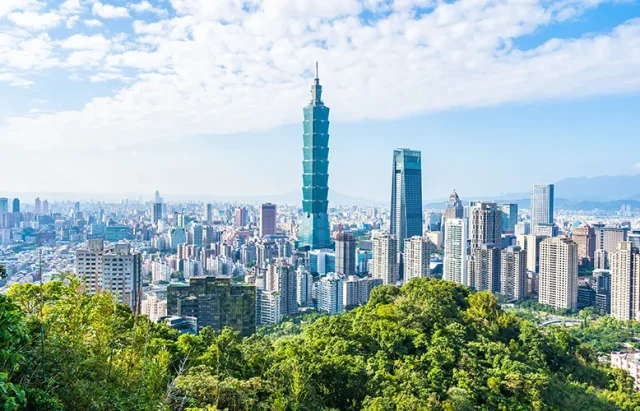
Taiwan brings an extraordinary variety of landscapes into a relatively compact island. Modern cities give way to forested mountains, tea-growing regions, dramatic coastlines, hot springs and small communities where temples and traditional markets remain part of everyday life.
Taiwan’s railways, high-speed trains and local buses make it easy to travel between major destinations. Driving, however, offers greater freedom once you leave the principal urban centers. A road trip can connect lakeside temples, coastal viewpoints, mountain villages and rural food stops that would otherwise require several changes of transportation.
Self-driving is not necessarily the best choice for exploring central Taipei or Kaohsiung, where traffic and parking can be challenging. A more practical approach is to use public transportation in the major cities and plan a road trip through one or two of Taiwan’s scenic regions.
What Visitors Should Know Before Driving in Taiwan
Taiwan drives on the right-hand side of the road, with the steering wheel positioned on the left side of the vehicle. Seat belts are mandatory, and speed limits are enforced through roadside cameras.
International visitors should arrange the appropriate driving documents before leaving home. Taiwan’s Tourism Administration advises travelers to carry a valid International Driving Permit. Because recognition can depend on the permit’s issuing country and reciprocity arrangements, visitors should confirm the requirements that apply to their license before traveling. The original domestic license, passport and International Driving Permit should be carried while driving. Taiwan Tourism Administration
Road signs on major routes generally include English, but place names may be spelled differently. Saving destinations in advance and checking the Chinese name of smaller attractions can make navigation easier.
Is Driving in Taiwan Difficult?
Driving conditions vary considerably across the island. Expressways and major highways are modern and generally straightforward, while city streets can feel much more demanding. Scooters frequently travel alongside cars, move between lanes and gather in designated boxes at intersections. Drivers should check mirrors and blind spots carefully before turning or changing lanes.
Mountain roads introduce different challenges. Many are narrow and winding, with steep gradients, limited shoulders and occasional rockfall. Fog and heavy rain can reduce visibility quickly. Travel times should therefore be treated as estimates rather than firm schedules.
Drivers should also avoid building an itinerary around too many destinations in a single day. Taiwan may look small on a map, but mountainous terrain can make journeys slower than expected.
Four Scenic Taiwan Road Trips
1. The North and Northeast Coast
A road trip along Taiwan’s northern and northeastern coastline combines unusual geological scenery, historic communities and Pacific Ocean views.
Yehliu Geopark is a natural starting point. The coastal landscape is known for its wind- and water-eroded rock formations, including the famous Queen’s Head. From there, travelers can continue toward the former mining communities of Jiufen and Jinguashi. Jiufen’s narrow lanes, teahouses and hillside views make it one of northern Taiwan’s most atmospheric destinations, although parking can be limited during busy periods.
Farther along the coast, stops can include Nanya’s weathered rock formations, Bitou Cape and Fulong Beach. The route can then continue into Yilan County, where hot springs, rice fields and coastal scenery provide a quieter contrast to Taipei.
This trip works particularly well over two days, allowing time to explore Jiufen after day-trippers have begun returning to the city.
2. Sun Moon Lake and Central Taiwan
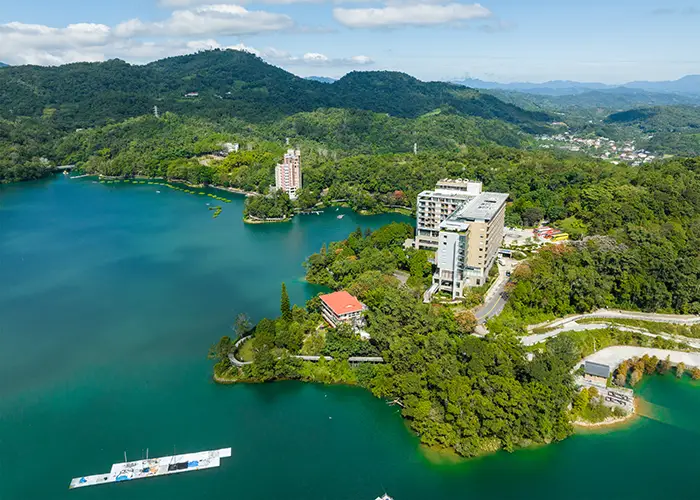
Surrounded by forested mountains in Nantou County, Sun Moon Lake is Taiwan’s largest lake and one of its most recognizable landscapes.
The roads around the lake provide access to several of its principal attractions. Wenwu Temple overlooks the water from the northern shore, while the Ci’en Pagoda rewards visitors with elevated views after a short uphill walk. Shuishe is the lake’s main visitor hub, and Ita Thao offers restaurants, shops and connections to the local Thao Indigenous community.
Driving should be combined with time away from the vehicle. Visitors can take a sightseeing boat, walk sections of the lakeside trail or rent a bicycle for a closer look at the shoreline. The lake is especially appealing early in the morning, before the main tour groups arrive.
Rather than treating Sun Moon Lake as a hurried day trip, consider staying overnight and pairing it with nearby Puli, known for its temples, mountain setting and regional agricultural products.
3. Alishan and Taiwan’s Tea Country
Alishan is not a single mountain but a highland region celebrated for forests, tea plantations, historic railway infrastructure and views across a “sea of clouds.”
The drive from Chiayi climbs gradually into the mountains, passing tea-growing communities such as Shizhuo. Small viewpoints and teahouses provide opportunities to stop and learn how elevation, mist and climate contribute to the character of Alishan tea.
Within the Alishan National Forest Recreation Area, visitors can walk among ancient cypress trees, explore forest trails and ride sections of the Alishan Forest Railway. Sunrise at Zhushan is a signature experience, but conditions vary and clear views are never guaranteed.
Allow generous time for this journey. The mountain road has numerous curves, and fog can develop quickly. Spending at least one night in the region creates a much more relaxed visit and reduces the need to drive mountain roads after dark.
4. Kenting and the Hengchun Peninsula
Southern Taiwan offers a warmer, more tropical road trip around the Hengchun Peninsula. Kenting National Park encompasses beaches, forests, coral limestone landscapes and coastal viewpoints, making it much more than a seaside resort destination.
Eluanbi Lighthouse stands near Taiwan’s southern tip, while Longpan Park offers broad views over grasslands and the Pacific. Baisha Beach is known for its pale sand and sheltered setting, and Maobitou provides a rugged contrast with its rocky coastline.
Hengchun Old Town adds a cultural dimension to the journey. Portions of the historic town walls and gates remain, while the surrounding streets contain traditional restaurants and local snack shops. Spending time in Hengchun can also provide a quieter alternative to staying directly on Kenting’s busy main street.
Strong winds and sudden rain can affect coastal driving, particularly during seasonal weather systems. Travelers should check local forecasts before setting out.
A Note About Taroko Gorge
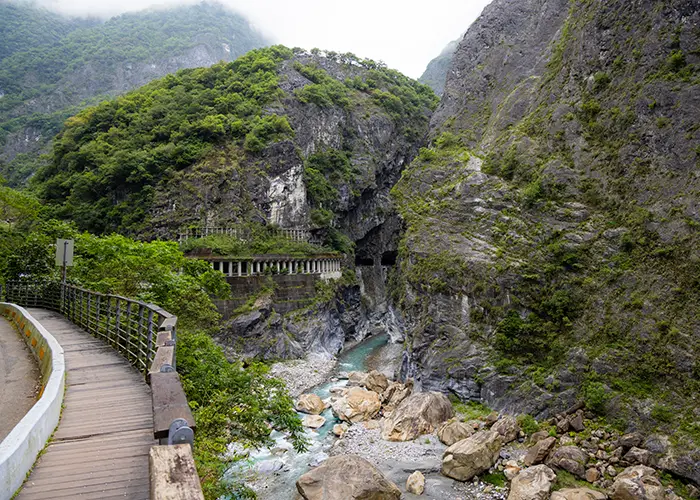
Taroko Gorge was once commonly included in Taiwan road-trip itineraries, but conditions changed significantly after the April 3, 2024 earthquake and subsequent typhoons. Several roads and popular trails sustained serious damage.
As of July 2026, traffic controls remain in place on parts of Provincial Highways 8, 9 and 14A, while major trails including Shakadang and Swallow Grotto remain closed. Conditions and opening times can change as reconstruction continues. Travelers should not rely on older itineraries and should consult the official Taroko National Park notices immediately before visiting. Taroko National Park road updates and current hiking information
Practical Safety Tips
Be particularly careful around scooters
Scooters are an essential part of daily transportation in Taiwan. They may approach from either side, especially near intersections. Check mirrors carefully before opening a door, turning or pulling away from the curb.
Avoid unnecessary city driving
Taipei and Kaohsiung have excellent public transportation. Collecting a vehicle when leaving the city—and returning it before beginning an urban stay—can reduce traffic stress and parking costs.
Allow extra time in mountain regions
Distances can be deceptive when roads include steep climbs and repeated bends. Plan fewer stops than you think you can manage and avoid driving unfamiliar mountain routes at night.
Check road and weather conditions
Heavy rain, typhoons, earthquakes and landslides can temporarily close roads or affect access to national parks. Check official road and park notices before traveling, particularly in eastern and mountainous Taiwan.
Understand local parking rules
Legal parking spaces are generally marked, but signs and curb colors should be checked carefully. Red curbs indicate no parking, while yellow curbs usually represent restricted or temporary stopping areas. In popular destinations, using a designated public parking lot is generally the simplest option.
When Is the Best Time for a Taiwan Road Trip?
Spring and autumn generally offer comfortable temperatures for sightseeing, although rain is possible throughout the year. Summer can be hot and humid, particularly in southern Taiwan, and falls within the main typhoon season. Winter is often mild in the south but can be cool, damp and foggy in northern and mountainous regions.
Seasonal conditions vary across the island, so travellers should pack for both warm lowland weather and cooler mountain temperatures.
Planning a More Rewarding Journey
A successful Taiwan road trip is less about covering the entire island and more about exploring one region properly. Combining public transportation with a short driving itinerary often provides the best balance.
Visitors might spend several days in Taipei before driving the northeast coast, take the train to Chiayi before exploring Alishan, or begin a southern road trip from Kaohsiung. This approach leaves more time for experiences that make Taiwan memorable: drinking locally grown tea, walking through forested highlands, visiting a neighborhood temple, or stopping at a family-run restaurant discovered along the way.
With realistic travel times, careful preparation and attention to current road conditions, driving can reveal a quieter and more varied side of Taiwan—one found beyond the major railway stations and city centers.