Slovenia often surprises hikers not because it delivers something extreme, but because it doesn’t. The mountains are real, the distances are meaningful, and the terrain demands attention, yet the experience rarely tips into intensity or fatigue. Days feel complete without being exhausting. Routes feel serious without feeling heavy. This balance is not accidental. Slovenia has built a hiking environment that limits excess without stripping away substance, and that restraint is what defines the experience.
The Terrain Resists Escalation
One of the most noticeable features of hiking in Slovenia is how rarely difficulty stacks on itself. Climbs are present, but they are rarely paired with extreme exposure or punishing distances. Descents exist, but they tend to ease out before becoming relentless.
This keeps effort contained. You work, but you are not constantly pushed. The terrain challenges you in sections rather than all at once. That pacing prevents fatigue from compounding too aggressively over multiple days.
Transitions Soften the Experience
Slovenia’s landscapes change gradually. Valleys widen before they rise. Forests thin before rock takes over. You rarely move abruptly seen from one environment into another.
These transitions matter more than scenery. They give the body and mind time to adjust. Instead of reacting, you adapt. This reduces mental strain and makes long days feel steadier than the elevation profiles might suggest.
Trails Favor Practical Movement
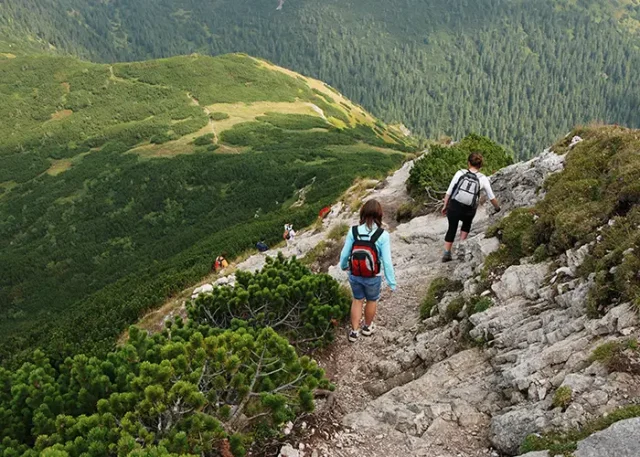
Routes in Slovenia tend to follow lines that make sense on foot. Old paths, forestry tracks, and traditional routes form the backbone of the network. Even in alpine areas, trails usually traverse rather than attack the terrain.
This keeps walking efficient without making it dull. You are moving with the land instead of against it. The experience feels cooperative rather than confrontational, which changes how effort is perceived.
Navigation Is Clear Without Being Overbearing
Trail marking in Slovenia is consistent and readable, but it does not dominate the experience. You are guided, not escorted. Once you understand the system, navigation fades into the background.
This allows attention to shift away from logistics and toward pacing, footing, and energy. The hike feels lighter because you are not constantly checking or second-guessing.
Villages Anchor the Walk Without Interrupting It
Slovenian villages appear often enough to provide rest, food, and orientation, but they rarely disrupt the rhythm of a hike. They feel lived-in rather than positioned for visitors.
You pass through them naturally. They support continuity instead of breaking it. This keeps the experience grounded without turning it into a sequence of stops.
The Peaks Remain Optional
Slovenia has iconic summits, but they do not dominate the hiking culture. Many routes offer rewarding days without involving a summit at all. High ground is available, not compulsory.
This flexibility keeps pressure low. You are not subtly pushed toward harder terrain to justify your presence. The walk remains valid at multiple levels of ambition.
Forests Absorb Intensity
Large portions of Slovenia’s hiking terrain move through forest. These sections regulate temperature, reduce exposure, and soften elevation changes. They act as buffers between more demanding stretches.
This buffering prevents emotional spikes. Forest walking may not feel dramatic, but it keeps days sustainable. Over time, that sustainability matters more than spectacle.
Weather Rarely Forces All-Or-Nothing Decisions
While mountain weather is always a factor, Slovenia’s common routes rarely put hikers in situations where conditions force immediate retreat. Alternatives are often nearby. Routes remain readable in cloud cover.
This reduces anxiety. Weather influences comfort more than outcome. You adjust rather than abandon, which keeps the experience calm even when conditions shift.
Intensity Is Chosen, Not Imposed
Slovenia does not impose difficulty. You can increase intensity by linking routes, choosing higher terrain, or extending days, but the environment does not demand it.
This makes the hiking feel cooperative. You shape the experience rather than surviving it. That agency is a key reason Slovenia rarely feels overwhelming.
Why This Balance Is Easy to Miss
Hikers used to more theatrical mountain regions sometimes misread Slovenia as mild. What they often realize later is that they finished stronger, less fatigued, and more consistent than expected.
The experience doesn’t spike. It holds. That steadiness is what allows people to walk well for longer.
Where Guided Options Fit Naturally
Because the environment already limits friction, Slovenia hiking tours integrate easily. They reduce planning overhead without altering the character of the walk. The terrain remains the same. The rhythm remains intact.
What Slovenia Ultimately Delivers
Slovenia delivers an experience that stays within bounds. Not because it lacks ambition, but because it values continuity. The hiking feels balanced without feeling diluted. Challenging without being heavy. Varied without becoming noisy.
You don’t leave with one defining moment. You leave with a sense that the walking made sense from start to finish. For many hikers, that coherence is harder to find than drama, and far more satisfying once you do.