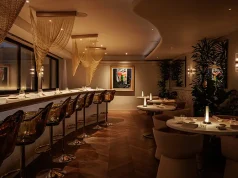

London has always been a city where different cultures meet, and nowhere is that more obvious than in its food scene. Walking through the capital often means passing bakery windows, market stalls, and small dining rooms that reflect decades of migration and changing tastes. What makes London interesting for food lovers isn’t just the number of places to eat, but how closely the city’s culinary identity connects to specific neighbourhoods.
A short walk can take someone from historic markets to modern dining streets shaped by chefs experimenting with British ingredients. Borough Market, Soho, and the districts around Bloomsbury all reveal different sides of the city’s culinary character. Exploring these areas on foot or by Underground makes it surprisingly easy to experience the diversity of London’s kitchens.
Planning Your Stay Around London’s Historic Dining Districts
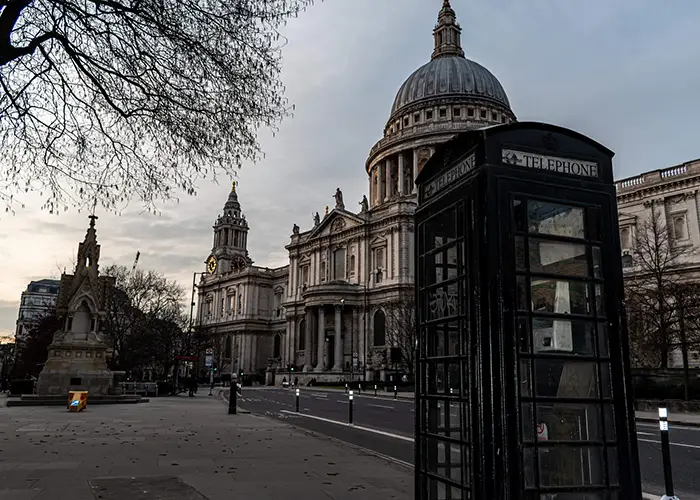
Choosing the right neighbourhood to stay in is crucial for making the most of your foodie adventure in London. Bloomsbury sits in a particularly convenient position between the West End, Soho, and the markets along the Thames. Streets such as Great Russell Street, Lamb’s Conduit Street, and Marchmont Street are filled with small bakeries, delicatessens, and independent grocers that locals rely on throughout the week.
Staying in a Bloomsbury hotel London places travellers within easy reach of several of the capital’s historic dining districts. Russell Square station connects directly to the Piccadilly Line, making it easy to get to South Kensington, Covent Garden, or Leicester Square. The neighbourhood also sits within walking distance of Soho and Fitzrovia, where a dense mix of dining rooms, bakeries, and food shops line streets such as Charlotte Street and Goodge Street.
Bloomsbury itself has long been connected to London’s literary and academic life, but the surrounding streets now hold plenty of casual food spots and small wine merchants. Walking through the garden squares toward Holborn or Tottenham Court Road gradually brings visitors into the heart of the West End’s dining scene.
Sampling Artisanal Delights at Borough Market
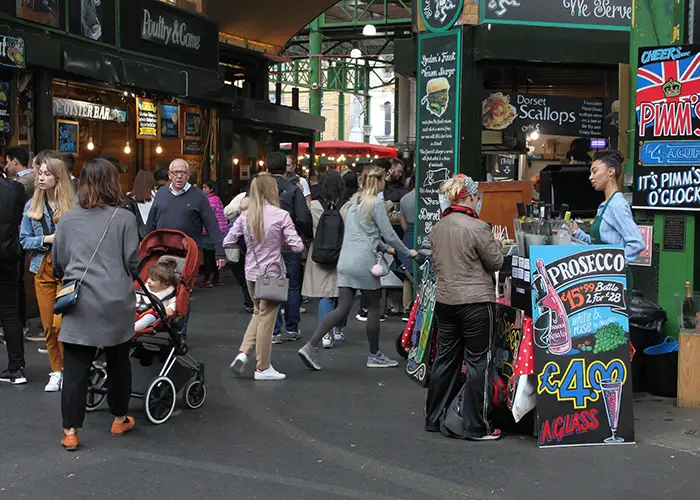
Borough Market remains one of London’s most well-known food destinations, and it’s easy to see why. The market sits beneath the railway lines near London Bridge, where traders have gathered for centuries. Walking in from Borough High Street, visitors immediately encounter stalls selling cheeses, baked goods, and freshly prepared meals served straight from small counters.
Many people arrive mid-morning, which tends to be the best time to explore before the lunchtime crowds build. The covered market hall spreads beneath green iron beams, while nearby streets such as Stoney Street and Winchester Walk hold additional traders selling everything from cured meats to pastries. The area always smells like warm bread and grilled food.
It’s easy to get to Borough Market from central London. The Northern Line stops at London Bridge station, and several bus routes pass nearby. After eating, most visitors wander toward the Thames Path or cross Southwark Bridge toward the City. The walk offers some of the best views of the river and St Paul’s Cathedral rising in the distance.
Modern British Gastronomy and the Rise of Refined Bistro Culture
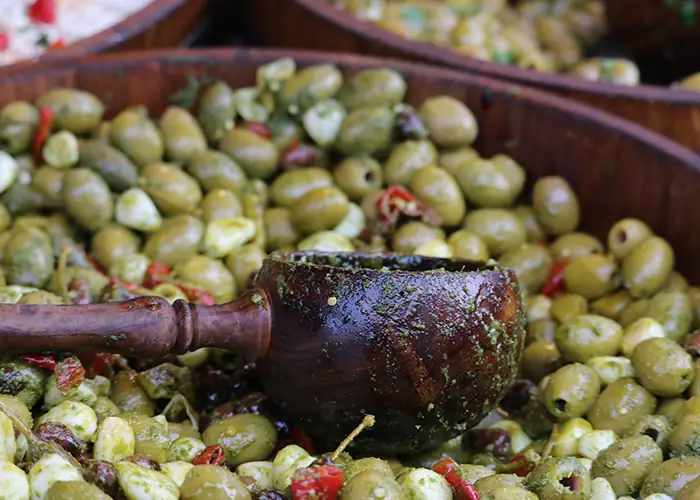
Over the past two decades, London’s food scene has shifted toward a more ingredient-focused style of cooking. Many chefs now highlight seasonal British produce, drawing from farms in counties such as Kent, Sussex, and Cornwall. The change is particularly visible in neighbourhoods like Fitzrovia and Clerkenwell.
Charlotte Street in Fitzrovia has become one of the most interesting areas for this modern bistro culture. The street sits a short walk from Tottenham Court Road station and is lined with dining rooms that emphasise simple preparations built around high-quality ingredients. Nearby Goodge Street and Rathbone Place have developed similar reputations.
Clerkenwell offers another concentration of modern British cooking. The area once served as a centre for printing workshops and small manufacturing, but today its narrow streets hold a number of contemporary dining spaces. Walking along St John Street or Exmouth Market reveals how this part of London has evolved into a neighbourhood where chefs experiment while still relying on traditional techniques.
Exploring International Flavours in Soho’s Hidden Alleys
Soho remains one of the most diverse food neighbourhoods in London. The district sits between Oxford Street and Shaftesbury Avenue, packed with narrow lanes that fill up each evening with theatre-goers, office workers, and visitors searching for somewhere to eat.
Many of the most interesting places are hidden along smaller streets such as Dean Street, Greek Street, and Frith Street. Chinatown lies just to the east along Gerrard Street, where grocery shops display hanging roast meats in their windows and bakeries sell warm buns throughout the day. The neighbourhood has long served as a meeting point for London’s Chinese community.
Walking through Soho reveals influences from across the world. One block may focus on Southeast Asian cuisine, while the next offers Middle Eastern bakeries or small Italian kitchens tucked into historic buildings. The variety reflects decades of immigration and cultural exchange. Visitors rarely need to search very far before finding something interesting.
Traditional Afternoon Tea
No culinary visit to London feels complete without experiencing afternoon tea. The tradition dates back to the nineteenth century and remains one of the city’s most recognisable dining customs. Many hotels and historic venues across central London still serve tea in the mid-afternoon, often between three and five o’clock.
Several classic settings for afternoon tea lie around Mayfair and St James’s. The streets near Green Park and Piccadilly hold grand buildings where tea is served alongside tiers of sandwiches, scones, and pastries. Walking through these neighbourhoods gives a glimpse of London’s more formal dining traditions.
Afternoon tea isn’t limited to luxury venues, though. Smaller tea rooms appear across districts such as Kensington and Marylebone, often located on quiet streets just away from the main shopping areas. Sitting down for tea after a morning of exploring museums or markets remains one of the simplest ways to pause during a busy day in the capital.
Are you ready to taste your way through the world-class kitchens and historic markets of London’s vibrant food scene?
London’s culinary reputation has grown steadily over the past few decades, and much of that change is visible in the neighbourhoods around the city centre. Exploring these areas on foot or by Underground shows how closely London’s food culture connects to its streets and communities. Markets, bakeries, tea rooms, and modern kitchens all sit within a short distance of one another. For travellers who like discovering a place through its food, few cities offer as much variety within such a compact area.