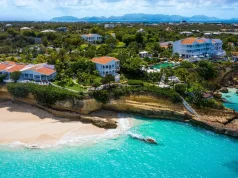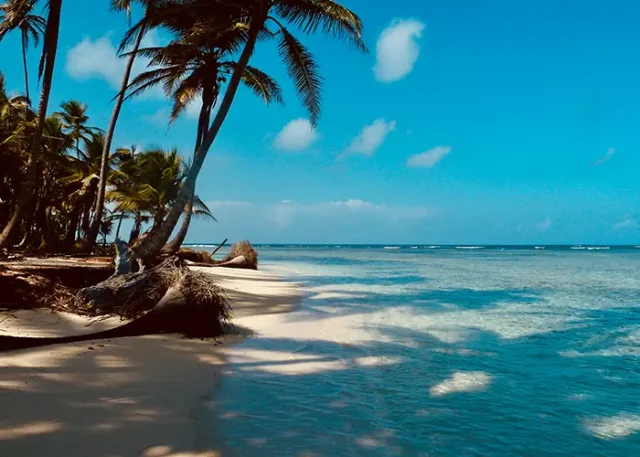
Picture this: turquoise water, white sand, a rum cocktail in your hand. Now rewind 300 years. That same beach was crawling with cutlass-wielding outlaws, stolen gold, and ships bristling with cannons. The Caribbean we vacation in today was once the world’s most lawless frontier.
Let’s talk about the real pirate hideouts, the ones that shaped history long before Hollywood got involved.
Tortuga: Where It All Started
Off the northern coast of Haiti sits a small, rocky island called Tortuga. It doesn’t look like much now. But in the early 1600s, it was ground zero for Caribbean piracy.
A group of French hunters originally settled there after fleeing Spanish aggression on nearby Hispaniola. They cured meat using a method called boucaner, and that word gave them a nickname the world would never forget: buccaneers. Once they realized piracy paid better than smoking pork, things escalated fast.
By the 1640s, Tortuga had its own fortified castle, Fort de Rocher, armed with 24 cannons. Pirates from England, Holland, and Portugal flocked to the island and formed a brotherhood called the Brethren of the Coast, complete with their own code of conduct. Think of it as an early freelancers’ guild, except with more gunpowder.
Sir Henry Morgan, one of the most famous buccaneers in history, launched raids from Tortuga before sacking Panama City in 1671. Today, only a few stone foundations of Fort de Rocher remain. But the beaches are untouched, the water is crystal clear, and the stories are everywhere. If you’d rather chase legends than lounge chairs, Tortuga belongs on your list.
Port Royal: The Wickedest City on Earth
Jamaica’s Port Royal earned its infamous title honestly. At the mouth of Kingston Harbour, this settlement became the richest and most reckless English city in the Caribbean during the late 1600s.
Pirates loved it. The harbour was deep enough for their ships, shallow waters nearby were perfect for repairs, and the location gave easy access to Spanish shipping lanes. Notorious figures like Henry Morgan and Calico Jack called it home. The streets were packed with taverns, gambling dens, and all the trouble money could buy. Port Royal was basically a pirate playground, equal parts fortune and recklessness, the kind of outlaw energy that platforms like Big Pirate have turned into a full social casino experience, complete with island raids and rival attacks.
Then nature stepped in. On June 7, 1692, a massive earthquake sent two-thirds of the city into the sea. Survivors fled to what became Kingston, and Port Royal never recovered.
Here’s the exciting part, though. In July 2025, UNESCO officially inscribed Port Royal as a World Heritage Site. Much of the 17th-century city still lies preserved underwater, sealed beneath layers of sediment. Visitors can explore Fort Charles, the only surviving fort from that era, now open as a museum. There’s also Giddy House, a half-sunken artillery store that tilts at a wild angle from a later 1907 earthquake. Strange, beautiful, and completely unforgettable.
Nassau: The Pirate Republic
When Port Royal cracked down on pirates, many simply packed up and sailed to Nassau. The capital of the Bahamas became a full-blown pirate republic in the early 1700s.
Blackbeard, Calico Jack, Benjamin Hornigold, Anne Bonny, Mary Read. The list of pirates who operated out of Nassau reads like a greatest hits album of maritime crime. Around 600 pirates sailed from the island at its peak, raiding ships and towns from the Caribbean to Maine.
The party ended in 1718 when Governor Woodes Rogers arrived to clean house. He rebuilt fortifications, stationed cannons around the harbour, and gave pirates a simple choice: accept a royal pardon or face the gallows. Most took the pardon. A few, like Jack Rackham, didn’t.
Nassau still celebrates its outlaw past. The Pirates of Nassau Museum lets you wander through a replica pirate ship and recreated 18th-century streets. Fort Fincastle offers tunnels that pirates once used for hidden passage. It’s theatrical, sure. But standing where Blackbeard actually anchored hits different.
Why These Islands Still Matter
There’s something magnetic about standing on ground where history went sideways. These weren’t just hideouts. They were experiments in self-governance, trade networks outside the law, and communities built by people who refused to play by the rules.
The Caribbean has changed, obviously. But the bones of pirate history are still there if you know where to look. Crumbling forts, underwater ruins, museums tucked behind tourist shops.
So next time you’re planning a Caribbean trip, consider going beyond the resort. Walk the streets of Nassau. Stand on the cliffs of Tortuga. Visit Port Royal before the rest of the world catches on to its new UNESCO fame. These islands earned their place in history the hard way.