

Travelling for culture usually means more than visiting famous landmarks. It’s about seeing how everyday life unfolds around historic streets, local markets, and neighbourhood traditions that have developed over centuries.
Cities and regions with strong cultural identities often reveal their character through small details: a quiet courtyard behind a busy avenue, a market stall selling seasonal produce, or a centuries-old building still used by residents.
Across Europe, Asia, and the Americas, certain destinations stand out for travellers who want to understand how history and modern life intersect. From Zurich’s carefully preserved urban centre to Kyoto’s traditional districts and the lively markets of Mexico City, these places offer encounters that go well beyond guidebook highlights.
Luxury Urban Exploration in Zurich
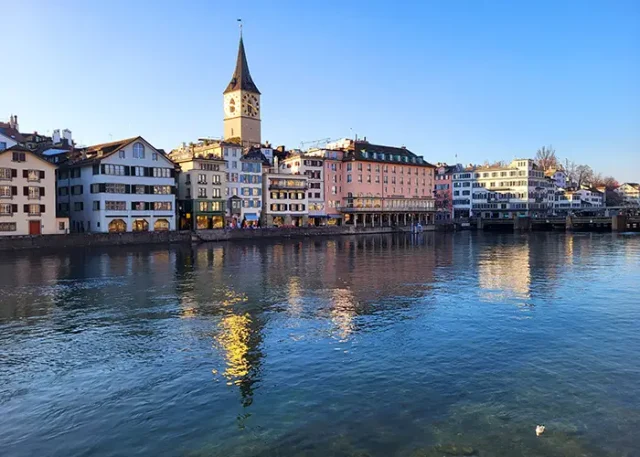
Zurich’s historic centre sits on both sides of the Limmat River, making it easy to explore on foot. Most visitors start near the Bahnhofstrasse, one of the city’s main shopping avenues, before crossing the river toward the Altstadt. Narrow streets around Augustinergasse and Niederdorf still follow their medieval layout, and many of the buildings date back several centuries.
The walk between Grossmünster and Fraumünster churches is one of the most interesting parts of the old city. Along the way, small squares open up unexpectedly, and stone alleyways lead toward the riverbanks. Lindenhof Hill, just a few minutes from the Bahnhofstrasse, offers a clear view over the rooftops and the Limmat.
Travellers interested in a deeper historical context can book exciting Zurich tours, which usually begin near Paradeplatz before continuing through the old guild houses and riverside promenades.
These guided walks often include stops at landmarks like St Peter’s Church, known for its large clock face, and the bridges connecting the two sides of the historic district. Most routes naturally end near the lakefront at Bürkliplatz. From there, visitors can continue along the promenade beside Lake Zurich.
Ancient Wonders and Culinary Traditions in Kyoto
Kyoto still feels shaped by its past in ways that many large cities no longer do. The historic district of Gion, east of the Kamo River, is one of the best places to understand how the old capital developed. Wooden machiya townhouses line streets such as Hanamikoji, where traditional architecture remains largely intact.
Walking north from Gion leads toward Yasaka Shrine and the narrow lanes of Higashiyama. Streets like Sannenzaka and Ninenzaka slope gently uphill toward Kiyomizu-dera Temple. Along these paths, small craft shops and food stalls sit inside buildings that have stood here for generations.
Kyoto’s food culture is closely tied to seasonal ingredients. Nishiki Market, located a short walk from Shijo Street, stretches across several blocks and offers a good look at local produce and traditional dishes. Vendors sell pickled vegetables, grilled seafood, and Kyoto-style sweets that reflect the region’s culinary history. From the market, it’s easy to reach the Pontocho district beside the Kamo River. The narrow alley runs parallel to the water and connects several historic neighbourhoods.

Scenic Heritage and Relaxed Journeys Across Ireland
Ireland’s heritage sites are spread across the countryside rather than concentrated in a single city, which is why many travellers choose guided routes that link historic towns and landscapes. Dublin usually serves as the starting point. Visitors often begin near Trinity College before heading west through streets like Dame Street and Christchurch Place toward the medieval quarter.
From Dublin, routes commonly travel across the Midlands toward Galway. The journey passes through small towns and farmland before reaching the Atlantic coast. Galway’s Latin Quarter, around Quay Street and the Spanish Arch, shows how the city grew as a trading port centuries ago.
Elderly travellers or those with limited mobility can go on Ireland bus tours for seniors, which connect destinations such as the Cliffs of Moher, the Ring of Kerry, and smaller heritage towns along the west coast. These tours typically include stops in historic centres such as Killarney, where stone streets and traditional shopfronts still dominate the town centre.
Architectural Marvels and Moorish History in Andalusia
Southern Spain carries visible traces of several centuries of Moorish influence. Granada is one of the clearest examples. The Alhambra complex rises above the city on a wooded hill, overlooking the Albaicín district. Walking through its courtyards and gardens reveals the geometric designs and water features typical of Moorish architecture.
Below the Alhambra, the Albaicín neighbourhood still follows the layout of an old Islamic quarter. Narrow streets wind uphill from Plaza Nueva toward Mirador de San Nicolás, where visitors can see the palace complex across the valley. Many of these lanes were designed long before modern traffic, which is why walking remains the easiest way to explore them.
Further west, Córdoba offers another major example of Moorish heritage. The Mezquita stands in the historic centre near the Guadalquivir River. Its interior arches and columns reflect centuries of architectural adaptation after the city changed hands between different cultures. Streets surrounding the mosque-cathedral connect small plazas and courtyards, many filled with flowering plants. The old Jewish quarter sits nearby, creating a compact area where several layers of Andalusian history remain visible.
Vibrant Markets and Artistic Legacy in Mexico City
Mexico City’s historic centre spreads outward from the Zócalo, one of the largest public squares in the Americas. The Metropolitan Cathedral and the remains of the Templo Mayor stand beside one another, reflecting the city’s complex history.
Walking west along Avenida Francisco I. Madero leads toward the Palacio de Bellas Artes. The pedestrian street stays busy throughout the day, with street vendors, musicians, and small shops occupying historic buildings. A few blocks away, the Alameda Central Park provides a quiet break from the surrounding traffic.
Markets play a central role in the city’s daily life. Mercado de La Merced, east of the historic centre, remains one of the largest traditional markets in the capital. Stalls sell fruit, spices, textiles, and household goods, creating a dense maze of narrow aisles that locals navigate with ease. Further south, the neighbourhood of Coyoacán reveals another side of the city. Tree-lined streets lead toward plazas like Jardín Hidalgo, where weekend markets often attract local artists and craft sellers.
Which culture will you discover next?
Travelling through historic destinations often shows how closely everyday life and long-standing traditions remain connected. Markets, neighbourhood streets, and centuries-old landmarks still shape how people move through their cities, revealing far more than the main attractions alone.
In places where historic districts, cultural sites, and local traditions remain part of daily life, travellers quickly realise that heritage isn’t limited to monuments or museums. It appears in the layout of streets, the rhythm of local markets, and the way communities use spaces that have existed for generations.