
Some trips stay with people long after the luggage is unpacked. They often involve places where the landscape shapes the experience: climbing a volcanic mountain, navigating icy fjords, or spotting wildlife that exists nowhere else.
Across several continents, certain destinations stand out for how directly visitors interact with the environment around them. Whether trekking along Tanzania’s high-altitude slopes, sailing through remote polar waters, or crossing Namibia’s desert plains at dusk, these adventures offer a closer look at places where nature still sets the pace.
Challenging the Iconic Summit of Mount Kilimanjaro
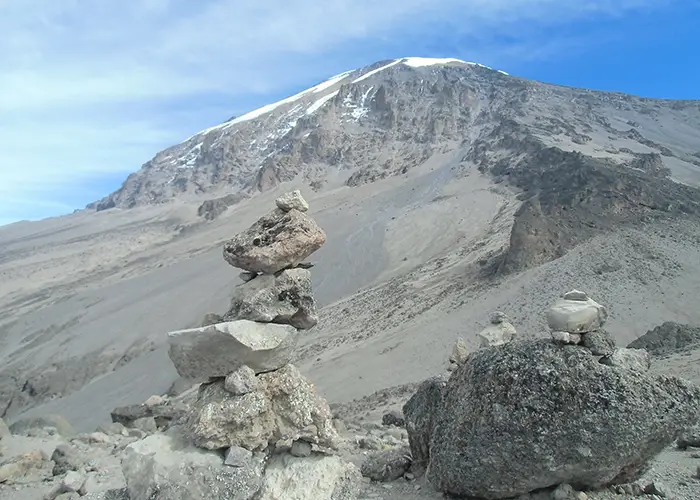
Kilimanjaro rises above the town of Moshi in northern Tanzania, its snow-capped summit visible from streets like Uhuru Street and the busy market roads around Mawenzi Road. Most climbers spend a night in Moshi before the trek begins, usually visiting the small produce stalls near Memorial Market or walking through the neighbourhoods near Moshi Coffee Market. It’s a practical base to organise gear and meet guides before heading up to the mountain gates.
Adventure on Mount Kilimanjaro hiking tours usually begin at entry points such as Machame Gate or Marangu Gate within Kilimanjaro National Park. From there, the routes climb through dense rainforest before emerging onto the open alpine landscapes around the Shira Plateau. Along the Machame route, trekkers pass Lava Tower and Barranco Wall, two landmarks that mark the transition to higher elevations.
Summit attempts typically begin around midnight from Barafu Camp. The climb toward Stella Point follows a narrow scree trail before continuing along the crater rim to Uhuru Peak, the highest point in Africa. By sunrise, the glaciers and volcanic plains surrounding the summit become clearly visible, stretching far beyond the park boundary.
Tracking Rare Wildlife in the Heart of the Galápagos
Visitors arriving in the Galápagos often land on Baltra Island before crossing the narrow Itabaca Channel to Santa Cruz. From there, a short drive leads to Puerto Ayora, the archipelago’s busiest town. Streets around Avenida Charles Darwin form the centre of daily life, where small produce markets and fishing docks line the waterfront.
Wildlife encounters usually begin nearby at the Charles Darwin Research Station. Giant tortoises roam large enclosures while marine iguanas sun themselves along the rocky shoreline just outside the station. A short walk along the coastal path leads toward Playa de los Alemanes, where sea lions often sleep directly on the sand.
Further exploration typically involves small boat journeys to nearby islands. On North Seymour, blue-footed boobies nest among low shrubs beside clearly marked trails. Española Island is known for waved albatross colonies, while Bartolomé Island offers views from its summit path over the distinctive Pinnacle Rock. The animals show little fear of people, making close observation surprisingly easy.
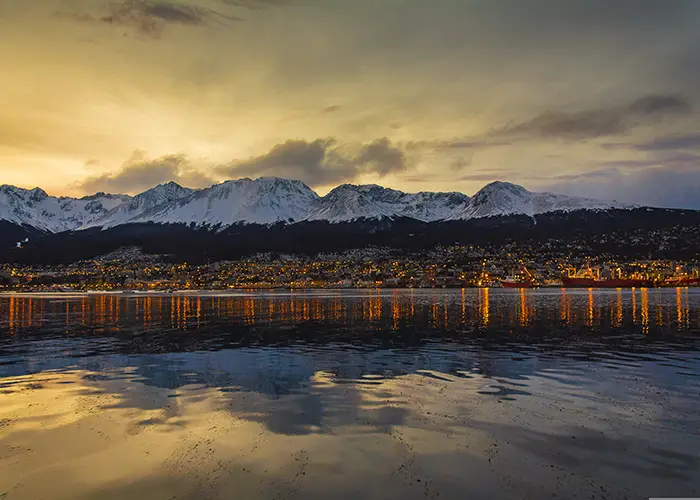
Curated Small-Ship Expeditions to Earth’s Remote Corners
Large cruise ships rarely reach the world’s more isolated coastlines, which is why many travellers choose amazing small ship cruises designed specifically for exploration. These vessels usually carry fewer than a hundred passengers, allowing them to access narrow channels and small harbours that larger ships cannot reach.
Expeditions might begin in ports such as Ushuaia at the southern tip of Argentina or Longyearbyen in the Svalbard archipelago. In Ushuaia, many travellers stay near Avenida Maipú before departure, where the waterfront promenade overlooks the Beagle Channel. From there, ships head toward Antarctica, crossing the Drake Passage before reaching landing sites like Cuverville Island or Neko Harbour.
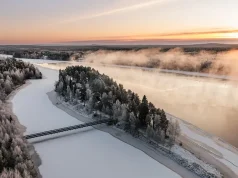
In the Arctic, routes around Spitsbergen often pass through fjords such as Kongsfjorden and Liefdefjorden. Zodiac boats carry passengers ashore for short walks among glacial valleys or along coastal tundra where Arctic foxes and seabirds appear. Because the vessels are smaller, schedules shift quickly depending on ice conditions and wildlife sightings.
Traversing the Dramatic Fjords and Glaciers of Norway
Western Norway’s fjord region stretches inland from the city of Bergen, where colourful wooden buildings line the historic Bryggen Wharf. Travellers often start by exploring the harbour area around Vågsallmenningen before boarding trains or ferries that connect the surrounding valleys and waterways.
The Bergen Railway runs east toward the mountain plateau of Hardangervidda, stopping at small stations like Myrdal. From there, the famous Flåm Railway descends sharply into Aurlandsfjord, passing waterfalls and steep rock walls along the way. Flåm village itself sits beside the fjord, where boats depart toward Nærøyfjord, one of the narrowest fjords in Europe.
Further north, travellers heading toward the Geirangerfjord often pass through Ålesund, a coastal town known for its Art Nouveau architecture around Apotekergata and the harbour district. From the fjord, steep cliffs rise directly from the water while roads like Ørnevegen wind up the mountainside toward viewpoints overlooking the valley.
Desert Safaris and Stargazing in the Namibian Wilderness
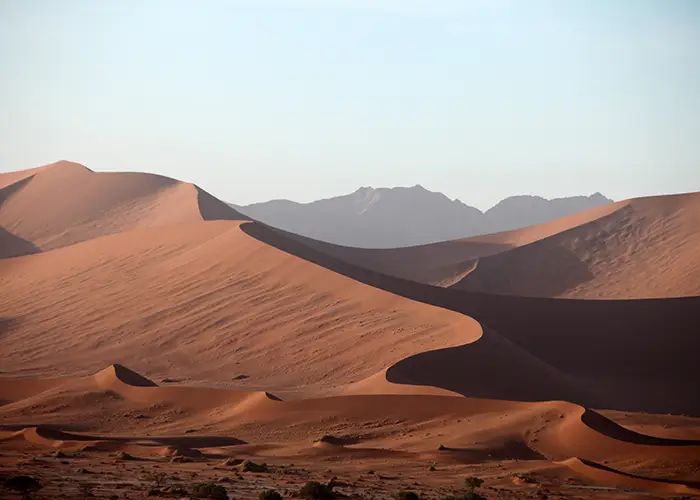
Namibia’s desert landscapes begin to appear long before reaching the famous dunes of Sossusvlei. Travellers often drive south from Windhoek along the B1 highway before turning onto gravel roads that cut across open plains toward the Namib-Naukluft National Park. Small roadside settlements like Solitaire provide fuel stops and basic supplies before continuing deeper into the desert.
Inside the park, the road leads toward Sesriem Gate, the main entrance to the dune fields. Early morning drives often begin here, continuing past Dune 45 and along the sandy route toward the clay pan known as Deadvlei. The towering dunes around the pan create a striking contrast with the dark skeletons of ancient camelthorn trees scattered across the white ground.
Evenings in this part of Namibia tend to revolve around the night sky. With little artificial light nearby, the stars appear unusually clear. Observers often set up telescopes outside desert lodges or simply watch the Milky Way stretch across the horizon.
Which of these grand adventures will define your year?
Travel experiences that involve effort or curiosity often leave the strongest impressions. Climbing a mountain like Kilimanjaro, navigating the wildlife-rich islands of the Galápagos, or sailing into remote polar landscapes brings travellers close to places where nature still shapes daily life. Norway’s fjords and Namibia’s desert offer entirely different environments but produce the same feeling of discovery. These journeys rarely revolve around famous landmarks alone. Instead, they unfold through trails, waterways, quiet roads, and unexpected encounters with landscapes that feel far removed from everyday routines.