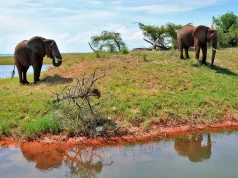
There are journeys you remember for a brief period, and then there are journeys that quietly embed themselves in your memory long after the luggage is unpacked. A true African safari belongs entirely to the latter category. It is not merely about the volume of photographs you capture or the specific animals you manage to check off a list. Rather, the lasting impact comes from the profound shift in how you experience time and space.
When You Stop Moving and Start Noticing
When you first arrive in the bush, the initial shock is rarely the wildlife. It is the pace. Modern travel often conditions us to rush from one landmark to another, driven by a fear of missing out. However, a properly structured safari demands that you stop moving and start paying attention.
If the journey is designed correctly, there is no pressure to move on to the next highlight. At first, this absence of a rigid schedule can feel unfamiliar to those accustomed to tightly managed vacations. Yet, after a day or two, an internal shift occurs. You might spend an hour simply watching the dust settle behind a breeding herd of elephants near the Chobe River, or listening to the absolute silence of the midday heat. That is the exact moment the environment stops being a mere backdrop and becomes a living, breathing space. You stop anticipating what is next and finally experience what is directly in front of you.
It Is Not About Seeing Animals, It Is About Being There
Travelers often arrive with a mental checklist of species they wish to see, which is a completely natural instinct. However, the moments that permanently alter your perspective rarely result from ticking off sightings in quick succession.
True immersion comes from the slower, less obvious situations. It is found in watching the light change across the horizon, or sitting in complete stillness while nothing appears to be happening—until you realize that this stillness is exactly the point. You are present in an environment that does not adjust itself to your demands, and yielding to that reality changes the way you experience the natural world.
Botswana: Where Space Changes the Experience
Certain destinations are deliberately designed to protect this fragile sense of space, and Botswana remains the gold standard for this philosophy.
Because the country strictly enforces a model of low-impact, high-value tourism, it protects its private concessions from the overcrowding seen in other regions. You do not find yourself competing with a dozen other vehicles for a glimpse of a leopard. Instead, the moments are allowed to unfold naturally. You are not racing from one sighting to another; you are staying long enough to witness complex behaviors develop over time.
If you want to understand how a safari ought to feel, looking at the Botswana model is the perfect place to begin.
The Difference Resides in the Details
What most travelers do not realize before they depart is how heavily the logistical structure of their trip dictates their emotional response to it. The experience is shaped long before you ever arrive in camp.
Decisions regarding where you stay, how long you linger in one location, and the expertise of the guides who accompany you form the critical framework of the journey. A well-designed itinerary never feels hurried. The pacing and the flow are aligned with the environment rather than artificially imposed upon it.
Designing the Journey
This level of connection does not happen by accident, nor does it come from standard, mass-market travel templates. It requires deliberate architecture.
Only One Safaris focuses precisely on creating this caliber of experience. With a deep understanding of the African landscape and destinations like Botswana, they plan each journey with meticulous attention to timing, pacing, and location. Their philosophy ensures that travelers are not merely processed through a fixed schedule, but are guided through the environment in a manner that feels completely unforced and authentic.
If you are looking for an experience that feels less like a standard vacation and more like a profound shift in perspective, it is worth exploring how Only One Safaris approaches the journey.
FAQ: Understanding the Safari Experience
1. What makes a safari different from a standard vacation? A safari places you inside a wild environment that does not adapt to human expectations. This fundamentally changes how you perceive time, attention, and movement, requiring you to adapt to the rhythm of the wilderness.
2. Why do some safaris feel rushed? Itineraries built around fixed schedules and multiple brief stops often prioritize geographic coverage over emotional depth. This creates a constant sense of transit and limits your ability to experience meaningful, unhurried moments.
3. Why is Botswana considered a premium destination? Botswana relies on a model of low tourism density and private concessions. This approach, combined with highly regulated access, creates exclusive and uninterrupted wildlife experiences far removed from crowded public parks.
4. Is it necessary to move between multiple camps? It is not necessarily the best approach. Some of the most profound experiences come from remaining longer in a single location, allowing you to deeply understand one specific ecosystem as it shifts from morning to night.
5. What role does a professional guide play? A highly skilled guide does more than drive a vehicle; they interpret the environment. They understand complex animal behavior, read the landscape, and position you safely for moments that would be impossible to access or comprehend on your own.