Some trips are easy to fill with checklists. Others ask for a bit more time. The kind where you start to recognise street corners, understand how places connect, and stop relying on maps quite so much.
Experience Spiritual Serenity on a River Cruise in India
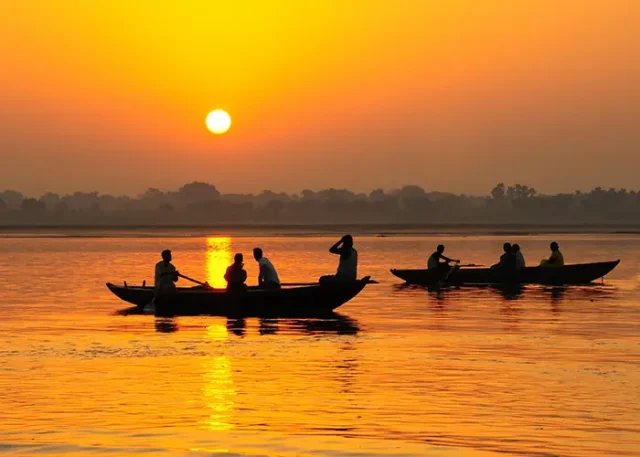
Travelling along the Ganges or Brahmaputra in India isn’t about rushing between landmarks. The river sets the pace. Mornings often begin near the ghats, where daily rituals unfold, especially in places like Varanasi, where Dashashwamedh Ghat fills early with activity. Watching the riverbanks come to life gives context to everything that follows. A few days in, it becomes clear why people choose to stay longer.
The most exciting India river cruises include stops in smaller towns such as Kalna or Mayapur, offering a quieter contrast to the major cities. They move beyond the headline destinations into areas that are harder to reach overland. These itineraries often include guided walks through temple complexes, local markets, and riverside villages, giving a more complete sense of how the river connects communities.
Movement between stops is built into the journey. Instead of relying on trains or internal flights, the route unfolds gradually. By the time you reach larger hubs again, you’ve already adjusted to how the region works, which makes exploring on land feel easier.
Savour the Unhurried Pace of Life in Tuscany, Italy
The charm of Tuscany really comes through when you stop trying to cover too much ground. Staying in one base, somewhere between Florence and Siena, makes things easier. From there, it’s easy to move between towns like San Gimignano, with its cluster of medieval towers, and Pienza, where the layout still reflects its Renaissance planning.
In Florence, it helps to focus on one area at a time. Spend a morning in the Oltrarno, cross Ponte Santa Trinita, and walk through quieter streets like Via Santo Spirito for a more grounded view away from the busier routes near the Duomo. Markets such as Mercato Centrale are some of the best places to see how locals go about their daily lives.
Driving through the Val d’Orcia changes how you experience the region. Roads linking Montepulciano, Montalcino, and Bagno Vignoni are well-marked and manageable, even for those not used to driving in Italy. Distances are short, but the landscape changes enough to keep things interesting. After a few days, it stops feeling like a series of day trips and more like a connected region.
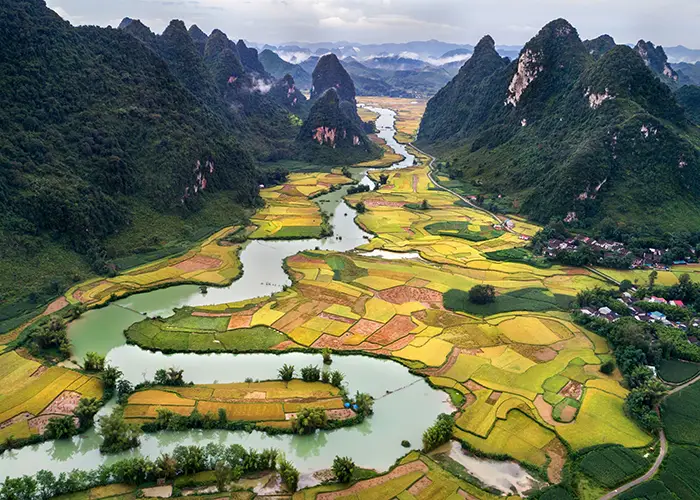
Follow the North-South Corridor Through Vietnam
Vietnam’s geography is particularly well-suited to a long escape because the country follows a single, linear route. Most journeys begin in either Hanoi or Ho Chi Minh City and move toward the opposite end using the North-South railway as the primary link. This layout allows you to stop in cities like Hue and Da Nang without needing to backtrack or rely on internal flights.
In Hanoi, the Old Quarter is best explored by focusing on the specific trade streets near Hoan Kiem Lake, while further south in Hue, the Imperial Citadel and the royal tombs along the Perfume River require several days to navigate properly. The transition between these hubs works best when you follow the best 3 week holiday ideas for grouping stops, such as linking the mountains of Sapa with the coastal limestone karsts of Ha Long Bay.
By structuring the trip along this natural spine, the distances become more manageable. Instead of a series of disconnected flights, the journey becomes a steady progression where the landscape changes gradually from the dense northern highlands to the open river delta in the south. After a few weeks on the ground, the connections between the major cities and the smaller riverside towns become much easier to understand.
Reconnect with Nature in the Vast Wilderness of British Columbia, Canada
British Columbia covers a large area, so choosing a good starting point matters. Vancouver is the obvious entry, but it’s worth heading out fairly soon. Taking the Sea-to-Sky Highway toward Squamish and Whistler introduces the landscape early, with stops like Shannon Falls and the Stawamus Chief offering short walks without taking up a full day.
Further north, areas around Pemberton and into the Cariboo region feel more remote. Lakes, forest trails, and long stretches without towns help you understand the scale. In contrast, Vancouver Island offers a different kind of wilderness. Around Tofino and Ucluelet, coastal paths such as the Wild Pacific Trail give access to the shoreline without requiring specialist gear.
Getting around usually means renting a car. Public transport exists, but doesn’t reach many areas. Distances can be longer than expected, so it helps to group stops in a way that makes sense. Spending a few nights in each place, rather than moving every day, makes the journey easier to manage and gives you time to explore properly.
Dive into Local Traditions and Heritage in Kyoto, Japan
Kyoto is easier to understand when you explore by district. The eastern side, particularly Higashiyama, is where many first-time visitors begin. Walking from Kiyomizu-dera down through Sannenzaka and Ninenzaka gives a clear introduction to the city’s layout, though it’s best to go early before the streets fill up.
From there, moving north towards Gion and across the Kamo River into areas like Kawaramachi helps connect the more traditional parts of the city with its modern centre. Nishiki Market sits right in the middle of this, and it’s a good place to see how food culture is woven into everyday life.
Spending time in Arashiyama on the western side adds contrast. The bamboo grove draws attention, but the surrounding area, including the Katsura River and quieter temple grounds, is just as worth exploring. Trains and buses link these districts, but once you’re in each area, walking is usually the best way to get around. After a few days, the city feels less like a collection of sites and more like a place you can move through naturally.
Ready to truly lose yourself?
Longer trips don’t need to be complicated, but they do require a different mindset. The destinations above are well-suited to that kind of journey, offering enough depth to stay engaging beyond a few days. Whether it’s following a river through India, driving between Tuscan towns, or navigating Kyoto’s neighbourhoods, each place becomes easier to understand with more time. If you can slow down and stay a little longer, these are the kinds of places where that approach pays off.