The top five simple essentials for effortless work travel prevent minor transit inconveniences from disrupting productivity.
Working from airport lounges and crowded coffee shops requires gear that functions predictably without constant management.
Establishing a smart digital nomad setup eliminates daily friction. This ensures your focus remains on your work rather than scrambling for failing equipment.
There is a certain kind of tired that only road warriors know when devices slide off small tray tables.
Heavy travel demands hardware that survives constant impact, making high-quality cases, protective screen covers, and custom phone cases essential defensive investments.
Finding dependable processing power on a budget leads many professionals to source enterprise-grade hardware, desktop towers, and refurbished laptops from PCLiquidations.
These quiet set-and-forget hardware decisions prevent small annoyances from becoming actual workday disasters.
1. Protect Your Phone From Disaster
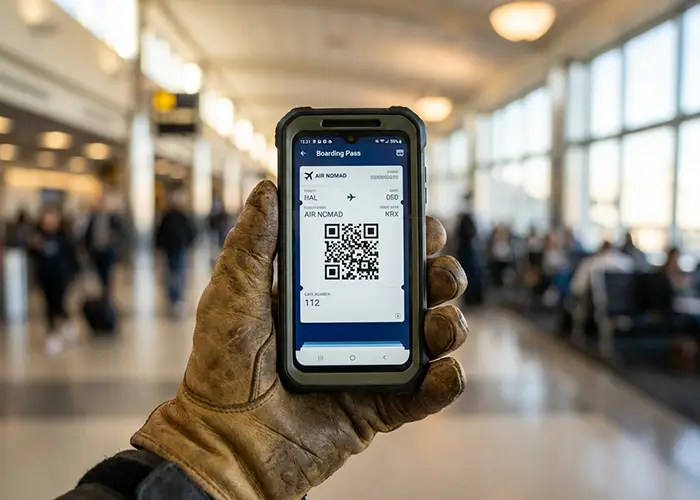
Your phone serves as your boarding pass, authentication device, navigation system, and client hotline.
It handles more active use on transit days than almost any other piece of gear in your travel tech checklist.
This heavy usage means it inevitably takes significantly more physical abuse. Thirty-three percent of smartphone users have lost or stolen their device, while countless others suffer cracked screens.
Navigating crowded gate areas and rushing through security bins increases the risk of drops.
A standard cover that works for a basic daily commute often falls short for someone bouncing between time zones.
Prioritizing robust structural durability reduces drop risks while keeping your core communication tool intact.
Choosing reliable protection ensures your most critical device survives months of airport wear and tear.
2. Build A Lightweight Tech Pouch
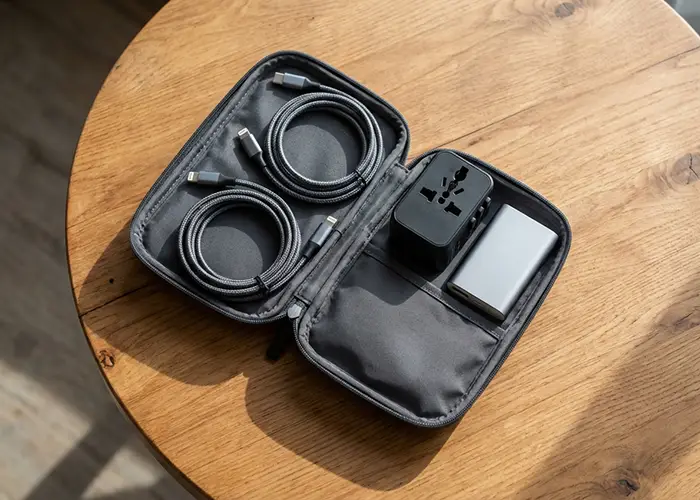
Every solid digital nomad setup shares one operational rule: nothing should be dug out of the bottom of a bag.
A dedicated tech pouch kept under a single pound solves this organizational challenge completely. You pack it once and never scramble through your carry-on at a coffee shop counter again.
The core low-drama travel kit should include several vital components. A universal power adapter is critical for seamless transitions during international legs.
Portable power banks are necessary to survive long layovers away from wall outlets.
This centralized approach simply requires consistency from the traveler. If your gear is always stored in the same pouch, it is always ready to deploy.
You eliminate the daily friction of packing and repacking cables.
3. Choose A Dependable Travel Laptop
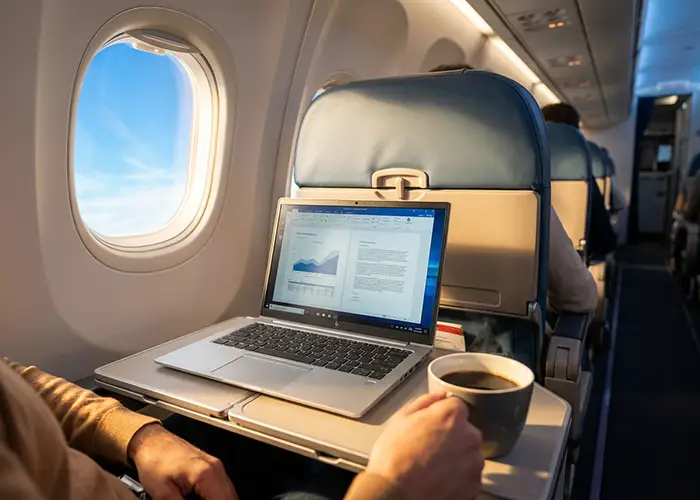
Staying productive on the road requires hardware you genuinely trust to perform under pressure.
Travel laptops must be light enough to carry all day and robust enough to handle heavy video calls.
They also need to be durable enough to survive a year of being shoved into overhead bins. The challenge is that premium new models carry significant financial risk during transit.
Experienced tech buyers often take a budget-smart route to dependable performance by utilizing certified hardware.
Opting for rigorously tested units from trusted enterprise brands offers great value without sacrificing processing power.
This strategy also provides a tangible sustainability benefit by keeping functioning hardware out of landfills.
It offers a quiet advantage for professionals actively tracking their environmental footprint while traveling.
| Key Insight: Buying refurbished isn’t just about cost savings; it’s a strategic move for travelers. It allows you to access high-end, enterprise-grade durability and performance without the financial anxiety of carrying brand-new, expensive equipment. |
4. Plan Smart Backups Beforehand
A dead charging brick before a morning client presentation is only a catastrophe if you failed to plan for it.
This segment of the travel tech checklist frequently gets skipped because redundancy feels like paranoia.
In practice, building redundancy into your workflow is merely a strong professional habit.
Implementing a few simple redundancies pays off immediately when primary systems fail. Syncing cloud storage before every trip ensures offline access to critical files.
Stashing a spare charging cable in a secondary location provides an emergency fallback.
- Sync cloud storage before trips to guarantee file access.
- Carry a multi-port charging plug for simultaneous power.
- Save offline copies of important documents and presentations.
Redundancy is not about anxiety over potential failures. It is about keeping the bad moments small and manageable.
You can recover from almost any transit mishap if your data is safely backed up.
5. Set Up Simple WiFi Security

Most travelers connect to airport or hotel networks without a second thought. Unfortunately, transit downtime is exactly when travel security is at its most relaxed and vulnerable.
A study showed that over 680,000 insecure connections were observed among public networks.
Protecting your data requires a simple, repeatable routine rather than complex technical overhauls.
Activating a virtual private network encrypts your traffic instantly. Avoiding sensitive account access keeps financial transactions safe from interception.
You should also enable two-factor authentication to lock down all critical work accounts. Treating public networks as shared spaces ensures your business data remains secure everywhere.
| Important: Never assume a public network is safe because it requires a password. Malicious hotspots often mimic hotel or airport names to intercept your data. Always verify the SSID with staff before connecting. |
The Bottom Line
Effortless work travel is rarely an accident. It is built out of quite deliberate decisions made before the trip even begins.
Protecting the gear you depend on and building redundancy into your workflow eliminates transit friction.
Travelers who show up ready to work have built highly resilient systems. They prioritize durable hardware and simple security routines that function predictably.
These proactive choices allow professionals to do their best work anywhere.