
Winter in Chile is often framed through a narrow lens. Ski slopes near Santiago, familiar resorts, predictable itineraries. But that view misses the point. Chile’s geography does not compress into a single-season experience. It stretches across climates and landscapes that behave very differently in winter.
From the stillness of the Atacama Desert to the deep, elemental weather of Patagonia, and across the Pacific to Easter Island, winter reveals a quieter, more deliberate version of the country. One that is less about movement and more about access. Less about volume and more about timing.
This is where private aviation becomes relevant. Not as a symbol of luxury in itself, but as a way to connect destinations that do not naturally sit together within a short travel window.
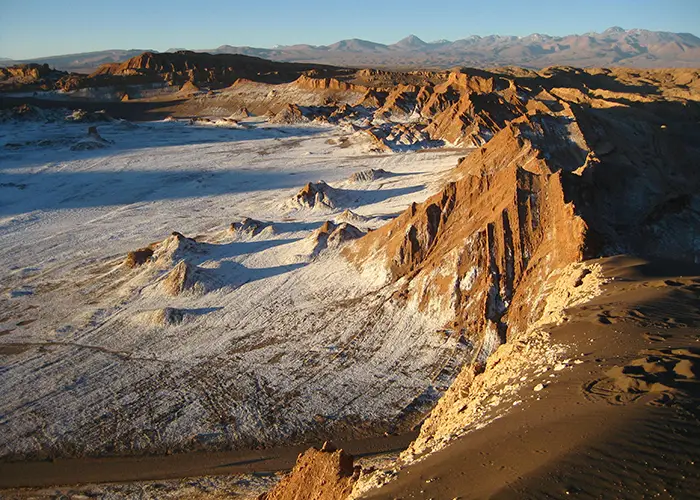
The north: silence and clarity in the Atacama Desert
Winter in northern Chile offers something rare: stability. The Atacama does not shut down with the seasons. It sharpens. Temperatures drop, skies become clearer, and the desert’s defining feature, its silence, becomes more pronounced.
For travelers, this translates into conditions that are often better suited for exploration than peak summer months. Stargazing reaches another level. High-altitude lagoons are less crowded. The early morning cold at geyser fields like El Tatio adds a sense of scale that is difficult to replicate elsewhere.
Reaching the Atacama, however, is not always straightforward. Commercial routes typically require connections, overnight considerations, or rigid schedules that limit flexibility. Private aviation changes that equation. A direct routing into Calama allows travelers to align their arrival with the experience itself, whether that means catching first light in the desert or maximizing limited time in the region.
In this context, luxury is not defined by accommodation alone. It is defined by continuity. The ability to move from one environment to another without losing time in transit.
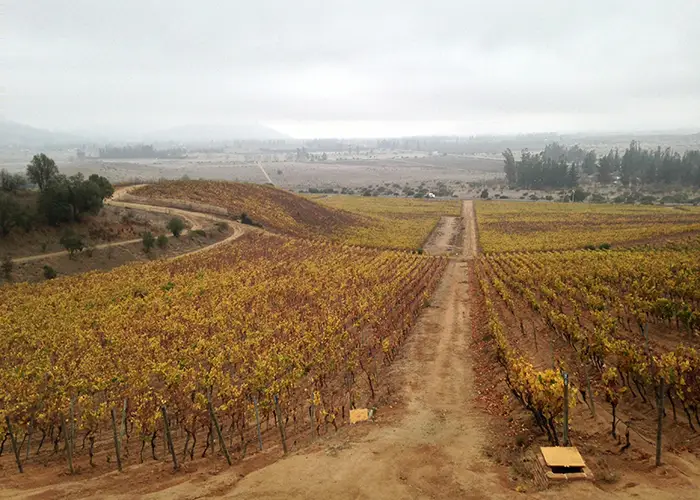
Santiago and the vineyards: proximity that is often overlooked
Central Chile in winter operates at a different rhythm. Santiago becomes a base rather than a destination in itself. Snow appears on the Andes, visible from the city, while the valleys just beyond continue to produce and host.
The wine regions, including Colchagua Valley and Casablanca Valley, are often associated with harvest season. But winter offers a more introspective version of the same experience. Fewer visitors, slower tastings, more direct access to winemakers.
What stands out is how close these elements are, geographically. Within a relatively short radius, it is possible to move from a morning in the mountains to an afternoon in a vineyard. Yet even here, time becomes the limiting factor. Traffic, road transfers, and scheduling constraints can compress what should feel like a fluid experience.
Private aviation, including short turboprop sectors, allows for a different structure. It becomes possible to treat these regions as part of a continuous itinerary rather than isolated stops. A morning departure from Santiago can turn into a multi-stop day across central Chile, without the friction of ground logistics dictating the pace.
In this part of the country, the role of helicopters becomes equally relevant. High-end VIP, twin-engine helicopters provide the highest level of safety available in this category, while also offering direct access to vineyards and nearby ski resorts that would otherwise require extended ground transfers. This adds another layer of flexibility, particularly when time is limited or when weather conditions in the mountains require more precise planning.

Easter Island: distance as part of the experience
Easter Island sits over 3,500 kilometers from mainland Chile. It is not a natural extension of a traditional itinerary, and that is precisely what makes it relevant in a discussion about access.
In winter, the island offers a quieter atmosphere. Visitor numbers are lower, and the landscape, defined by its volcanic terrain and the presence of the moai statues, feels more open and less structured by tourism flows. The experience becomes less about moving between sites and more about understanding the isolation that defines the island itself.
From an operational standpoint, reaching Easter Island is typically tied to fixed commercial schedules from Santiago. That structure limits flexibility, particularly for travelers trying to integrate the island into a broader, multi-destination journey across Chile.
Private aviation changes that dynamic. A direct flight from Santiago allows Easter Island to be incorporated into a wider itinerary that may already include the Atacama or Patagonia. What would otherwise require separate planning blocks can become part of a continuous journey.
Here, luxury is not about exclusivity. It is about reach. The ability to include one of the most remote inhabited islands in the world within a structured travel window across the country.

Patagonia: where distance defines the experience
If northern Chile is defined by stillness, southern Chile is defined by scale. Patagonia in winter is not an easy destination, and that is precisely its appeal. Weather is less predictable. Daylight is shorter. The environment is more exposed.
Within this region, Torres del Paine National Park stands out as one of the most recognizable landscapes in South America. In winter, it becomes something else entirely. Snow reshapes the terrain. Visitor numbers drop significantly. The same trails and viewpoints that see heavy foot traffic in summer become quiet, almost isolated.
Access remains the defining challenge. Reaching Patagonia from Santiago on commercial schedules often requires multiple steps, fixed timings, and limited flexibility once on the ground. Weather disruptions can compound this.
Private aviation does not remove the complexity, but it allows for better management of it. Direct flights into southern gateways, the ability to adjust departure times, and the option to combine aircraft types depending on runway conditions all contribute to a more controlled experience.
Turboprops play a central role in this environment due to their ability to operate into shorter and less-developed runways. At the same time, certain jet aircraft are also capable of accessing these shorter strips, expanding the range of options without compromising on speed or comfort. This flexibility becomes particularly relevant in Patagonia, where infrastructure varies significantly from one location to another.
The experience itself can extend beyond the flight. High-end lodges located near remote airstrips allow travelers to move, within a matter of hours, from a city like Santiago into isolated landscapes defined by native forests, rivers, and open terrain. Activities such as fly fishing or guided exploration become part of a broader transition, where the journey itself is as deliberate as the destination.

Connecting the extremes: a country that does not behave like one
Chile is often described as a long and narrow country. That description, while accurate, does not fully capture the operational reality of moving across it. Distances are significant. Infrastructure varies. Weather systems are not synchronized.
What makes winter travel in Chile compelling is the contrast. A traveler can move from one of the driest places on earth to one of the most remote islands in the Pacific, and then to one of the most dynamic weather systems in the southern hemisphere, within a matter of hours. But only if the itinerary allows for it.
Private aviation enables that connection. Not by replacing destinations, but by linking them in a way that preserves their individual character. A multi-region itinerary becomes viable within a defined timeframe. The desert, the city, the vineyards, Easter Island, and Patagonia can exist within the same journey without feeling rushed or fragmented.
The role of aircraft choice
One of the more practical aspects often overlooked in discussions about private aviation is aircraft selection. Not every destination in Chile requires or benefits from the same type of aircraft.
Jets provide speed and range, particularly for longer sectors such as Santiago to northern Chile or the extended routing to Easter Island. Turboprops, on the other hand, offer access. They are better suited for shorter runways, regional airports, and destinations where infrastructure is more limited.
For an operator like Aerocardal, the ability to deploy both types of aircraft is less about offering variety and more about matching the aircraft to the mission. In a country with as much geographic variation as Chile, that distinction becomes important.
The objective is not to standardize the experience, but to adapt it. Each leg of a journey may require a different operational approach, and the aircraft becomes part of that planning process.
Rethinking luxury through access and timing
Luxury travel is often framed around accommodation, service, and exclusivity. Those elements remain relevant, but in destinations like Chile, they are only part of the equation.
What defines the experience more clearly is access. The ability to reach a place at the right time, under the right conditions, without unnecessary friction. Timing becomes as important as location.
Winter amplifies this. Conditions are more dynamic. Opportunities are more specific. Missing a weather window in Patagonia or arriving too late for a desert sunrise changes the experience in a way that cannot be adjusted once on the ground.
Private aviation addresses that gap. It aligns travel with the environment rather than forcing the environment to fit within a fixed schedule.
A different perspective on Chile
Chile does not present itself all at once. It reveals itself in segments, each with its own rhythm and constraints. Winter brings those differences into sharper focus.
For travelers willing to move beyond conventional itineraries, the country offers a sequence of experiences that do not naturally connect through traditional travel structures. The Atacama Desert, Santiago and its surrounding valleys, Easter Island, and Patagonia are not variations of the same theme. They are distinct environments that require different approaches.
Private aviation provides a way to bridge them. Not as an end in itself, but as a tool that makes a more complete version of Chile accessible within a single journey.
In that sense, luxury is not about adding more. It is about removing constraints.
About Aerocardal:
Aerocardal is a leader in air ambulance, charter, MRO, and cargo services in South America. Based in Chile, the company has made a difference by providing outstanding aviation solutions to various industries. Focusing on safety, reliability, and innovation, Aerocardal is constantly pioneering the industry through versatile air transport services that prioritize efficiency.