Travel is often framed as freedom—new places, open skies, and a break from routine. But while travelers carefully plan flights, itineraries, and outfits, one essential item is often overlooked: eyewear.
And what’s more concerning is, it’s one of the easiest things to fail during a trip.
For something so central to daily life, glasses are surprisingly vulnerable when traveling. Whether it’s a weekend beach trip or a long-haul journey, a single pair is often expected to withstand conditions far harsher than everyday use. In reality, that expectation is rarely realistic.
The Hidden Stress Your Glasses Go Through While Traveling
Unlike many essentials, eyewear has no real protective ecosystem. A phone can be charged anywhere. Clothing can be washed or replaced. But glasses sit directly on your face, are constantly removed, placed on unknown surfaces, and stored in bags under unpredictable pressure.
And travel, quietly, amplifies these risks.
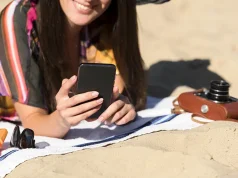
Even a short walk along the coastline can leave micro-scratches on lenses, gradually reducing their clarity. Beach environments are filled with fine sand particles that are nearly impossible to avoid, making contact almost inevitable. In addition, salt in the sea breeze can slowly erode lens surfaces over time. After swimming in the Caribbean, travelers often find their frames loosened, their lenses fogged up, or even notice serious scratches caused by sand trapped between the lenses and a towel when adjusting their glasses.
Beyond beach destinations, urban travel brings its own set of challenges: constant packing and unpacking, crowded public transportation, and moving between hotels. Glasses are also more likely to be misplaced in unfamiliar environments—left behind in rental accommodations, taxis, or other transient spaces. For example, in the crowded airport terminal in Ibiza, while grabbing luggage or squeezing through busy security lines, it’s easy to accidentally bend frames or even drop your glasses on the floor.
Individually, these risks may seem minor. But in reality, they combine to form a continuous wear cycle that most travelers rarely notice until performance has already declined.
Why One Pair of Glasses Isn’t Enough While Traveling
Most people travel with a single pair of glasses simply out of habit. They choose their most comfortable or stylish frame and assume careful handling is enough. But travel rarely rewards caution alone.
A bag gets dropped at airport security. A lens gets scratched during a rushed cleaning. A frame bends inside a tightly packed suitcase. Or a pair is simply lost in transit. These are not rare accidents—they are predictable outcomes of real travel behavior.
The problem is that most travelers only realize this vulnerability after something goes wrong. The result is immediate: reduced vision clarity, difficulty navigating unfamiliar places, and the urgent need to find a replacement in an inconvenient setting.
This is where the practical value of a second pair becomes clear. A backup is not about redundancy or luxury—it is about risk separation and continuity. It allows travelers to distribute usage across different environments: one pair for high-risk situations such as beaches, outdoor activities, or long transit, and another for more controlled settings like dinners, meetings, or indoor use.
Ultimately, this isn’t about carrying more—it’s about ensuring your ability to see clearly is never compromised. For frequent travelers or those spending extended time outdoors, vision is not something that can be paused or easily replaced. When it fails, the entire travel experience becomes significantly harder.
Modern Travel Demands More from Eyewear and Makes a Backup Pair Essential
For years, travel essentials have prioritized portability and convenience—light luggage, compact skincare, and multifunctional devices. Eyewear, however, has often been treated as a static item: something you simply wear, rather than something you actively plan for within your travel setup.
Modern travel has changed this dynamic. People now move frequently between diverse environments such as beaches, cities, coworking spaces, flights, and outdoor settings within a single trip. Each of these places places different demands on eyewear, from UV exposure and saltwater to scratches and constant handling. As a result, eyewear is increasingly viewed as part of a functional travel system that must adapt to changing conditions.
This shift is driving a more performance-focused mindset, where travelers prioritize durability, clarity, and protection over style alone. In this context, brands like EYDOLOGY reflect this evolution by emphasizing high-quality materials, scratch-resistant lens technology, and UV protection designed for varied environments. In addition to UV protection, photochromic (light-adjusting) lenses further extend this functionality by automatically adapting to changing light conditions—darkening under strong sunlight and clearing in lower-light or indoor environments.
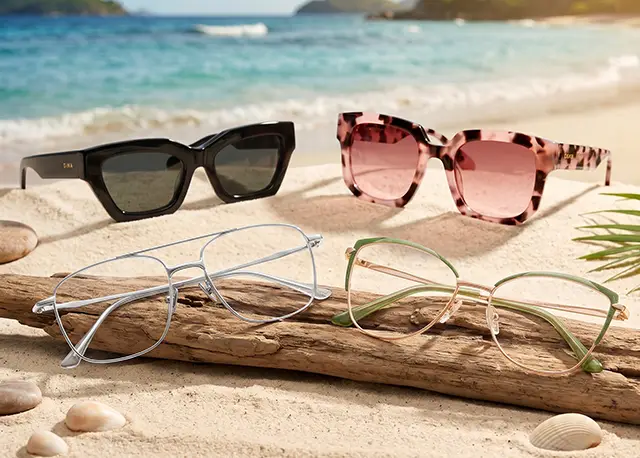
For travel scenarios such as beach trips, photochromic lenses provide consistent visual comfort and protection throughout the day, whether under direct sun, by the water, or moving between indoor and outdoor spaces. This adaptability makes them especially practical in environments where lighting conditions shift frequently. Eyewear is becoming travel equipment rather than just personal style, and within this framework, a backup pair is no longer optional but part of a deliberate travel strategy that ensures continuous clarity and reliability,especially when designed with lightweight materials for all-day comfort.
A Smarter Way to Travel

The solution is simple but requires a mindset shift: packing a second pair of glasses. This small change makes travel more resilient by adding flexibility, reducing stress, and ensuring your vision—essential to fully experiencing any destination—remains reliable no matter what happens.
Travel is always unpredictable, with delays, weather changes, and shifting plans, but clear sight shouldn’t be part of that uncertainty. A backup pair isn’t about expecting problems, but about preventing them from defining your trip, allowing you to move through the world with confidence and clarity.
For travelers who prioritize durability and consistent visual performance across changing environments, options like EYDOLOGY reflect this approach in practice.