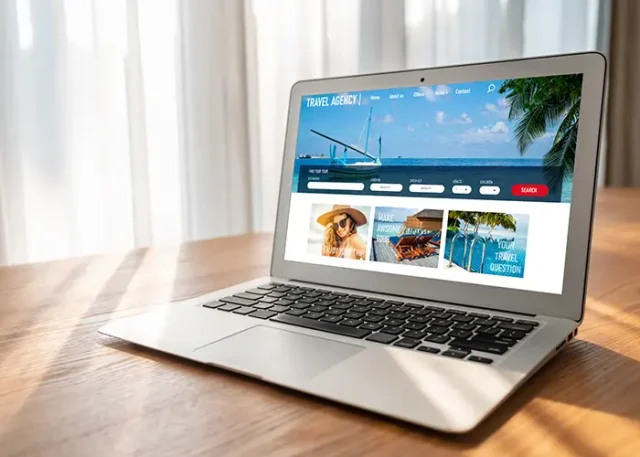
The tourism industry is constantly growing and evolving. That is precisely because there is always demand for services related to travel and trip planning. In other words, people will always need some rest and assistance organizing their trips.
Here is where tourism agencies kick in. With this in mind, businesses in the travel industry seem to have no time for rest. On the other hand, however, huge demand brings fierce competition within businesses in this niche.
And one of the crucial ways to stand out and attract potential clients is by having a professional website. If you are now on your way to crafting one, then this publication is definitely what you need.
Let’s dive in and explore how you can launch a travel platform and drive traffic without breaking the bank.
How to Launch a Travel Website on a Budget
Decades ago, creating a website may have turned into an uphill battle. It was complex, time-consuming, and could cost you quite a fortune. Today, however, you can do it on your own without even basic coding skills. Let’s show you exactly how to hit the spot.
Pick an Affordable Website Builder
As we have already mentioned, building a website no longer requires coding skills. So, how can you sort things out? Simply by employing website builders. Fortunately, today there is no shortage of such platforms. Take WordPress, for example. Plenty of businesses, regardless of their size and niche, utilize it to create solid and professional websites.
The next thing making WordPress a real gem for website creation is its drag-and-drop features, which make the whole building process pretty simple. Plus, there is no lack of themes WordPress offers. Most simply, they can be easily adjusted to perfectly fit your brand’s style. Last but not least, you may use WordPress plugins to add different features, from payment to booking, to your website.
Overall, it’s pretty safe to say that there is no shortage of cost-effective plugins and tools to enrich your website’s functionality. For example, you may use open-source invoice templates to accurately manage customer payments.
Opt for Low-Cost Hosting
After creating your website, you will require a hosting platform. There are many options out there on the market to choose from, all depending on your budget and main goals. But for a traveling business that is in its early stages, opting for cheap shared hosting can be a smart choice.
Think of it like a room that you could share with your other teammates while at university. It is pretty cost-effective since you would not have to handle all the rent alone. The same is true for shared hosting — they are pretty simple to set up and cost-effective. This makes shared hosting ideal for small businesses and startups.
Employ User-Friendly Design
It will sound trivial, but design your website with the end users in mind. Visitors should not get lost on your website, so make it simple to navigate. Ensure you have a solid homepage that includes all the crucial subpages like “About Us,” “Contact,” etc.
Also, it is worth including some buttons that will take visitors to your brand’s social media pages. You can also include a booking button, thus simplifying the customer journey.
Make it Mobile-Friendly
Yes, we know, just like the previous one, this step also looks pretty obvious. But we want to highly emphasize the importance of your mobile friendliness even more. You see, many startups think that it is enough to go with the web version first, and then, upon time, they will move to mobile. The truth is that a heavy share of your potential customers will prefer reaching out to you on the go.
Potential customers won’t waste time interacting with a solution poorly optimized for mobile, especially when competitors already provide smoother and more convenient mobile experiences.
Tips on How to Promote Your Travel Website with Low-Budget
Once you successfully design and launch your travel website, you may think that you are out of the woods. Frankly speaking, you are not. It is just the beginning — now you need to promote your website. There are plenty of strategies to drive traffic to your platform, but we decided to shortlist those that are more efficient and cost-effective.
- Optimize for SEO: While understanding the importance of SEO, many startups avoid employing it, thinking it is costly. Well, actually, SEO services are not the cheapest option, but there is no need to employ a full package of SEO services. You can opt for link-building services first. This will help you optimize your website content and drive relevant traffic. After all, outsourcing only one service will not cost you a pretty penny.
- Offer Referral Programs: Word-of-mouth advertising is a proven tactic to promote your services and engage new customers. Plus, given that referral programs typically include perks for both referrers and referees, there are high chances of repeat purchases. You may create, run, and monitor your referral programs with tools like ReferralCandy or Referral Rock. It will take all the burden of the referral program off your shoulders by automating the entire process and assisting in simplifying the tracking of your campaign performance.
- Employ Social Media Marketing: Have you ever wondered where your potential customers spend most of their time online? Yes, exactly — social media. You can use ads to reach relevant people, create engaging travel-related content, and share information about your services, while, of course, linking to your website. This will definitely drive relevant traffic to your platform.
Final Thoughts
Now you are one step closer to designing and launching a truly professional and competitive traveling website. The main thing is to define the core tools you are going to utilize for your website creation and follow the advice we gave you about its core design and functionality. Also, employ the steps we suggested to promote your platform’s visibility without breaking the bank. This will help you drive relevant traffic and maintain a successful business.