Planning a trip along the Croatian coast requires deciding how to get around. With over a thousand islands, narrow straits, and shallow ports, the size of your ship determines exactly what you can see and how much time you actually spend on land. Here is a practical look at the differences between standard large cruisers and small ships in the Adriatic.
Docking and Going Ashore
Standard cruise liners carry thousands of passengers and require deep water. Because historic ports like Trogir, Korčula, and Hvar have shallow stone piers, large liners must drop anchor miles offshore. Passengers then have to wait in line for tender boats to ferry them to the mainland.
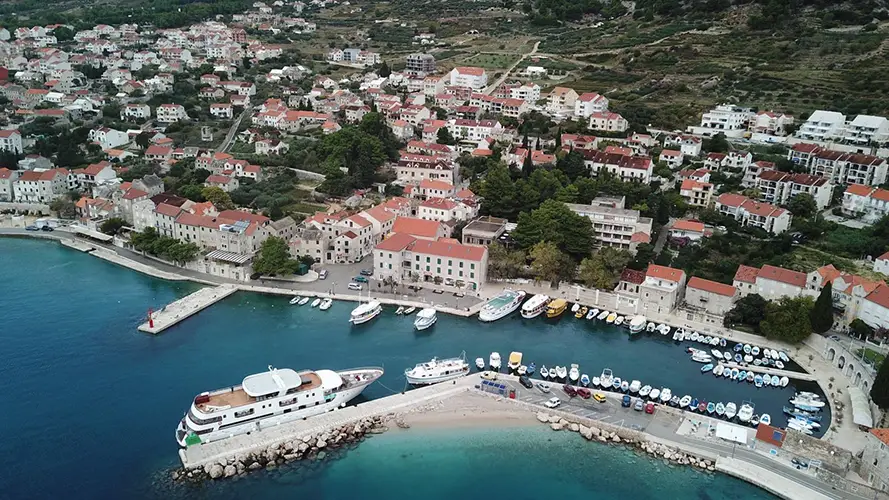
Small ships, accommodating anywhere from intimate vessels for 40 guests to boutique yachts for up to 250 guests, bypass this process completely. They are built to dock directly in historic ports. When the ship arrives, passengers simply walk down the gangway straight into the town centers, saving hours of transit time. When packing for these port visits, keep it practical: comfortable walking shoes are essential for navigating the historic cobblestone streets immediately off the pier.
Access to Hidden Bays
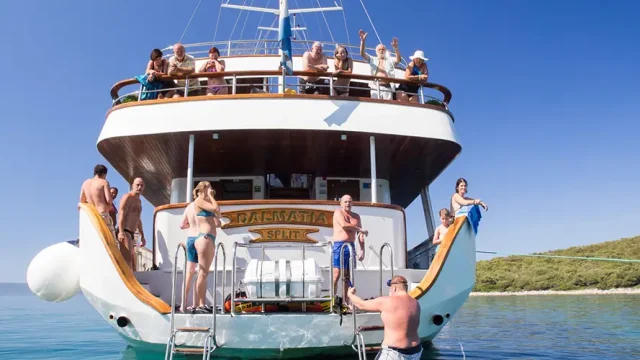
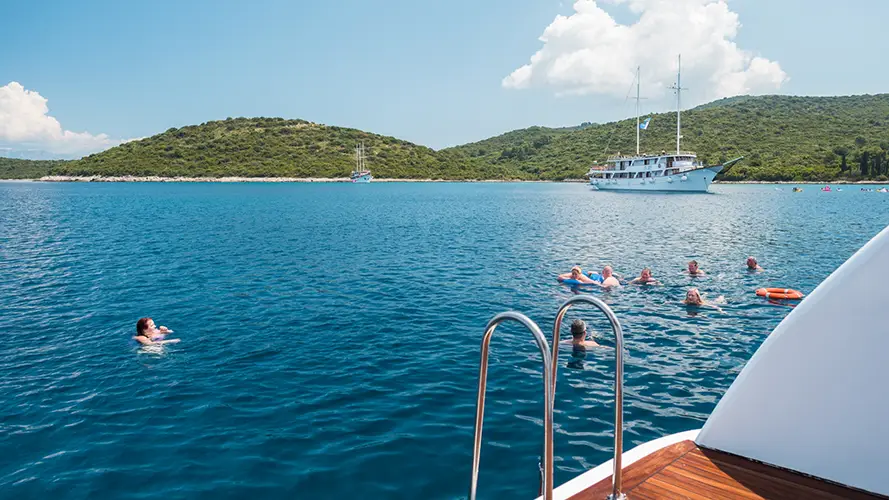
The maneuverability of smaller vessels provides another practical advantage: access to secluded areas. While large ships must stick to deep maritime corridors, small ships can navigate safely between smaller islands. This allows captains to schedule daily swim stops in hidden bays, dropping anchor in spots where larger vessels are strictly restricted from entering. While it is true that large liners provide onboard swimming pools to compensate for this, diving straight off the back of a ship into a quiet, natural bay that is often inaccessible by road offers a fundamentally different and more authentic Mediterranean experience. Bringing a diving mask is highly recommended to make the most of these stops.
Daily Schedule and Dining
The daily routine on a small ship also differs significantly from that of a large liner. Instead of an all-inclusive model that keeps passengers on board for all meals, most cruises operate on a half-board basis. While there are exceptions, such as certain premium vessels like Star Clipper or Windstar that offer full board dining, these are in the minority. The crew serves breakfast and a 3 course lunch daily. Because the ship remains docked in the port overnight, the schedule allows you to explore local restaurants in Split, Dubrovnik, and the islands for dinner. You are not forced to rush back to the ship at 6 PM for an assigned dinner seating. Furthermore, because the ship stays moored at the pier until morning, you are free to enjoy the local nightlife and return to your cabin at any hour, putting the evening schedule entirely in your hands.
A practical insider tip regarding this schedule: Since captains often fire up the engines before dawn to reposition the vessel for the following day’s destination, packing a pair of earplugs is a smart move for anyone who sleeps lightly.
Ship Categories and Atmosphere
Because these ships accommodate a limited number of guests (typically around 30 to 40 individuals on traditional itineraries), the environment is far more interactive than on a massive cruise liner. By the middle of the week, particularly following social gatherings like the Captains Dinner, the group dynamics become highly familiar and friendly.
The local fleet is structured into distinct classes based on size and onboard amenities. Standard and Standard Superior vessels measure between 29 and 41 meters and deliver a classic maritime experience alongside updated, climate-controlled cabins. For those seeking top-tier comfort, Deluxe and Deluxe Superior vessels can stretch up to 47 meters in length. These modern builds offer much larger sleeping quarters, up to 17 square meters, and feature premium upper decks equipped with jacuzzis and generous relaxation zones.
Finding the Right Route
Selecting the ideal vessel is the most critical step for anyone planning to explore the Adriatic. Travelers planning their itinerary can review a comprehensive catalog of Croatia small-ship cruises, providing a straightforward way to compare routes, ship sizes, and departure hubs for an upcoming trip.