

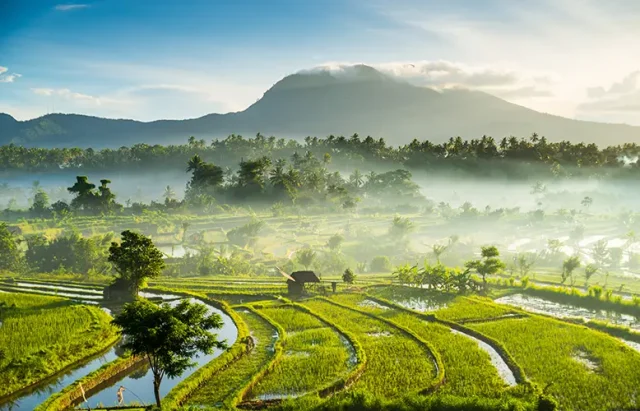
Bali’s best-known places earn their popularity. Uluwatu’s clifftop temple, Ubud’s galleries, Seminyak’s restaurants and the beaches of the Bukit Peninsula can all be memorable parts of a trip. But when an itinerary becomes a race between viral photo locations, it is easy to miss the rhythms that give the island its character.
The answer is not to search for a supposedly “real Bali” hidden beyond the reach of other travelers. Bali is not divided into authentic villages and inauthentic resort towns. It is a living island where ceremony, farming, art, hospitality and modern tourism exist side by side.
To experience Bali more meaningfully, slow down. Stay longer in fewer places. Leave room for conversations, meals and unexpected processions. Choose locally rooted guides and businesses, learn what you are looking at and remember that rice terraces, temples and villages are not simply backdrops for photographs.
Begin by Changing the Pace
Distances on a map can be deceptive in Bali. Traffic, narrow roads and religious processions can turn a short journey into a much longer one. Building an itinerary around multiple day trips from the south often means spending more time in a vehicle than in the places you came to see.
A better approach is to choose two or three bases in different parts of the island. Combine a few days near the coast with time in an inland valley, northern highland or eastern village. An overnight stay makes it possible to experience a place after day-trippers leave and before tour vehicles arrive the following morning.
Ubud can still be a useful introduction, especially for first-time visitors, but its busy center is only one part of central Bali. Stay outside the core or use it as a starting point before continuing toward Sidemen, Munduk, Jatiluwih or Pemuteran.
Walk Through the Working Landscapes of Jatiluwih
Jatiluwih is often described as one of Bali’s most beautiful rice-terrace destinations, but its importance goes well beyond scenery. It forms part of the UNESCO-listed Cultural Landscape of Bali Province, which recognizes the island’s subak system of cooperative water management.
Dating back centuries, the system connects irrigation, agriculture, temples and the Balinese philosophy of Tri Hita Karana—harmony among people, nature and the spiritual world.
Visitors can follow marked walking and cycling routes through the terraces, stopping at small restaurants and viewpoints along the way. Early morning and late afternoon generally bring cooler temperatures and softer light.
Whatever the hour, remember that the paddies are working farmland. Stay on designated paths, do not enter planted fields and avoid blocking farmers while taking photographs.
Rather than making Jatiluwih a hurried photo stop, give it half a day. A local guide can explain how water is shared, how planting cycles work and why the temples are integral to the landscape. That context transforms a beautiful view into an encounter with one of Bali’s most important cultural systems.
Spend a Few Days in Sidemen
Sidemen, in eastern Bali’s Karangasem Regency, offers broad views of rice fields, river valleys and, when the weather is clear, Mount Agung. Tourism has grown here, but the area retains a gentler pace than Bali’s southern resort belt.
The pleasure of Sidemen is not a long list of major sights. It is waking to the sound of village life, walking between fields with a local guide, watching artisans work at handlooms and lingering over a meal prepared with ingredients grown nearby.
Some accommodations can arrange cooking lessons, weaving demonstrations or guided treks, but it is worth asking who leads the experience and how the community benefits.
Stay at least two nights. One day can be devoted to the valley itself, while another might include a carefully planned visit to a nearby temple, water palace or artisan village. Avoid trying to combine eastern Bali with several distant attractions in a single day; the slower schedule is the point.
Explore the Cooler Highlands Around Munduk
In northern Bali, Munduk trades coastal heat for misty hills, clove and coffee gardens, waterfalls and forested views. Footpaths connect several waterfalls near the village, and local guides can lead longer walks through plantations and rural landscapes.
Nearby Lake Tamblingan and Lake Buyan offer another side of the highlands. The forests around the lakes are well suited to guided walks, while traditional canoe trips can provide a quiet way to experience the water.
Conditions can be wet and trails slippery even outside the rainiest months, so sturdy footwear is more useful here than resort sandals.
Munduk rewards travelers who spend the night. Mornings can be cool and quiet, and cloud drifting through the hills is part of the atmosphere rather than a reason to rush elsewhere.
Meet Living Traditions in East Bali
Tenganan Pegringsingan is one of Bali’s best-known Bali Aga communities and is especially associated with gringsing, a rare double-ikat textile produced through an exceptionally time-consuming process.
A visit can offer insight into weaving, architecture and community traditions, provided travelers approach the village as someone’s home rather than an open-air museum.
Ask before photographing residents, ceremonies or the interiors of family compounds. If an artisan explains their work, take time to listen. Buying directly from a maker can be a more meaningful souvenir than purchasing a mass-produced imitation elsewhere, but avoid aggressive bargaining over work that may have taken months or even years to complete.
The same principles apply throughout Bali. Cultural tourism is most valuable when it supports the people maintaining the traditions, not when it turns daily life into a performance for visitors.
Make Time for Bali’s Northwest Coast
Pemuteran feels markedly different from the densely developed beach towns of southern Bali. The northwest coast is known for snorkeling and diving, community-linked marine conservation and access to the waters around Menjangan Island and West Bali National Park.
Choose an established dive or snorkeling operator that follows park rules, uses moorings instead of dropping anchors on coral and provides clear guidance about marine life. Never stand on coral or pursue animals for photographs.
Travelers who want to contribute more can ask about locally managed reef-restoration or beach-cleanup programs, but should look for projects with transparent, long-term community involvement.
Pemuteran is several hours by road from southern Bali, depending on traffic and the route, which makes it a poor candidate for a rushed day trip. Two or three nights allow time for the sea, the national park and the long scenic journey itself.
Let Food Lead You Beyond the Familiar
Bali’s dining scene ranges from ambitious tasting menus to family-run warungs. Both belong in a good trip, but small local restaurants often provide the most direct introduction to everyday flavors.
Look for dishes such as nasi campur, a plate of rice with several accompaniments; lawar, a seasoned mixture commonly made with vegetables, coconut and spices; sate lilit, minced meat or fish wrapped around a skewer; and ayam or bebek betutu, poultry slowly cooked with an aromatic spice paste.
Some preparations contain pork, shrimp paste or other ingredients that may not be obvious, so travelers with allergies or dietary restrictions should ask clearly.
A market visit or cooking class can add useful context, especially when it is led by a local cook and includes an explanation of ingredients rather than simply a recipe. Choose small-group experiences when possible and confirm whether the market visit is part of daily commerce or a staged stop.
Understand Temple and Ceremony Etiquette
Religion is visible everywhere in Bali, from major temple complexes to daily offerings placed outside homes and businesses. Visitors are often welcome at temple grounds and public ceremonies, but welcome should never be mistaken for unrestricted access.
Wear clothing that covers the shoulders and knees and use a sarong and sash where required. Follow posted rules and the directions of temple attendants. Do not climb on shrines, stand above worshippers, interrupt a procession or pose disrespectfully with sacred objects. Never step on the small offerings placed on sidewalks and at entrances.
Photography is not automatically appropriate simply because an event is taking place in public. Watch how local participants behave, ask permission when people are identifiable and put the camera away when the moment calls for it.
Bali’s provincial guidance for international visitors specifically asks travelers to respect local culture, dress appropriately and avoid disrespectful photographs at religious sites.
Spend in Ways That Benefit the Place
Meaningful travel is shaped as much by spending choices as by sightseeing. Consider locally owned guesthouses, independent restaurants, community guides, craft cooperatives and responsible tour operators.
Ask hotels how they manage water and waste, whether they employ locally and how they work with surrounding communities.
Avoid wildlife attractions that rely on forced handling, performances or close-contact photo opportunities. Carry a refillable bottle where safe refill stations are available, decline unnecessary single-use plastics and dispose of waste carefully.
Water is a limited resource in parts of Bali, so shorter showers and responsible laundry use matter, particularly during the dry season.
You do not need to reject comfort or luxury to travel responsibly. The aim is to choose businesses that treat local culture and nature as relationships to sustain, rather than themes to package.
A More Thoughtful Bali Itinerary
For a trip of 10 to 12 days, consider dividing your time among three areas:
- Central Bali: Spend three nights in or outside Ubud, leaving time for art, food and an early visit to a temple or rice-growing area.
- East or north Bali: Stay three nights in Sidemen or Munduk for guided walks, village landscapes and a slower daily rhythm.
- The coast: Finish with three or four nights in Pemuteran, Sanur, Jimbaran or another coastal base suited to your interests.
The locations matter less than the pacing. Three well-chosen bases will usually reveal more than six hurried hotel changes.
Practical Tips Before You Go
Bali has a tropical climate. The dry season generally runs from April through October, while November through March is wetter, although seasonal patterns are increasingly variable. The greener months can be rewarding, but allow flexibility for rain and sea conditions.
For longer journeys, hiring a licensed local driver is often the simplest option. Travelers should only rent scooters if they are experienced, properly licensed for Indonesia and covered by insurance. Helmets are essential, and roads can be congested, poorly lit or unexpectedly challenging.
International visitors are currently required to pay Bali’s tourism levy of IDR 150,000 per person. Use the official Love Bali website rather than an unofficial intermediary.
Visa and arrival requirements depend on nationality and can change, so check Indonesia’s official immigration portal before departure.
Travelers planning a multigenerational trip may also find DRIFT’s family travel guide to Bali useful. Those considering a private rental can review these things to know before renting a villa in Bali.
Bali Is More Than a Checklist
The most rewarding experiences in Bali are not necessarily secret. They may happen in a place thousands of other travelers have visited: a temple courtyard, a rice terrace, a roadside restaurant or a village workshop. What changes the experience is the attention you bring to it.
Stay longer. Ask questions. Learn the meaning behind the landscape. Pay fairly. Observe before photographing. When travelers make room for Bali to be a living place rather than a collection of attractions, the island becomes far more memorable.