
By Rachid Hochlef, Head of Flight Operations, Centrale de Vols Ambulance
France has remained a favorite destination of American tourists throughout the years. Millions of visitors are annually attracted to the French capital, museums, historical landmarks, cafes, and the beautiful vineyards and sunny beaches of the South of France, as well as the villages of Provence.
In 2025, France was still the leader in welcoming international visitors. Around 102 million foreign tourists visited the country, and France kept its title of the world’s most visited destination. American travelers have become a vital part of this statistic, as almost five million visitors came from the USA that year.
An important fact is that a significant part of these tourists are retired people or older adults who travel for extended periods of time around Europe rather than just visiting one destination. Although most trips go well, older age increases the risk of a medical issue while traveling due to various factors, including an unexpected illness, an acute episode of a pre-existing medical condition, or even an accident.
A medical emergency is definitely not something travelers expect when they pack their suitcases. However, being aware of how the medical assistance system works in France before leaving the USA can be useful in case of an emergency.
Medical care in France is generally of a high standard. However, there are many differences from the American system that travelers need to consider to avoid complications and delays.
These include the payment system, insurance, medical transportation, and repatriation.
Preparing for a trip to a new country is not about assuming that something might happen. The main goal is to be ready to respond optimally in case the unforeseen occurs.
France has a great medical system, but it works differently
The first thing travelers need to understand is that the French healthcare system is well-developed. There are many internationally recognized hospitals in major cities such as Paris, Lyon, Marseille, Nice, and Toulouse.
In many cases, patients get excellent medical care and are impressed by the level of treatment and low prices. The problem is that the system operates quite differently from what American travelers are used to.
Hospitals and clinics may request payment for a guarantee, insurance verification, or administrative documents. Communicating with medical professionals in France may become quite challenging if you leave the tourist areas where people speak English.
It is even harder to deal with all these procedures when the traveler has an existing medical condition or chronic illness that requires constant management and monitoring.
Being aware of how your travel insurance company, assistance company, and healthcare providers collaborate before going abroad may be very helpful in the event of medical treatment.
Travel insurance deserves extra attention from travelers
Travel insurance is usually purchased shortly before departure, and travelers expect it to cover all potential scenarios of medical help abroad. However, it is not always true.
One of the most important aspects for American citizens is that Medicare does not cover medical treatment received outside the country. Therefore, it is especially important for older travelers to have medical insurance.
Older travelers might also suffer from existing health conditions before boarding. According to the CDC, six out of ten American adults have at least one chronic disease. Four in ten people suffer from two or more diseases, such as heart disease, diabetes, respiratory disease, or mobility issues, that don’t prevent them from traveling, but make it important to know what medical help and insurance coverage you will have in another country.
Different travel insurance policies offer different levels of medical support. Emergency medical help is usually included in all plans.
The level of medical transportation may vary greatly. Some policies provide transportation under certain circumstances. Some of them require prior approval for arranging transportation.
Pre-existing medical conditions also deserve extra attention. Different policies have different policies towards them. Sometimes they are excluded. Other times, travelers are obliged to mention their existence.
Many people focus on the cost of medical treatment while overlooking the potentially significant costs associated with medical transportation. Depending on the patient’s condition, specialized medical flights can involve dedicated medical teams, medical equipment, coordination between hospitals, and complex international logistics.
International medical evacuations can range from tens of thousands of dollars to well over $100,000, with some long-distance air ambulance missions costing considerably more. Therefore, understanding what is covered before leaving home is often far easier than trying to clarify coverage during an emergency overseas.
Medical emergencies abroad often involve much more than healthcare
When people imagine the process of being admitted to a hospital in another country, they usually think about doctors. However, the majority of medical cases that require assistance from international medical organizations involve far more.
Family members should contact the hospital and insurance company, adjust their travel plans, find alternative accommodation for the patient, and make other decisions.
Language barriers may complicate the situation even more. Relatives of the patient usually try to understand the situation that unfolds thousands of miles away, gathering information from various sources.
That is why international air medical providers have become a very important element in such cases. They help communicate with all stakeholders and ensure that all medical decisions and transportation are made in accordance with the patient’s condition.
Understanding the different types of medical transportation
Medical transportation is not a one-size-fits-all service. Several options may be available depending on the patient’s condition.
For patients requiring minimal assistance, commercial airline travel may remain possible. In some situations, a medical escort such as a nurse or physician can accompany the traveler during the flight.
Patients requiring more comprehensive medical monitoring may travel using stretcher arrangements on commercial aircraft, where available and medically appropriate.
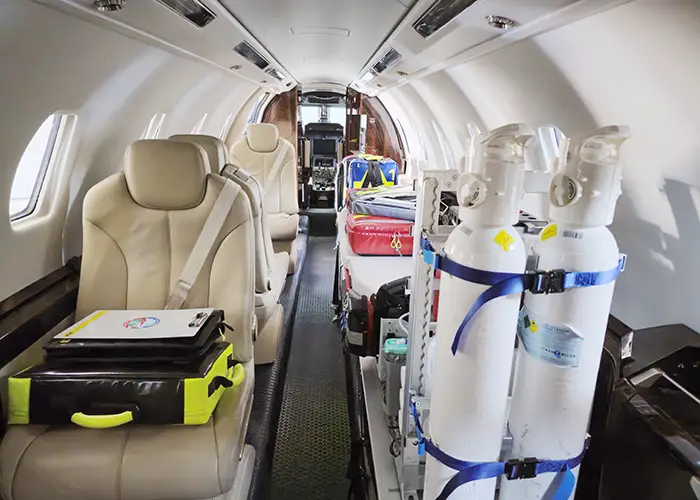
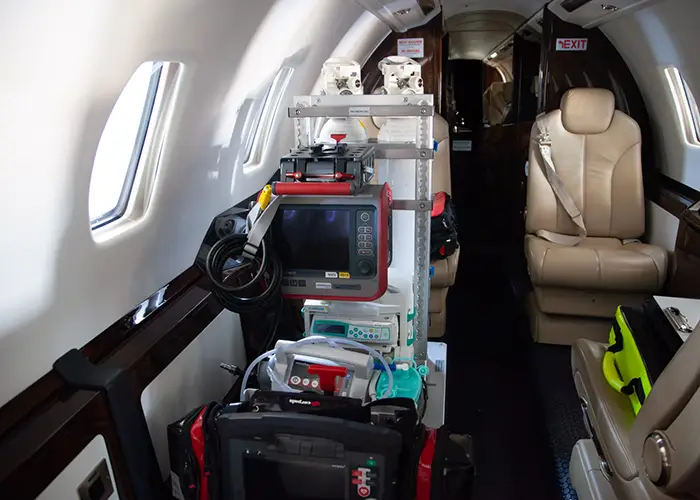
More serious cases may require a dedicated ambulance aircraft equipped with specialized medical equipment and staffed by experienced medical professionals. These aircraft function as intensive care environments in the air and can transport critically ill patients between countries while maintaining continuity of care.
The appropriate solution is determined by medical necessity rather than convenience. The goal is always to select the safest mode of transport while ensuring the patient’s condition remains stable throughout the journey.
Preparation is crucial with age
Although many older travelers are active, healthy, and independent, older age increases the risk of a medical issue during a trip.
Preparation doesn’t have to be complex. Having an updated medication list, writing down all existing conditions, and informing relatives about the location of all necessary information can be very useful.
People can also take copies of all medical documents, medications, and physician contact information in case of a chronic illness.
With technological advances, it has become much easier to store all this information on a phone. A secure digital copy of the data on medications, allergies, and other medical details can be accessed quickly if the physician requests it.
The main goal is not to be prepared for every possible situation; it is to be ready to provide healthcare professionals with all the important information.
Confidence comes from preparation
France is a fantastic place for travelers from the U.S. and attracts many retired people with the opportunity to see the country and its wonders.
Most trips go according to plan, and travelers return with great memories of visiting famous places and trying French cuisine.
However, traveling to a new country always involves some uncertainty, especially for older tourists with health issues or those traveling for extended periods.
The good news is that France offers access to high-quality healthcare, extensive medical infrastructure, and well-established medical transportation networks. When combined with appropriate travel insurance and thoughtful preparation, these resources help ensure that unexpected medical situations can be managed effectively.
For older American travelers, preparation should not diminish the excitement of discovering France. On the contrary, understanding how medical support works before departure allows travelers and their families to focus on enjoying the journey, knowing they are better prepared should the unexpected occur.
About Centrale de Vols Ambulance
Centrale de Vols Ambulance provides worldwide medical evacuation and medical repatriation services, transporting patients who cannot be treated where they are and transferring them to the required destinations on board fast medical jets or with medical escorts on commercial flights.