
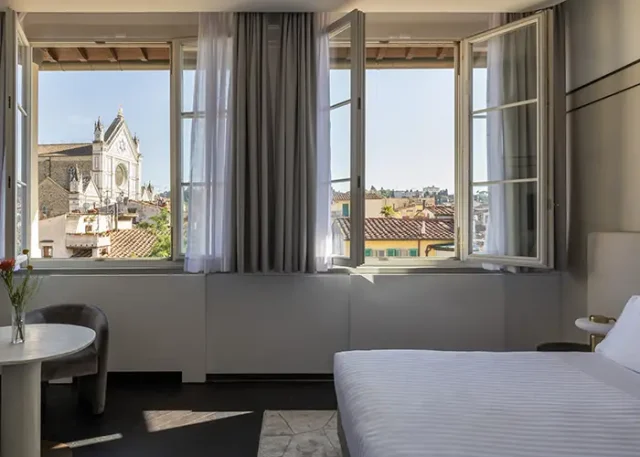
Palazzo Firenze by Baglioni Hotels & Resorts has unveiled an extensive redesign by Studio Marco Piva, introducing contemporary Italian style to an 18th-century palazzo in Florence’s Santa Croce neighborhood.
The project encompasses the hotel’s 24 guestrooms and suites as well as its public spaces. Historic architectural features have been carefully restored and paired with modern furnishings, Florentine craftsmanship and a sophisticated new color palette.
Located inside Palazzo Jacometti Ciofi, the renewed hotel offers travelers an intimate place to stay while experiencing Florence’s artistic heritage and local character.
A Historic Palazzo in Santa Croce
Palazzo Jacometti Ciofi was originally constructed during the first half of the 18th century at the request of Marquis Giovanni Maria Baldinucci, who served as Treasurer to the Pope.
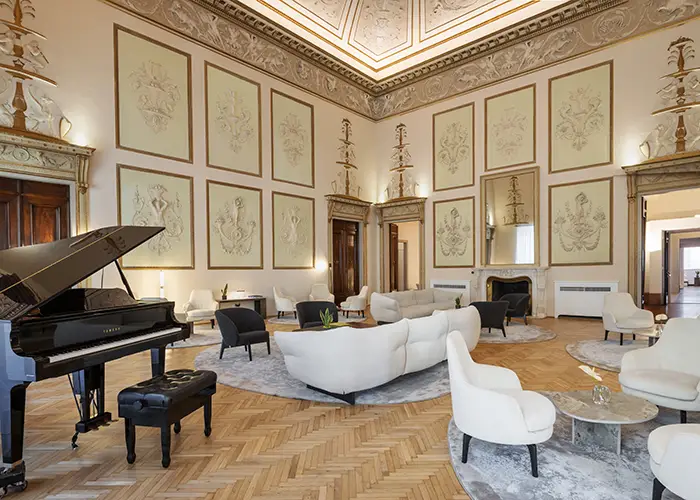
The residence has retained much of its architectural identity over the centuries. Rather than transforming it into an entirely modern hotel, Studio Marco Piva approached the redesign as a dialogue between the building’s past and its present use.
Original doors, terracotta floors and historic surfaces were preserved and restored. Contemporary furniture, lighting and textiles were then introduced to give the interiors a more current character without overwhelming the original architecture.
“We approached Palazzo Firenze with respect for its historical and monumental value, while recognizing that a building of this importance must be given new life,” said architect Marco Piva.
“Our work here contributes to what we call civic magnificence—a shared beauty that enriches the urban environment. It is a balance between memory and transformation.”
Contemporary Design Meets Florentine Heritage
The redesign is guided by what the studio describes as “beauty by design.” Under this philosophy, design is intended to shape how guests experience the hotel rather than function simply as decoration.
Materials, textures, colors and lighting have been selected to create a sense of continuity throughout the palazzo. Historic elements remain visible, while contemporary additions bring comfort and a more polished residential atmosphere.
The result reflects Palazzo Firenze’s position within Baglioni Hotels & Resorts, an Italian luxury collection that emphasizes a strong connection between hospitality and place.
In Florence, that connection is expressed through the building’s architectural history, local craftsmanship and references to people who contributed to the city’s cultural and commercial identity.
Suites Inspired by Florentine Stories
Several of the hotel’s suites use color and texture to tell stories connected to Florence.
The De Pepi Suite is dedicated to a Florentine family associated with the historic spice trade. Warm pepper tones establish its color palette, while tactile details recall the mortars and grinders traditionally used to prepare spices.
These references are integrated into the interior without turning the suite into a themed space. Instead, they provide subtle links to the commercial history and family traditions of Florence.
The Da Verrazzano Suite honors Giovanni da Verrazzano, the Florentine explorer recognized as the first European to reach New York Bay.
Deep blues evoke the sea, while warm ochres and flowing forms introduce a sense of movement. The design uses Verrazzano’s voyages as inspiration while maintaining the elegant character of the palazzo.
Together, the suites illustrate how the redesign connects individual rooms with wider stories from Florence’s past.
Florentine Craftsmanship Throughout the Hotel
Restoring an 18th-century residence required close collaboration between designers, conservation authorities and craftspeople.
Studio Marco Piva worked with Florence’s Superintendency for Cultural Heritage, specialist restorers and local artisans throughout the project. This collaborative process helped ensure that the palazzo’s historic details were treated appropriately while accommodating its role as a contemporary hotel.
The updated interiors include Rubelli fabrics and Gessi bathroom fixtures. Curated lighting and furnishings from Italian and international design houses such as Flos, Cassina and Baxter add a contemporary layer to the restored rooms.
The combination of artisanal restoration and modern design reflects a broader movement in Italian hospitality: adapting historically significant buildings while preserving the details that make them distinctive.
A More Intimate Way to Experience Florence
With only 24 guestrooms and suites, Palazzo Firenze provides a more intimate alternative to the city’s larger luxury hotels.
Its Santa Croce location places guests in a neighborhood known for historic architecture, artisan workshops, cafés and a strong connection to everyday Florentine life. The area’s character complements the hotel’s emphasis on slower, more immersive travel.
Guests can use the property as a base for exploring Florence’s churches, museums, galleries and Renaissance landmarks before returning to the quieter surroundings of the restored palazzo.
“Palazzo Firenze represents a new chapter in the story of one of Florence’s most captivating historic residences,” said Flora Grillo, general manager of Palazzo Firenze.
“This redesign has deepened its character and identity, giving new life to its historic heritage through contemporary design language. Today, the palazzo fully expresses its soul, offering guests an authentic interpretation of Florence.”
Studio Marco Piva’s Approach to Heritage Design
Based in Milan, Studio Marco Piva works across architecture, interior design and heritage restoration.
Its Heritage and Monumental Buildings division specializes in adapting historic properties for new uses while preserving their architectural significance. The studio’s approach at Palazzo Firenze sought to maintain the character of Palazzo Jacometti Ciofi while establishing a clear identity for the hotel.
The project demonstrates how thoughtful design can extend the life of an important urban building. Instead of treating the palazzo as a static monument, the redesign allows travelers to experience its architecture as part of a contemporary stay.
Palazzo Firenze Begins a New Chapter
The redesign strengthens Palazzo Firenze’s position as a luxury boutique hotel rooted in the artistic and architectural traditions of Florence.
Its restored surfaces and terracotta floors preserve tangible links to the past, while carefully selected furnishings, lighting and textiles make the property relevant to today’s traveler.
For visitors drawn to historic hotels, Italian design and intimate accommodations, Palazzo Firenze offers a distinctive base in one of Florence’s most characterful neighborhoods.