

La Dolce Vita Orient Express has announced a new five-day, four-night rail journey connecting Istanbul and Rome, with stops in Bulgaria, Romania, Austria and Italy.
Reimagining one of Europe’s legendary overland routes, the itinerary will travel from the shores of the Bosphorus through southeastern and central Europe before arriving in the Italian capital. Along the way, guests will visit Plovdiv, Sofia, Timișoara, Vienna and Venice.
The journey combines slow travel with contemporary Italian design, regional dining and curated cultural experiences intended to connect travelers with each destination along the route.
A Grand Rail Journey Across Europe
Beginning in Istanbul, a city spanning Europe and Asia, the itinerary traces a route through several of the continent’s most culturally significant cities.
Rather than positioning the train simply as transportation between two capitals, La Dolce Vita Orient Express treats the journey itself as the central experience. Time onboard is balanced with opportunities to leave the train and explore architecture, local cuisine, artistic traditions and UNESCO-listed historic districts.
The route travels through Turkey, Bulgaria, Romania, Austria and Italy, presenting passengers with a changing panorama of urban landmarks, rural landscapes and distinct regional cultures.
By the time the train arrives in Rome, guests will have traveled from the Bosphorus to the Eternal City while experiencing several lesser-visited European destinations alongside established cultural capitals.
From Istanbul to Historic Plovdiv
The journey begins in Istanbul, where Ottoman landmarks, Byzantine architecture, lively markets and contemporary neighborhoods meet along the Bosphorus Strait.
From there, the train travels into Bulgaria and stops in Plovdiv, one of Europe’s oldest continuously inhabited cities. Plovdiv is known for its Roman theater, cobbled Old Town and colorful 19th-century houses.
Its historic center reflects the many cultures that have shaped the city over thousands of years. Roman ruins sit alongside Ottoman-era buildings, Orthodox churches and creative districts filled with galleries, cafés and studios.
The stop introduces travelers to a part of Europe that is sometimes overlooked on traditional luxury rail itineraries.
Discovering Bulgaria’s Capital, Sofia
The itinerary continues to Sofia, Bulgaria’s capital and largest city.
Sofia’s architecture reveals layers of Roman, medieval, Ottoman and modern history. Among its best-known landmarks are the gold-domed Alexander Nevsky Cathedral, the ancient Church of St. George and the remains of the Roman city of Serdica.
The capital is framed by nearby Vitosha Mountain, giving it a distinctive combination of urban culture and natural scenery. Its markets, restaurants and public spaces offer another perspective on contemporary Bulgaria.
La Dolce Vita Orient Express plans to complement the city visit with curated experiences focused on local history, architecture, artisans and gastronomy.
Exploring Timișoara, Romania
After Bulgaria, the journey proceeds to Timișoara in western Romania.
Known for its broad public squares and varied architectural heritage, Timișoara has been influenced by Romanian, Hungarian, Serbian, Austrian and German cultures. Its historic districts contain Secessionist buildings, Baroque palaces and colorful facades.
The city played an important role in the 1989 Romanian Revolution and has since developed a reputation as a center for arts and culture.
Its inclusion gives passengers a chance to discover a destination outside Europe’s most heavily traveled rail corridors while exploring the cultural connections linking southeastern and central Europe.
Imperial Elegance in Vienna
The train then arrives in Vienna, a city synonymous with imperial architecture, classical music and café culture.
Austria’s capital provides a contrast to the earlier stops on the itinerary. Grand boulevards, former Habsburg residences, museums and concert halls reflect its centuries as the center of a European empire.
Off-train experiences may include opportunities to discover Vienna’s architectural landmarks, culinary traditions and artistic heritage. The city’s historic center is recognized as a UNESCO World Heritage Site, with notable landmarks ranging from St. Stephen’s Cathedral to the Hofburg complex.
Vienna also has a deep connection to the history of European rail travel, making it a natural stop on a journey inspired by the romance of crossing the continent by train.
Arriving in Venice by Rail
Before reaching Rome, passengers will stop in Venice.
Arriving by train offers one of the most atmospheric introductions to the lagoon city. From the station, travelers step into a landscape of canals, bridges, narrow streets and historic palaces.
La Dolce Vita Orient Express will provide curated access to aspects of the city’s heritage, artistry and cuisine. Experiences may include discovering architectural landmarks, meeting local artisans or exploring Venetian culinary traditions.
The visit reinforces the train’s emphasis on meaningful interaction with each destination rather than conventional sightseeing alone.

The Final Journey to Rome
The itinerary concludes in Rome, bringing passengers from the historic crossroads of Istanbul to Italy’s capital.
Rome provides an appropriate finale for a train built around Italian hospitality and design. Ancient ruins, Renaissance palaces, Baroque landmarks and lively neighborhoods create a setting where multiple eras coexist.
The arrival also connects the rail journey with Orient Express La Minerva, the brand’s first hotel, which opened in Rome in April 2025.
More than a direct trip between two cities, the route offers a layered passage through European history—from the Byzantine and Ottoman influences of Istanbul to Bulgaria’s ancient cities, Romania’s cultural crossroads, imperial Vienna and the artistic heritage of Venice and Rome.
Italian Design Aboard La Dolce Vita Orient Express
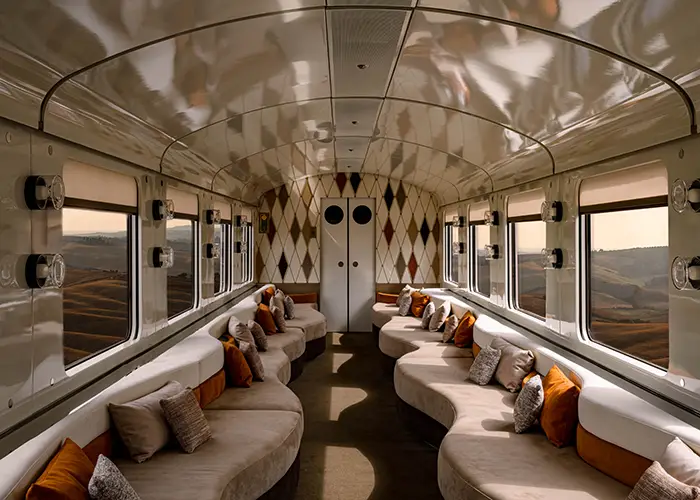
Onboard, the atmosphere is inspired by the artistic energy and glamour of 1960s Italy.
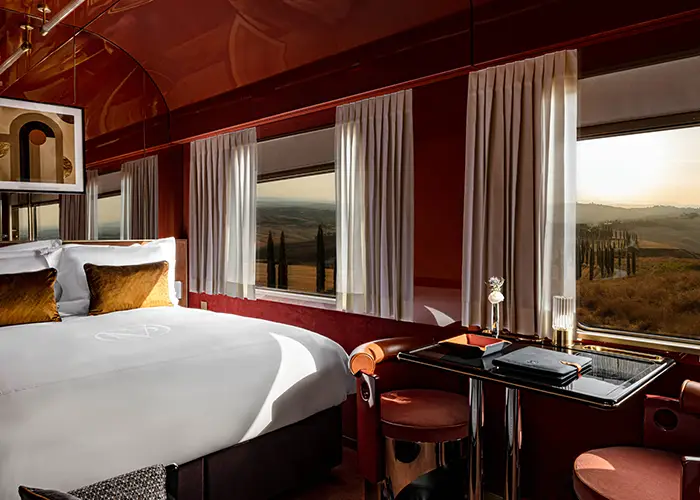
Dimorestudio created the train’s interiors, interpreting the period through contemporary materials, colors and furnishings. Intimate lounge areas and private accommodations are intended to encourage passengers to slow down and enjoy the rhythm of rail travel.
The train has 31 cabins, including 18 suites, 12 deluxe cabins and the La Dolce Vita Suite. These accommodations combine privacy and modern comfort with the visual identity of the wider train.
Personalized service and shared lounge spaces create opportunities for both quiet relaxation and socializing during the journey.
Dining Curated by Chef Heinz Beck
Food is an important part of the onboard experience, with menus curated by three-Michelin-starred chef Heinz Beck.
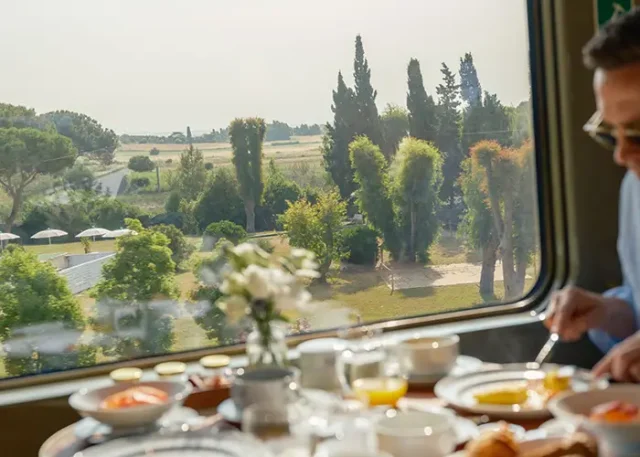
The culinary program draws upon Italian traditions while incorporating innovation and a focus on well-being. Meals are designed to reflect the landscapes and cultures encountered along the route, turning onboard dining into another component of the journey.
As the train moves between destinations, regional flavors and culinary references help connect the onboard experience with the changing geography outside.
A Contemporary Interpretation of Grand Train Travel
La Dolce Vita Orient Express celebrates the style, craftsmanship and cultural heritage associated with Made in Italy.
The Istanbul-to-Rome itinerary expands that philosophy beyond Italy, using an Italian interpretation of hospitality as the framework for exploring a broader cross-section of Europe.
For travelers interested in slow travel, railway history and multicountry itineraries, the route offers an alternative to flying between destinations. It replaces airport transfers and short city breaks with a continuous journey in which the landscapes, meals and hours onboard become part of the travel experience.
Frequently Asked Questions
How long is the Istanbul-to-Rome train journey?
The new La Dolce Vita Orient Express itinerary lasts five days and four nights.
Which cities are included in the itinerary?
The train travels from Istanbul to Rome with stops in Plovdiv, Sofia, Timișoara, Vienna and Venice.
How many accommodations are aboard the train?
La Dolce Vita Orient Express has 31 cabins, including 18 suites, 12 deluxe cabins and the La Dolce Vita Suite.
Who designed the train’s interiors?
The interiors were created by Dimorestudio and draw inspiration from the art, design and glamour of 1960s Italy.
Who oversees the onboard culinary program?
The culinary experience is curated by Heinz Beck, a three-Michelin-starred chef known for combining Italian culinary traditions with contemporary techniques.