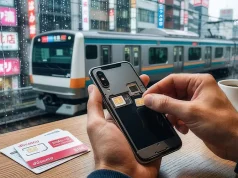
Luxury travel is planned in extraordinary detail. The suite is confirmed months ahead. The transfer is arranged, the restaurant table held, the guide briefed on preferences. Every element of the journey has been considered by someone who understands that the difference between a good trip and an exceptional one usually lies in what the traveller never has to think about.
And then the aircraft doors open, phones come off airplane mode, and the entire carefully assembled itinerary depends on something almost nobody plans in advance: whether the device in your hand actually works.
The friction that no itinerary accounts for
For most travellers reading this, the cost of international data is not the issue. The issue is friction, and friction has a way of arriving at precisely the wrong moment.
It looks like twenty minutes at a telecom kiosk in arrivals with a passport photocopy, while a driver waits outside. It looks like a WhatsApp message from the hotel that does not land because you are offline. It looks like airport Wi-Fi that requires a captive portal login, an SMS verification code you cannot receive, and a session that expires after fifteen minutes.
None of these are disasters. All of them are the opposite of what you paid for. A journey designed around ease should not begin with a queue.
Why traditional roaming still disappoints
Carrier roaming packages have improved, and for a single-country trip they can be perfectly adequate. The difficulties appear the moment an itinerary becomes complex, which is exactly what the better itineraries tend to be.
A Mediterranean sailing may touch five countries in a week. A European rail journey can cross two borders in a single afternoon. A safari itinerary might route through three regional hubs before reaching camp. Carrier roaming zones rarely map neatly onto that kind of movement, and the packages that do cover multiple regions are typically priced for convenience rather than value, with data allowances that assume light use.
There is also the matter of speed. Some roaming arrangements throttle data after a threshold, which becomes noticeable the moment you try to upload photographs, join a video call, or download a boarding pass on the move.
The case for a travel eSIM
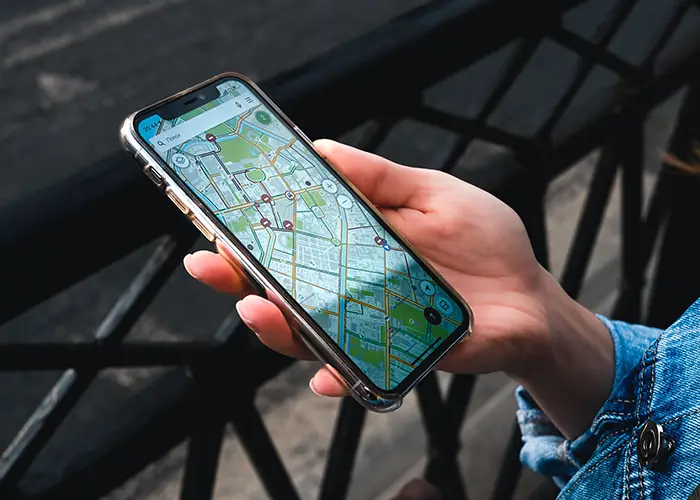
An eSIM is a SIM profile stored in software rather than on a physical card. Most devices released in the past four or five years support it, including recent iPhone, Google Pixel and Samsung Galaxy models. The plan is purchased online, installed by scanning a code, and activated the moment you land.
Three things make this genuinely useful for the sort of travel this magazine covers.
Your existing number stays live. The eSIM handles data while your usual line remains in the device, so calls and messages continue reaching you. Your office, your family and your assistant do not need to be told you are temporarily unreachable on a different number.
Regional plans follow multi-country itineraries. Rather than acquiring a new local connection at each border, a single regional plan can cover an entire route. For cruise passengers going ashore in a different country every day, this removes an entire category of administration.
Nothing happens at the airport. The plan is bought and installed at home, on your own network, before departure. You land already connected, walk past the kiosk queue, and meet your driver.
What to confirm before buying
A few practical checks prevent the small disappointments.
Verify device compatibility first, under Cellular on iPhone or Network and Internet on Android. If the option to add a mobile plan appears, the device supports it.
Compare the plan’s coverage list against your actual route rather than the region’s name. “Europe” and “Asia” are marketing categories, and the countries included vary considerably between providers.
Be realistic about consumption. Travellers who work while away, share photographs frequently, or rely on navigation will use substantially more than the smallest plans allow.
One honest limitation worth knowing: an eSIM will not help you at sea. Once a ship leaves coastal range, connectivity comes from the vessel’s satellite system, and that remains a separate arrangement made with the cruise line. The eSIM resumes its usefulness the moment you are ashore.
Beyond the individual traveller
The reasoning strengthens when more than one person is involved. Families need each device connected independently, and a teenager without data is a logistical problem in any city. Business travellers gain predictable, documentable costs rather than a variable roaming bill arriving three weeks after the trip closes. Anyone travelling with staff, working with a concierge, or coordinating a group benefits simply from being reachable without qualification.
There is also the quieter argument. Being connected on arrival means the hotel can reach you if your room is ready early, the restaurant can confirm the change you requested, and the driver can find you when the terminal exit is not where the map said it would be. These are small things individually. Collectively, they are what people mean when they describe a journey as seamless.
A shift worth noticing
Connectivity has moved from amenity to infrastructure over the past decade. Hotels advertise it. Airlines charge for it. Destinations market themselves on it. It has become one of the assumed conditions of modern travel rather than an optional extra, and the traveller who treats it as an afterthought is the one who notices its absence most sharply.
Ten minutes of preparation before departure is a modest investment. It buys an arrival that requires nothing of you at all, which is arguably the entire point.