


Summer may be winding down across Europe, but Lisbon’s dining season shows little sign of slowing. Warm days and pleasant evenings create an inviting setting for lingering over seafood lunches, exploring neighborhood markets and enjoying petiscos on an outdoor terrace.
Portugal’s capital has become one of Europe’s most appealing culinary destinations by balancing tradition with innovation. Visitors can spend the morning eating a warm pastel de nata, stop for a casual bifana sandwich at lunch and finish the day with a contemporary tasting menu from one of the country’s leading chefs.
For food lovers, late summer offers an opportunity to experience the city through the flavors of the Atlantic, the traditions of its historic neighborhoods and the wines produced throughout the surrounding Lisbon region.
Discover Lisbon’s Atlantic Flavors
Lisbon’s relationship with the sea is central to its food culture. Fresh fish and shellfish appear throughout the city, from casual neighborhood restaurants to sophisticated dining rooms.
Grilled sardines remain one of the city’s most recognizable dishes, particularly when served simply with bread, potatoes or a fresh salad. Octopus may arrive grilled, roasted or dressed with olive oil and herbs, while clams are frequently prepared à Bulhão Pato with garlic, cilantro, olive oil and white wine.
Bacalhau, or salted cod, is another cornerstone of Portuguese cooking. It can be baked with potatoes, folded into crisp fritters, combined with eggs and onions or served in one of the many regional preparations found across Portugal.
Travelers should also look for seafood rice, grilled sea bass, cuttlefish and platters of freshly cooked shellfish. The experience is often refreshingly straightforward: excellent ingredients, careful preparation and few unnecessary distractions.
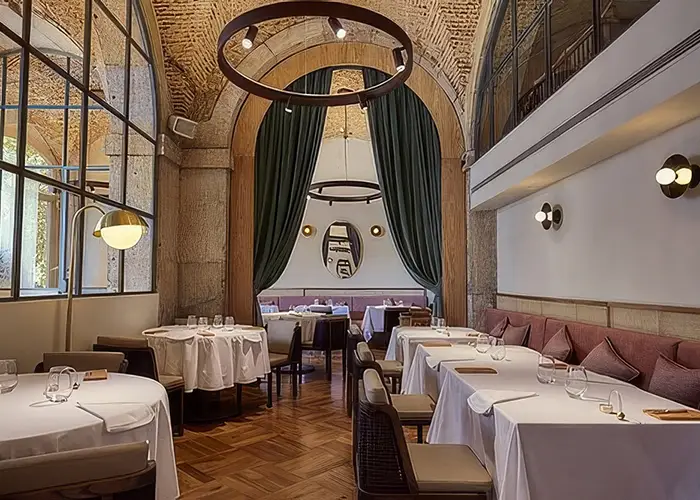
On Avenida da Liberdade, JNcQUOI Fish presents Portuguese coastal cuisine through a polished contemporary lens. The menu places fish and seafood at the center while drawing on the flavors and culinary traditions of Portugal’s coastline.
For something more playful, Can the Can Lisboa occupies a prominent location on Praça do Comércio. The restaurant explores Portugal’s canning heritage through dishes featuring preserved fish and seafood, demonstrating how a familiar pantry ingredient can become part of a creative dining experience.
Explore Markets and Neighborhood Favorites
Some of Lisbon’s most memorable food experiences happen away from formal dining rooms. Neighborhood cafés, bakeries, traditional taverns and food markets provide an accessible introduction to how the city eats every day.
Mercado da Ribeira, opposite the Cais do Sodré train station, combines a traditional market with the busy Time Out Market Lisboa food hall. Its collection of restaurant counters makes it possible to sample several interpretations of Portuguese cooking in one place, although travelers should also seek out smaller municipal markets such as Mercado de Alvalade and Mercado de Campo de Ourique.
Petiscos are another essential part of the Lisbon dining experience. Often compared with Spanish tapas, these small dishes are designed for sharing and might include cod fritters, octopus salad, Portuguese cheeses, cured meats, snails, croquettes or pica-pau—small pieces of seasoned meat served with pickles and sauce.
For a casual lunch, try a bifana, a sandwich filled with thin slices of seasoned pork. A prego offers a similar experience with beef, while caldo verde, Portugal’s comforting potato and kale soup, can provide a lighter alternative.
No food-focused visit would be complete without pastéis de nata. These crisp pastry shells filled with baked custard are found throughout Lisbon, but tasting them while they are still warm adds an entirely different dimension. A sprinkle of cinnamon is optional, although highly recommended.
Experience Lisbon’s Celebrated Restaurants
Lisbon’s fine-dining scene has earned international recognition while remaining closely connected to Portuguese ingredients and traditions.
In Chiado, chef José Avillez’s Belcanto holds two Michelin stars in the 2026 Michelin Guide. Its creative tasting menus reinterpret Portuguese flavors through modern techniques, storytelling and carefully composed presentations.
Solar dos Nunes in Alcântara offers a more traditional experience, with family-style hospitality and dishes influenced by the cooking of Portugal’s Alentejo region. In Belém, Nunes Real Marisqueira specializes in fish and shellfish near landmarks including the Jerónimos Monastery and Centro Cultural de Belém.
Travelers willing to venture beyond central Lisbon can make a culinary day trip to Cascais. Set within a 17th-century fortress overlooking the ocean, Fortaleza do Guincho holds one Michelin star in the 2026 guide. Chef Gil Fernandes draws inspiration from Portugal’s coastline, emphasizing seafood, regional products and maritime traditions.
The dramatic coastal setting makes the restaurant a fitting conclusion to a day spent exploring Cascais, Guincho Beach and the landscapes west of Lisbon.
Drink Your Way Through the Lisbon Wine Region
Wine is an important part of Lisbon’s culinary identity, and visitors do not have to travel far from the city to find historic vineyards and distinctive regional styles.
Bucelas is particularly associated with white wines made from the Arinto grape. These wines are generally known for bright acidity and citrus or mineral characteristics, making them a natural partner for seafood.
Near Sintra, the coastal vineyards of Colares are influenced by Atlantic winds and sandy soils. The region is best known for Ramisco-based red wines, along with white wines traditionally made from Malvasia de Colares.
Carcavelos produces a rare fortified wine with a long history, while the Setúbal Peninsula south of Lisbon is known for aromatic Moscatel de Setúbal. Vineyard visits can easily be paired with historic towns, coastal viewpoints and countryside restaurants.
Back in the city, visitors can finish an evening with ginjinha, Lisbon’s traditional sour-cherry liqueur. It is served at small bars around Rossio, Baixa and Mouraria, sometimes in a chocolate cup.
How to Plan a Food-Focused Lisbon Escape
A successful culinary itinerary should leave room for both reservations and spontaneity. Book Michelin-starred and popular seafood restaurants well in advance, particularly for weekend dinners. Keep lunches more flexible so there is time to explore bakeries, markets and neighborhood taverns.
Consider spending one day in central Lisbon, moving between Baixa, Chiado, Alfama and Cais do Sodré. A second day can focus on Belém and Alcântara, followed by an excursion to Cascais or the wine areas around Bucelas, Colares and Carcavelos.
Travelers interested in exploring more of the country can also read DRIFT’s guide to Portugal’s top cities for food lovers or consider a journey connecting Lisbon and Porto through these culinary rail itineraries in Europe.
Late summer in Lisbon is not defined by a single restaurant or signature dish. Its appeal comes from the variety of experiences: grilled fish beside the Atlantic, custard tarts eaten at a café counter, regional wines poured in historic neighborhoods and contemporary chefs finding new ways to tell Portugal’s culinary story.
For travelers who choose destinations according to what they can eat and drink, Lisbon offers a particularly flavorful way to extend the summer.
For additional travel-planning information, visit Visit Lisboa.