
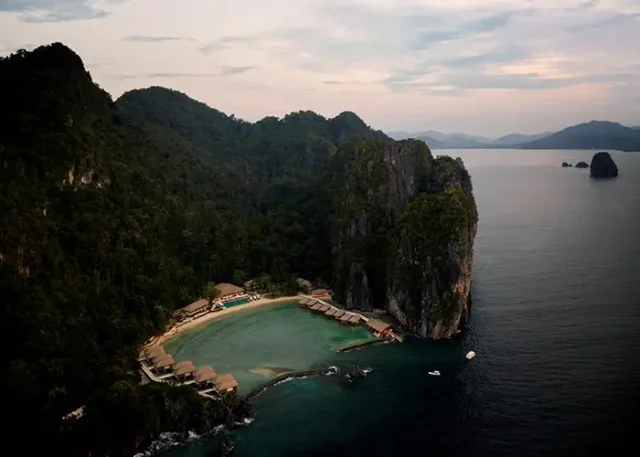
El Nido Lagen Island Resort has reopened following a year-long transformation that rethinks how a luxury resort can occupy one of the Philippines’ most environmentally sensitive destinations.
Located on a private island in northern Palawan, Lagen first opened in 1998 after being established by a group of divers. Its latest chapter introduces redesigned accommodations, expanded wellness facilities, new restaurants and a dedicated conservation center.
One of the most significant decisions was to make the resort smaller. The number of accommodations has been reduced from 51 to 42, allowing former beachfront cottage sites to be returned to open shoreline.
The renovated resort now includes 18 overwater villas and 24 forest rooms and suites. A 200-meter stretch of white sand has also been opened along the waterfront, creating a stronger visual and physical connection between the resort and the bay.
Filipino Craft Shapes the New Design
The renovation was led by WATG and Wimberly Interiors in collaboration with Henning Larsen and Ayala Land Hospitality’s in-house creative team.
Rather than giving the property an internationally generic resort aesthetic, the designers drew on Filipino architecture, materials and craftsmanship.
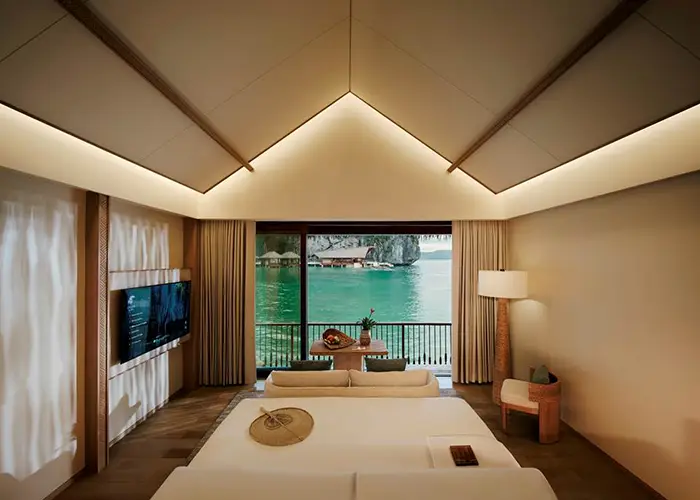
The 18 overwater villas take inspiration from the bahay kubo, the traditional Filipino stilt house. Palm-fringed roofs, woven panels, timber details and a quiet natural color palette allow the villas to sit more comfortably against the surrounding water and limestone cliffs.
Each Water Villa now includes a sunken lounge positioned to create uninterrupted bed-to-bay views. Screened openings and carefully angled windows provide privacy without completely separating guests from the landscape.
Filipino artisans contributed many of the resort’s decorative elements. Clay workers created ceramic beads influenced by traditional weaving patterns, while woodcarvers incorporated vernacular motifs into doors and railings. Woven textiles and panels appear throughout the villas, restaurants and shared spaces.
The 24 Forest Rooms and Suites occupy two buildings between the shoreline and the Napuro forest. Balconies face the sea, while rear windows frame trees, rehabilitated vegetation and limestone formations.
The forest accommodations use deeper greens and warmer timber tones, giving them a different character from the pale, water-inspired interiors of the overwater villas.
A Renovation Focused on Reuse
Lagen’s owners describe the project as a preservation-first renovation. Rather than demolishing and rebuilding the entire resort, the project retained and adapted existing structures where practical.
Original narra wood flooring was recovered and repurposed as wall paneling. Local building methods and materials were used in place of some imported alternatives, supporting regional craftspeople while reducing the transportation associated with foreign materials.
The lower room count is another important part of the strategy. Removing the former beachfront cottages reduced the density of development along the shore and created more open space between the resort and the water.
The resort says its new swimming pool uses ultraviolet treatment to reduce reliance on conventional pool chemicals. Low-wattage exterior lighting has also been introduced to minimize light pollution and maintain a darker section of beach for turtles.
Privacy around accommodations is provided partly through planted vegetation rather than extensive walls and constructed barriers. At the wellness complex, elevated flooring allows plants and parts of the forest floor to continue growing beneath the structure.
These measures do not make the resort impact-free. Reaching a private island and operating a luxury property still require transportation, energy and other resources. However, the reuse of existing buildings, reduction in room numbers and attention to lighting, vegetation and materials represent measurable changes from the previous resort layout.
A New Conservation Center
Lagen is located within the El Nido-Taytay Managed Resource Protected Area, a large landscape and seascape containing limestone karsts, forests, beaches, coral ecosystems and habitats for numerous marine and terrestrial species.
A new conservation center introduces guests to these ecosystems through exhibitions and educational programs. It will also serve as a starting point for guided experiences on land and in the water.
The resort has appointed a head of sustainability to oversee ongoing conservation initiatives and help connect operational decisions with the environmental conditions of the island.
Travelers can support these efforts by following established routes, avoiding contact with wildlife, using reef-safe personal-care products where required and choosing guided activities that respect protected-area regulations.
The Lagen Wellness Sanctuary
The renovation introduces a significantly expanded wellness offering.
Set within a garden, the Lagen Wellness Sanctuary has three treatment rooms, a Pilates studio, a Technogym fitness center, hot and cold plunge pools, a steam room and a sauna. Its elevated design was intended to limit disturbance to the vegetation below.
Treatments combine international spa practices with therapies influenced by Filipino healing traditions.
Heritage Healing draws on the concept of the babaylan, a traditional Filipino spiritual healer and community figure. The treatment incorporates local botanical ingredients and energy-alignment practices.
The spa has also partnered with British skincare and wellness brand ESPA for facials, massages and body treatments.
The sanctuary allows guests to maintain familiar wellness routines while being introduced to approaches connected with Filipino cultural traditions. Travelers interested in traditional therapies should ask practitioners to explain the treatment’s origins and techniques before booking.
Three New Dining Experiences
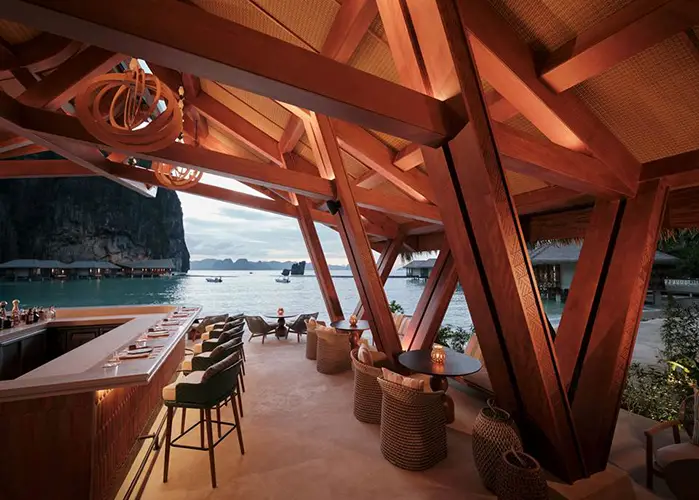
The redesigned resort has three principal dining and social spaces, each with a different relationship to the island.
The Boat House functions as the arrival pavilion, welcome lounge and daytime gathering place. Its design references a paraw, a traditional Filipino sailboat. A sail-like roof rises above the pavilion, while an extended architectural element resembling a bowsprit reaches toward the sea.
Guests can stop at the Boat House for light dishes and cocktails after arriving at the island or returning from an excursion.
The Beach Club sits back from the newly opened stretch of sand. Its menu centers on wood-fired pizzas, seafood and Mediterranean-influenced dishes, accompanied by tropical cocktails and sunset views.
At the center of the property, the Club House serves as the principal all-day restaurant. The redesigned space has been opened toward the surrounding forest and ocean to increase natural light and airflow.
Menus combine Filipino dishes with southern European influences. Local specialties include Lagen Kinilaw, a Filipino preparation of raw seafood dressed with citrus or vinegar, and Ginataang Alimango, crab cooked in coconut milk. Paella, fresh pasta and a complete vegetarian menu broaden the selection.
Private dining can be arranged in several locations around the island, including quiet coves, garden settings and sandbars. Availability depends on weather, tides and marine conditions.
Diving and Water Activities
Lagen’s diving heritage remains central to the guest experience. The new marine sports and dive center provides access to more than 20 dive sites around El Nido.
Programs range from introductory experiences to PADI-certified courses. Younger guests may be able to participate in supervised Bubblemaker sessions, subject to PADI’s age, health and safety requirements.
Snorkeling, kayaking and other non-motorized water activities provide alternatives for guests who prefer to remain closer to the surface.
The resort also offers Schiller water bikes that allow riders to pedal across the bay. Night kayaking excursions use underwater lighting to reveal marine life below, although these should be conducted carefully to avoid disturbing nocturnal animals.
Ocean activities are dependent on weather, visibility and sea conditions. Guests should follow the guidance of the resort’s marine team and avoid standing on coral, feeding wildlife or collecting shells and other natural materials.
Weddings and Small Events
A new ceremonial hall and chapel have been designed for weddings and private celebrations. Woven wall panels, a palm-fringed exterior and openings toward the tropical landscape continue the resort’s Filipino design narrative.
Two meeting rooms have also been added, each accommodating up to 56 guests. These spaces allow Lagen to host small corporate retreats and social gatherings without transforming the resort into a large-scale convention property.
Planning a Stay at Lagen Island
Most international travelers reach El Nido by flying to Lio Airport, with connections available from Manila and selected Philippine cities. From the airport, the journey continues by road and boat to Lagen Island.
Boat-transfer times depend on weather, tides and the point of departure. Travelers should coordinate arrival details directly with the resort and avoid booking tightly timed onward connections.
The generally drier months between December and April are popular for island hopping, diving and other water activities. Conditions can still vary, and travelers visiting during the wetter season should expect a greater possibility of rain, rough seas and schedule changes.
Readers planning a wider Palawan itinerary can also explore DRIFT’s guide to El Nido’s distinctive geography and natural attractions.
The new Lagen is not simply a cosmetic update. By reducing its accommodations, reusing existing materials and giving more space back to the shoreline, the resort has changed how it sits within its island environment.
Its overwater villas, forest rooms and new wellness and dining spaces still deliver a high level of comfort, but the strongest aspect of the renovation may be its effort to make Palawan’s landscape and Filipino creative traditions more visible.
For reservations and current transfer information, visit El Nido Resorts.