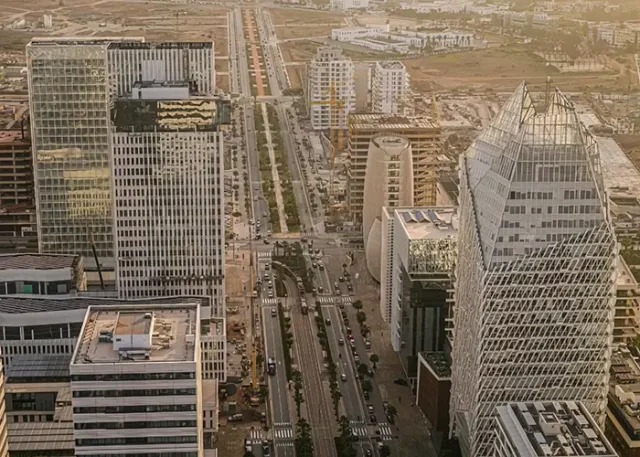
Casablanca may share its name with one of Hollywood’s most romantic films, but Morocco’s largest city is far more complex than its cinematic reputation suggests. This Atlantic metropolis blends Art Deco avenues, neo-Moorish landmarks, lively markets, contemporary restaurants and an increasingly polished cultural scene.
Many first-time visitors begin at the monumental Hassan II Mosque. DRIFT’s guide to visiting the Hassan II Mosque explains what to expect, including guided-tour requirements and appropriate clothing.
Yet the mosque is only one part of the Casablanca experience. The following five stops reveal more of the city’s food, architecture, art, shopping and nightlife.
Taste Casablanca at Marché Central
Casablanca’s Marché Central is both a working market and one of the city’s most enjoyable places to experience Moroccan food.
Located along Boulevard Mohammed V, the market is easy to recognize by its neo-Moorish entrance and central cupola. Inside, vendors arrange displays of Atlantic seafood, fruit, vegetables, spices, flowers and olives, while small restaurants prepare dishes using ingredients sourced from the surrounding stalls.
Fresh fish is one of the market’s specialties. Depending on the day’s catch, visitors may find oysters, sardines, shrimp, sea bass and other seafood ready to be grilled or fried nearby. Fresh juices, breads and traditional Moroccan accompaniments complete an informal lunch.
The market is also a worthwhile stop for travelers interested in Casablanca’s early 20th-century architecture. Completed in 1917, it formed part of the European-built ville nouvelle, or new city, while incorporating design elements inspired by Morocco’s historic imperial cities.
Marché Central is most atmospheric in the morning and around lunchtime. The Casablanca tram stops directly outside, making it easy to combine with a walk along Boulevard Mohammed V and the surrounding Art Deco streets.
Admire the Architecture Around Mohammed V Square
Place Mohammed V has served as Casablanca’s administrative center for more than a century. Created in 1916, the square is surrounded by public buildings that combine European planning with Moroccan decorative traditions.
Arches, tiled details, carved plasterwork and monumental facades demonstrate how architects working during the French Protectorate blended Art Deco, neo-Moorish and Hispano-Islamic influences.
Among the prominent buildings surrounding the square are the Wilaya administrative headquarters, the courthouse and the nearby Grand Theatre of Casablanca. Palm trees, fountains and broad pedestrian areas soften the formal architecture, while the steady movement of residents gives the square the feeling of an urban gathering place rather than a museum district.
The square is especially useful as a starting point for exploring central Casablanca on foot. Arab League Park, the former Sacred Heart Cathedral and the Abderrahman Slaoui Museum are all nearby.
Travelers planning a longer visit can find additional ideas in DRIFT’s guide to experiencing Casablanca during the summer.
Discover Moroccan Art at the Abderrahman Slaoui Museum
Housed in an elegant historic building near Mohammed V Square, the Abderrahman Slaoui Museum offers a more intimate cultural experience than Casablanca’s major monuments.
The museum is named for Moroccan businessman and art collector Abderrahman Slaoui. His private collection includes antique Moroccan jewelry, decorative objects, crystal pieces, paintings and vintage travel posters.
The poster collection is particularly revealing. Created during the early years of international tourism in North Africa, these colorful advertisements show how Morocco, Algeria and Tunisia were presented to European travelers. Today, they offer a fascinating look at both graphic design and the evolving image of Morocco abroad.
Historic pieces are complemented by temporary exhibitions devoted to contemporary Moroccan artists. The museum also organizes workshops and cultural programs, making it an active part of Casablanca’s creative community.
Because of its manageable size, the museum can usually be explored without setting aside an entire day. It fits naturally into a walking route connecting Mohammed V Square, Arab League Park and the central Art Deco district. Visitors should confirm current opening hours before arriving, as the museum is generally closed on Mondays.
Shop and Explore at Morocco Mall
Traditional markets remain essential to the Moroccan travel experience, but Casablanca also presents a distinctly contemporary side.
Set along the Atlantic coast, Morocco Mall is one of Africa’s largest shopping centers. Its stores range from familiar international labels to Moroccan fashion and lifestyle brands, providing an alternative to the bargaining and tightly packed stalls of a traditional souk.
The building’s best-known attraction is Aquadream, a large cylindrical aquarium filled with marine life. The aquarium rises through the center of the complex and has become a destination in its own right, especially for families.
Restaurants, cafes and ocean views make the mall more than a quick shopping stop. It can also provide a comfortable break from outdoor sightseeing during the hottest part of the day.
Morocco Mall is situated west of central Casablanca, so visitors should allow time for traffic when traveling between the mall and downtown. It can be combined with a walk along the Corniche or time at Ain Diab, Casablanca’s best-known beachfront district.
Experience Casablanca After Dark
Casablanca has one of Morocco’s most varied dining and nightlife scenes. The city’s evening venues range from neighborhood restaurants and traditional Moroccan dining rooms to rooftop lounges, live-music spaces and oceanfront clubs.
Gauthier and Maarif are good areas for contemporary restaurants, casual bars and cafes frequented by local professionals. Along the Corniche, many venues pair dinner or drinks with Atlantic views. The city center offers historic hotel bars and restaurants that recall Casablanca’s mid-century glamour.
One of the most impressive viewpoints is Le Rooftop at Royal Mansour Casablanca. Located on the 23rd floor, the Mediterranean restaurant and cocktail bar offers panoramic views across the city toward the Hassan II Mosque.
The Royal Mansour itself occupies a restored 1950s landmark near the port and Old Medina. Le Rooftop serves food throughout the day, while evenings may include a live DJ and views of the city lights. Reservations are advisable, particularly around sunset and on weekends.
Casablanca’s after-dark soundtrack is equally varied. Depending on the venue, visitors may encounter jazz, Arabic pop, raï, electronic music or French-language classics. Dinner tends to begin later than in many North American cities, and the liveliest clubs may not fill until close to midnight.
Travelers should check current hours, dress requirements and reservation policies before heading out, especially on weekends and during religious holidays.
How to Combine the Five Experiences
Most of these attractions can be organized into a comfortable one- or two-day itinerary.
Begin in the morning at Marché Central, allowing time to wander through the food stalls and stop for an early seafood lunch. Continue along Boulevard Mohammed V toward Place Mohammed V, taking time to notice the city’s Art Deco and neo-Moorish architecture.
The Abderrahman Slaoui Museum is within walking distance of the square and makes a natural afternoon stop. End the day with dinner or sunset drinks at Royal Mansour Casablanca.
Morocco Mall and the Corniche are best saved for a separate afternoon, particularly if you want time for shopping, the aquarium, the beach or an oceanfront meal.
Those planning to continue beyond Casablanca can consult DRIFT’s complete guide to tours in Morocco for ideas involving Marrakech, Fes, the Atlas Mountains, the Sahara and Morocco’s Atlantic coast.
Seeing the Real Casablanca
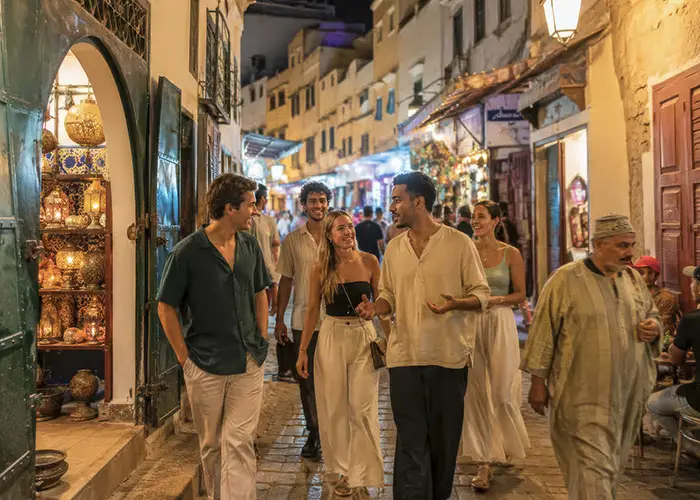
Casablanca does not present itself as neatly as some of Morocco’s more tourism-oriented cities. Its appeal lies in the contrasts: traditional seafood stalls beside tram lines, ornate civic buildings surrounded by modern traffic, private art collections displayed in historic homes and polished rooftop restaurants overlooking the Atlantic.
Approached slowly, the White City reveals a side of Morocco shaped as much by contemporary urban life as by history. Its markets, architecture, museums and nightlife reward travelers willing to look beyond the famous movie and discover Casablanca on its own terms.
More destination information is available from the Moroccan National Tourism Office.