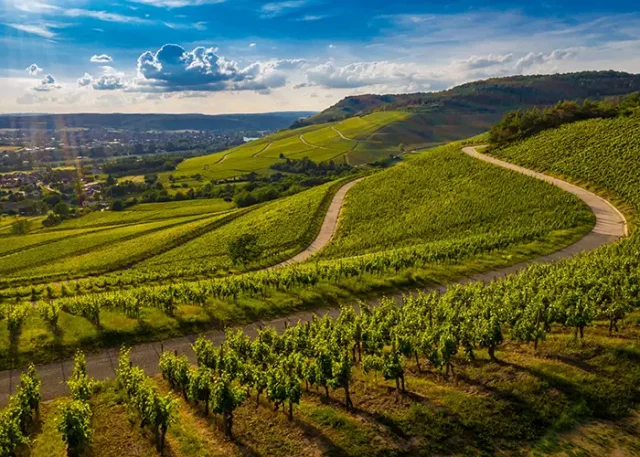
In the Cognac region of southwestern France, autumn does more than change the color of the vines. It marks the transition from harvest to distillation, when fermented white wine begins its transformation into the spirit that carries the region’s name.
The process continues through winter, with copper stills operating day and night at estates across the Charentes. This quieter period offers travelers a closer view of the work behind cognac, but the region’s appeal is no longer limited to conventional cellar tours. Visitors can now blend their own spirit, watch coopers shape oak barrels, try glassblowing, walk with donkeys or pair cognac with chocolate.
Some activities are available year-round, while others belong specifically to harvest, fall or winter.
Begin with the Ban de la Distillation
The fourth Ban de la Distillation is scheduled for October 23–25, 2026. The name uses ban in its traditional sense: a public proclamation marking the beginning of an important seasonal activity.
The three-day gathering celebrates Charentais distillation through producer visits, workshops, performances, concerts, exhibitions and discussions. It is an ideal introduction for travelers who want to see how cognac connects agriculture, craft and local culture. The official Ban de la Distillation program should be checked before traveling because individual activities have their own schedules and reservation requirements.
For a broader seasonal overview, DRIFT’s guide to why fall is an excellent time to visit Cognac covers the atmosphere, landscapes and traditions that define the region after summer.
Active ways to see the Cognac countryside
1. Follow a treasure trail through Jardin Respectueux
The Jardin Respectueux at L’Yeuse combines a nature garden, open-air artwork and an environmental education space. Its self-guided treasure trail places riddles among structures and vine-inspired installations, giving families and groups a playful way to explore.
Sculptural elements also serve as habitat, drawing attention to biodiversity. The experience normally operates from spring into October, making it best suited to an early-fall visit.
2. Walk with Poitou donkeys at Domaine Montansier
At Domaine Montansier, Poitou donkeys Jazz and Fifi set the pace for an easygoing outing through fields planted with local grape varieties. The estate grows Ugni Blanc, Folle Blanche and the less familiar Chauché, alongside truffle oaks and grapes for regional wines.
The walk introduces visitors to a mixed agricultural landscape rather than focusing solely on a tasting room. It concludes with a simple Charentais snack and estate products. This is a May-to-September activity, so it belongs to the harvest side of the itinerary and should not be planned as a midwinter excursion.
3. Tour the vines by smartphone at Vignoble H. Begey
Travelers who prefer to explore without a fixed group can follow a smartphone-guided route through the vineyards and village surrounding Vignoble H. Begey. Videos explain local heritage, family winegrowing and the annual cycle of the vines before the route returns to the estate for a tasting.
The self-paced format suits an independent road trip, although visitors should confirm languages, opening days and tasting arrangements.
Go behind the scenes of Cognac craftsmanship
4. Try glassblowing at Fondation d’Entreprise Martell
The Fondation d’Entreprise Martell has introduced adult glassmaking workshops for 2026. Working alongside glass artisans, participants learn how heat, tools and breath shape solid and blown glass, then make personalized pieces to take home.
The experience broadens the idea of a Cognac souvenir. Instead of buying another object from a shelf, visitors gain an appreciation for the skill behind the glass itself. Workshop formats and dates vary, and advance booking is essential.
5. Watch barrels take shape at Tonnellerie Navarre
Oak has a quiet but decisive role in cognac. At Tonnellerie Navarre, visitors can see how staves are assembled, heated and bent into barrels, as well as how used casks are reconditioned.
The tour connects physical craftsmanship with flavor. A concluding nosing session demonstrates how oak can influence aroma and character during maturation. Visits are available by reservation, making this one of the more specialized behind-the-scenes experiences in the region.
6. Create a personal blend at Maison CAMUS
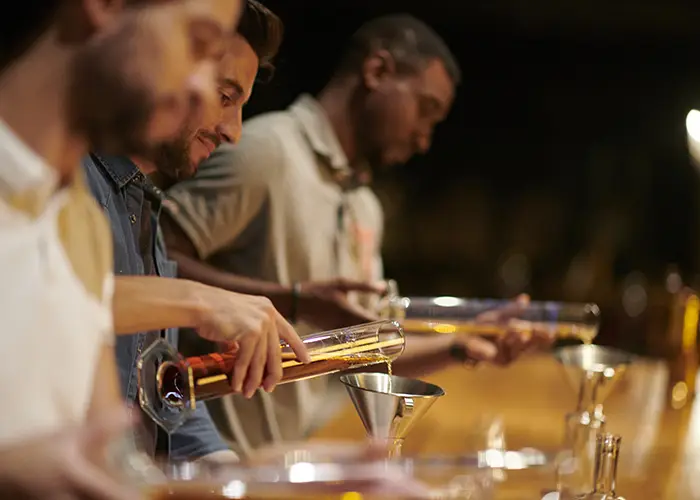
Maison CAMUS turns blending into a hands-on lesson. Its Master Blender’s Challenge introduces guests to cognacs from Fins Bois, Borderies, Petite Champagne and Grande Champagne before inviting them to combine the components into an individual blend.
The exercise helps explain why origin matters within the Cognac appellation. Comparing the four growing areas side by side reveals differences that may be harder to identify during a standard tasting. This experience is offered by reservation through Explore Cognac.
Taste Cognac in unexpected combinations
7. Pause for afternoon tea at La Nauve Hôtel & Jardin
La Nauve Hôtel & Jardin offers an afternoon tea pairing built around a cognac long drink and a small creation from the kitchen. The hotel’s extensive gardens add another reason to linger, particularly when autumn light settles over the grounds.
It is a lighter, less formal introduction to cognac cocktails and food pairing than a structured tasting. The experience is offered on selected afternoons for much of the year, but reservations and current service days should be confirmed.
8. Pair cognac with artisan chocolate at Normandin Mercier
Near La Rochelle, Normandin Mercier pairs its cognacs with seasonally changing organic chocolates from La Cabosse Enchantée. Combinations may include maritime-inspired flavors, sea salt or candied orange, with different textures and cacao profiles drawing out characteristics in the glass.
Rather than presenting chocolate as a sweet afterthought, the tasting explores how aroma, texture and origin interact. Individual visits are generally offered by reservation through Explore Cognac, with separate arrangements for groups.
9. Eat breakfast beside a working still
During the November-to-March distillation period, Chai du Rouissoir invites small groups to sit down to a traditional stillman’s breakfast while the equipment is running. Local cheeses, cured meats, preserves and biscuits accompany an introduction to the work of the distiller.
Guests can observe the moment known as the bonne chauffe, the second distillation that refines the spirit before it enters the aging process. A cellar visit and tasting complete an experience that engages smell, sound and taste while providing rare proximity to the production process.
Explore the region’s history through its distilleries
10. Separate family legend from craft at Maison Raynaud
Maison Raynaud is a fifth-generation estate in Grande Champagne where contemporary winegrowing sits alongside old and new stills. Its chapel is associated with a local tale involving the Knights Templar and the discovery of aging spirits.
The story is best understood as family legend rather than documented cognac history, but it adds atmosphere to a visit focused on the estate’s real work in the vineyard, distillery and cellar. Tastings may include older expressions paired with artisan chocolate.
11. See tradition and geothermal energy meet at Distillerie Fontagard
Distillerie Fontagard has distilled in Neuillac since the 19th century and continues to use open-fire, double distillation. Its visitor route follows the process from vine to cellar while explaining how geothermal energy and resource management are being incorporated into the operation.
The contrast is the point: heritage production does not have to mean resisting every modern improvement. The Fontagard visit shows how a long-established family operation can retain hands-on methods while reconsidering its environmental footprint.
12. Visit Roman remains and copper stills at Brillouet Distillery
At Brillouet Distillery in Saint-Romain-de-Benet, a Gallo-Roman tower shares the site with a working family distillery. An eco-museum and still exhibition trace the development of distillation, while the estate produces cognac, Pineau des Charentes, wines and liqueurs.
The combination provides a long view of regional history without suggesting that modern cognac production dates to the Roman period. The distillery continues operating during winter, while tours, exhibitions and food-focused activities are scheduled at different points throughout the year.
Planning a Cognac trip in fall or winter
Cognac can be reached by rail from Paris with a connection in Angoulême, while regional trains link Cognac with Saintes, Angoulême and La Rochelle. A car is helpful for rural estates, but travelers planning tastings should arrange a driver, taxi or organized transportation rather than driving afterward.
Reservations matter outside the summer season. Many small producers welcome visitors only on selected days or by appointment, and distillation schedules depend on the progress of that year’s harvest and fermentation. Confirm the operating period, language, accessibility and whether an experience includes alcohol before booking.
Winter travelers can add seasonal markets, food and historic towns to the itinerary using DRIFT’s guide to a festive winter in the Cognac region.
The appeal of Cognac during this period is not simply the chance to taste its famous spirit. It is the opportunity to see the region at work: copper warming, oak charring, glass glowing and generations of knowledge moving from one pair of hands to another.
For current visitor information and reservations, consult the official Explore Cognac website.