
Most travel advice still assumes the interesting places are the easy ones to reach. The overlook a short walk from the parking lot. The viewpoint with a paved path and a rail. That version of travel is real, but it leaves out where a lot of the appeal actually lives: the places you get to only after the road thins out.
For a growing number of travelers, an electric bike is the way to reach those places. It moves faster than walking, quieter than a car, and it can lower the fitness barrier that keeps some riders from exploring farther. The catch is that not every electric bicycle handles the ground the same way, and once the surface gets rough, comfort depends heavily on how well the bike manages repeated impacts and changing terrain.
The Gap Between a Map and a Road
It is easy to pick a destination and harder to picture the last mile. A scenic route to a mountain lake might be perfect asphalt for the first ten minutes, then turn to gravel, then to a washboard stretch of packed dirt that rattles every bolt on the bike.
A traveler on a standard commuter can push through it for a while, but constant jarring can turn a pleasant ride into work. For travelers using electric-bikes on these backcountry stretches, the road becomes part of the trip rather than a precondition for it. They choose a bike built for ground that can change under them, widening the itinerary instead of limiting it to routes that stay smooth from beginning to end.
What Full Suspension Actually Does
A full suspension ebike does more than make a ride softer. Front and rear suspension help the wheels track uneven ground more consistently, which can improve comfort and control when the surface becomes rough.
When a bike hits a rock, root, rut, or washboard section, the suspension absorbs part of that impact instead of passing all of it through the frame and into the rider. The bike is less unsettled by repeated bumps, and the tires have a better chance of maintaining useful contact with the ground. Over a long, uneven route, that can mean less fatigue in the hands, shoulders, and back.
It also affects confidence. A bike that stays composed over rough ground makes it easier to hold a steady line rather than tense up at every impact, especially for travelers who are comfortable riding but are not experienced mountain bikers.
When Distance Starts to Matter
Short outings can tolerate a lot. The real test is when the ride becomes hours rather than minutes and the terrain keeps asking for attention.
This is where a long distance electric bike becomes relevant. Assistance helps with climbs and headwinds, while sufficient battery capacity gives riders more margin between stops. On a road trip, detours, photo stops, wrong turns, and elevation changes can all stretch a route beyond what was originally planned.
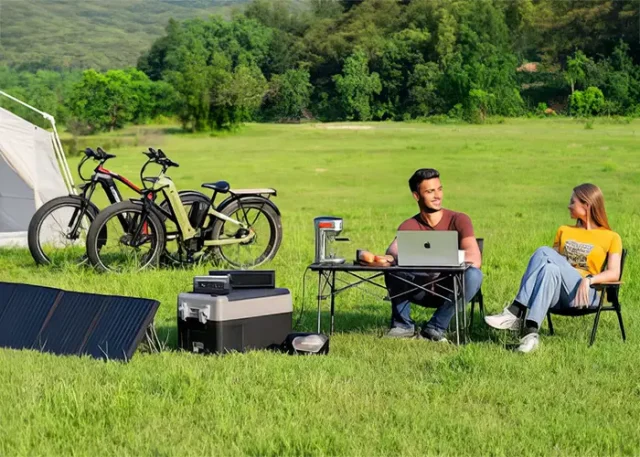
Charging and pace matter on longer days. If power is available at a lunch stop, campsite, hotel, or other destination, a break can also become an opportunity to top up the battery. Higher assist and higher speeds usually consume more energy, so riders who want to stretch a day should leave room in both the battery and the schedule.
Why Comfort Matters More on Long Rides
The people who ride the farthest are not always the strongest. They are often the ones who remain comfortable enough to keep going.
Full suspension reduces repeated vibration and sharp impacts that would otherwise reach the handlebars, saddle, and rider. Tire volume contributes too, but suspension becomes more noticeable when the route includes rough gravel, washboard roads, roots, or broken pavement.
That matters even more on multi-day travel. A ride that leaves someone noticeably sore or fatigued can make the next day’s route much less appealing. The goal is not to make every surface disappear, but to keep small impacts from accumulating into the kind of fatigue that shortens the day.
Planning a Route Around the Ride You Want
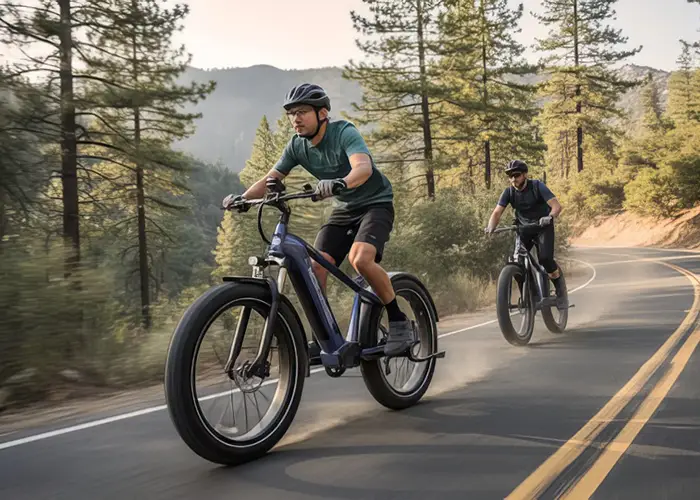
A useful habit for bike travel is to map the route more like a hike than a drive. Park roads, rail trails, forest roads, gravel connectors, and quiet farm lanes can create a more interesting route than staying beside traffic for the entire day.
The key is to choose surfaces that match both the bike and the rider. A gravel or dirt connector between two valleys can be memorable on the right setup and frustrating on the wrong one. Full suspension can make rough terrain more comfortable, but it does not replace judgment, route knowledge, or riding skill.
Check access rules before leaving. E-bike access can vary between parks, forests, trail systems, and local jurisdictions, so a route that looks rideable on a map may not always permit the type of bike you are bringing. Start modest, build up, and leave room for the unexpected detour rather than planning every day around the bike’s maximum theoretical range.
What Matters in a Road-Trip Setup
If a rough-terrain trip is on your list, match the bike to both the ground and the way you plan to transport it. Suspension travel, tire width, braking, battery range, and bike weight all matter.
Weight becomes especially important off the bike. A heavier full-suspension e-bike may require a vehicle rack rated for that load, and the battery may need to be removed before lifting or transport depending on the rack and bike instructions. Secure overnight storage also matters at hotels, campsites, or rental properties.
Charging belongs in the route plan, not as an afterthought. Bring the correct charger, know where power will be available, and avoid assuming every stop will have a convenient outlet. Riders carrying panniers, tools, or camping gear should also check the bike’s stated load limits.
You do not need the most extreme machine on the road. You need a bike that keeps the ride controlled, keeps the effort manageable, and fits the logistics of the trip. Mokwheel is one example of a brand offering both full-suspension and long-distance-focused e-bike options, reflecting how often terrain and distance need to be considered together.
Conclusion
The value of full suspension on a road trip is not about finding the roughest trail available. It is about keeping more routes comfortable and manageable when smooth pavement gives way to gravel, washboard roads, broken surfaces, or uneven ground. For travelers who want the road thinning out to expand the itinerary rather than end it, that extra control and comfort can change what the trip allows them to reach.