
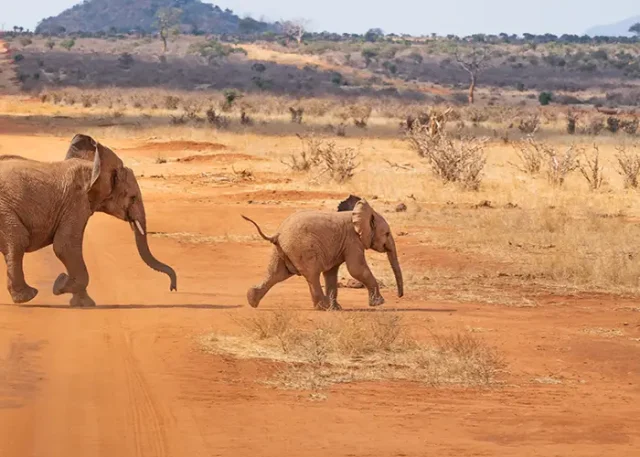
Africa is home to some of the world’s most fascinating wildlife, found across diverse landscapes ranging from open savannas to dense forests. A visit to the continent might include seeing elephants gathered near a waterhole or giraffes moving across the grasslands. These encounters can be especially memorable when you take the time to appreciate the animals in their natural surroundings.
For wildlife enthusiasts, moments like these can become the highlight of an entire trip. With experienced local guides and thoughtfully planned itineraries, you can explore different African habitats while observing wildlife responsibly. These five wildlife encounters are compelling reasons to plan an African adventure around the animals you’ve always wanted to see in the wild.
Watching Wildlife Roam Against a Skyscraper Horizon in Nairobi National Park, Kenya
Just outside Kenya’s capital, Nairobi National Park has open grasslands and wooded areas where wild animals roam against the distant city skyline. The park is home to lions, giraffes, buffaloes, and endangered black rhinos, creating an unusual setting where wildlife and modern skyscrapers share the same horizon.
On a guided safari drive, you can observe animals moving through the grasslands, with Nairobi’s tall buildings visible in the distance. You might spot a giraffe feeding near the trees or a rhino grazing on the plains. The contrast between the animals and the urban backdrop makes this one of Kenya’s most distinctive wildlife-viewing experiences.
Located around 10 kilometres from central Nairobi, the park is accessible for shorter visits as well as longer safari drives. Its proximity to the capital is worth considering if you’re planning luxury Kenya safari holidays, particularly when spending time in Nairobi before exploring other wildlife destinations. Guided visits allow guests to explore established routes while keeping a respectful distance from the animals.
Gliding Through Okavango Delta Channels in a Dug-Out Mokoro in Botswana
Botswana’s Okavango Delta is a vast network of winding waterways, lagoons and floodplains surrounded by papyrus reeds and water lilies. Traditional mokoros, once carved from tree trunks but now commonly made from fibreglass, are used to explore the shallow channels. The wetlands are home to elephants, hippos, antelope and a remarkable variety of birdlife.
A poler guides the mokoro through narrow channels using a long pole to explore the wetlands without the noise of an engine. From your seat close to the water, you might spot tiny painted reed frogs resting among the reeds or a brightly colored malachite kingfisher perched nearby. Elephants and other larger animals may also be visible along the distant banks, depending on where the journey takes you.
Mokoro excursions are available through safari camps and local guides in different parts of the Delta. Water levels influence which channels can be explored, with the annual flood generally making June through August a particularly good period for these trips. Experienced polers choose suitable routes and maintain respectful distances from wildlife, allowing visitors to appreciate the surroundings without unnecessary disturbance.
Tracking Desert-Adapted Black Rhinos Across Communal Land in Kunene, Namibia
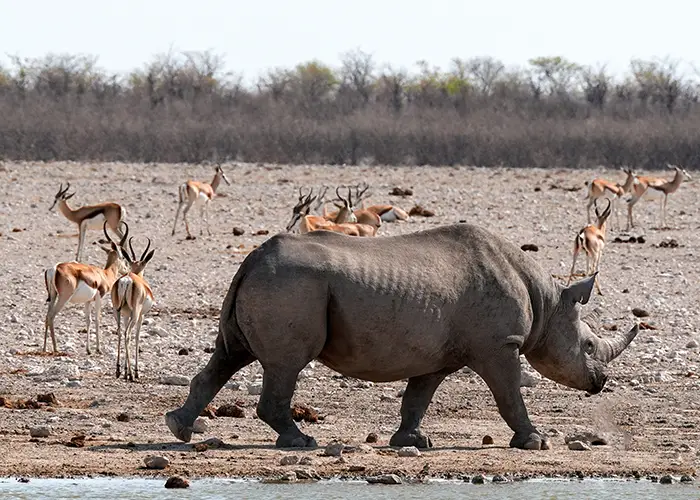
Northwestern Namibia’s Kunene region is home to desert-adapted black rhinos that roam across vast stretches of rocky hills, dry riverbeds, and arid plains. These endangered animals have adapted to life in a harsh environment, feeding on sparse vegetation and travelling long distances in search of food and water.
Exploring this remote landscape with experienced local guides provides a closer look at the rhinos and the environment they inhabit. Guides look for footprints and other signs of recent activity, sometimes continuing on foot across the rocky terrain. If a rhino is located, visitors may have the opportunity to observe it from a safe distance as it moves through the landscape.
Community-led conservation is central to wildlife protection in Kunene. Save the Rhino Trust works with local conservancies to monitor black rhinos and train local rangers, while responsible tourism helps support conservation activities and community livelihoods. Guided rhino excursions follow established viewing practices that give these endangered animals space to move naturally.
Walking Through the Valley of the Leopard in South Luangwa, Zambia
South Luangwa National Park in eastern Zambia is known for its winding river, oxbow lagoons, and forests that shelter a remarkable variety of wildlife. Leopards are among the park’s most sought-after animals, sharing the landscape with elephants, giraffes, hippos, and numerous bird species. The Luangwa River is particularly important during the dry season, when wildlife gathers around its remaining water sources.
Exploring the park on foot allows you to notice details that might go unnoticed during a safari drive. Accompanied by experienced guides, you can walk through ebony groves and along sandy riverbeds, learning to recognise animal footprints, bird calls, and other signs of activity. You might encounter antelope grazing among the trees or spot elephants moving through the woodland at a distance.
South Luangwa is considered the birthplace of the modern walking safari, with guided excursions available through several safari camps. The dry season, particularly June through October, is generally the best period for these walks, when vegetation thins and trails become easier to navigate. Guides and accompanying scouts choose suitable routes and maintain respectful distances from wildlife, allowing visitors to appreciate the experience without unnecessary disturbance.
Following Semi-Habituated Chimpanzees Through Kibale National Park, Uganda
Kibale National Park in western Uganda protects a tropical rainforest that shelters 13 primate species, including chimpanzees, red colobus monkeys, and black-and-white colobus monkeys. Its dense forest canopy and thick undergrowth provide habitat for chimpanzee communities that move between the treetops and forest floor in search of food.
Accompanied by experienced guides and researchers, visitors walk through the forest to observe chimpanzees that are still becoming accustomed to human presence. You might hear their distinctive calls carrying through the trees or spot individuals feeding, resting, or interacting with one another. Their movements can be unpredictable, so every encounter can be different.
Kibale’s Chimpanzee Habituation Experience allows visitors up to four hours observing a semi-habituated community, compared with one hour on a standard chimpanzee trek. The longer visit provides more time to learn about the animals’ behaviour and the work involved in habituation. Forest conditions and the chimpanzees’ movements influence how the day unfolds, with guides maintaining appropriate viewing distances throughout.
Which encounter would you plan around?
Exploring Botswana’s waterways by mokoro, observing desert-adapted rhinos in Namibia, or walking through Uganda’s rainforests can make an African wildlife trip particularly rewarding. Each destination has its own landscapes and wildlife, with experiences that encourage you to spend more time observing the animals in their natural habitats.
Planning a trip around wildlife also means leaving room for the unexpected. You never know exactly what you’ll encounter, but with experienced guides and time to explore, even the quieter moments can become some of your favourite travel memories.