Travel often leaves us with memories that are difficult to capture in photographs alone. The sound of waves reaching the shore, the atmosphere of a bustling market, or the changing colours of a mountain sunset can bring a destination back to life. Learning how to create a video from these moments gives travellers a way to preserve their experiences and share them with friends, family, and fellow explorers.
Why Travel Videos Are Worth Making
Photographs capture individual moments, but videos can bring several parts of a journey together into a continuous story. A short film might follow a morning walk through a historic city, a scenic drive along the coast, or a weekend spent exploring a remote mountain village.
Travel videos are also useful for documenting experiences that go beyond famous landmarks. Local food, conversations with fellow travellers, traditional crafts, and quiet moments between activities can reveal the character of a destination. These details often make a travel story feel personal rather than simply looking like a collection of holiday highlights.
You do not need professional equipment to get started. A smartphone and a little planning are often enough to produce a memorable result.
Plan a Story Before You Start Filming
Before leaving for a destination, think about what you want your video to communicate. You might focus on the local food scene, the journey itself, cultural experiences, or the contrast between busy city streets and peaceful natural landscapes.
Having a loose plan helps you capture the footage you need without making the trip feel like a production schedule. Research interesting locations, consider the best times for photography, and leave room for unexpected discoveries.
A simple beginning, middle, and ending can give your video a natural structure. Start with an establishing shot of the destination, move through the main experiences, and finish with a memorable scene that reflects the overall journey.
Capture More Than the Main Attractions
Famous landmarks and panoramic landscapes can provide impressive footage, but smaller details often make a travel video more engaging.
Film the movement of a local train, the preparation of a regional dish, colourful market stalls, or sunlight falling across an old building. These short clips provide context and help viewers understand what makes a place distinctive.
Vary your perspective as well. Combine wide shots that establish the surroundings with closer shots of interesting details. If you are filming people, respect their privacy and ask permission when appropriate, particularly when recording identifiable individuals in sensitive settings.
Keep your camera steady whenever possible, and record a few seconds of each scene before moving on. This gives you more flexibility when editing.
Make the Most of Natural Light
Lighting can influence the mood of your footage considerably. Early morning and late afternoon often provide softer light that works well for landscapes, architecture, and outdoor portraits.
At midday, strong sunlight can create harsh shadows, particularly in open areas. Look for shaded streets, covered markets, or interesting architectural details when the light is difficult.
Weather should not always be treated as an obstacle. Rain on a city pavement, clouds moving across a mountain range, or mist drifting through a forest can add atmosphere to a travel story. The goal is to capture the destination as you experienced it rather than making every scene look identical.
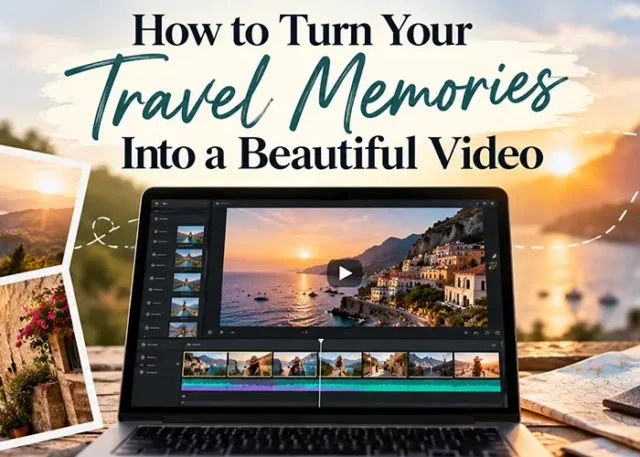
Edit Your Footage Into a Cohesive Story
Once the trip is over, review your recordings and choose the clips that best communicate the experience. Remove repeated shots, long pauses, and footage that does not contribute to the story.
Arrange the remaining clips in a logical sequence. You could organise them chronologically or group them around a theme, such as local cuisine, outdoor adventures, or cultural discoveries.
Transitions can help connect scenes, but simple cuts are often enough. Use fades when moving between sections or when you want a more reflective mood. Avoid adding effects to every clip, as excessive transitions can distract from the destination itself.
Music can help establish the atmosphere, while captions can identify locations or explain details that might otherwise be unclear. Choose music you have permission to use, and make sure it does not overpower natural sounds or narration.
Choose a Format That Suits Your Audience
Consider where you plan to share the finished video. A widescreen format may suit a longer travel film intended for a television or video-sharing platform, while vertical footage can work well for short-form social media.
Keep important subjects near the centre of the frame if you expect to crop the footage for different formats. Before publishing, watch the complete video to check for abrupt cuts, inconsistent audio, and captions that are difficult to read on a mobile screen.
You should also review privacy settings before sharing footage that includes other travellers, children, or identifiable personal information.
Let Your Journey Tell Its Own Story
The best travel videos do not necessarily feature the most expensive destinations or the most elaborate camera equipment. They capture the atmosphere of a place and give viewers a reason to imagine themselves there.
With thoughtful planning, varied footage, and careful editing, even a short weekend trip can become a meaningful visual story. Focus on the moments that made the journey special, keep the editing natural, and let the character of the destination guide the final result.