

Nobody plans to be ill on holiday, yet it is one of the most common ways a trip to Spain goes off course. A sore throat on the flight, an infected insect bite after a day in the countryside, a urinary infection that starts on the second morning: none of these are emergencies, but none of them feel like they can wait until you get home either. The real difficulty is rarely the illness itself. It is knowing where to go, how long you will wait, and whether anyone will understand you when you get there.
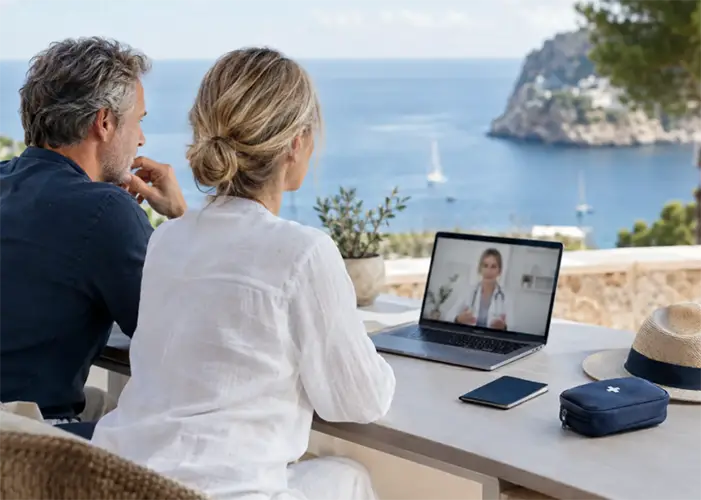
As a GP registered in Spain who sees travellers every day by video, I can tell you that most of these problems can be handled quickly and safely, often from your hotel room, as long as you know which route to take. If you need care today, an urgent online doctor in Spain who speaks English can usually assess you within hours, issue a prescription you can collect at any Spanish pharmacy, and give you the paperwork your travel insurer will ask for.
First, rule out an emergency
Some symptoms need emergency care immediately, wherever you are and whatever your insurance. In Spain, as across the European Union, you can call 112 free of charge from any phone, and operators can help in English. Call 112 or go straight to the nearest hospital emergency department (urgencias) for:
- Chest pain or pressure, especially with sweating, breathlessness or pain spreading to the arm or jaw.
- Signs of a stroke: a drooping face, weakness in an arm or leg, or slurred or confused speech.
- Severe difficulty breathing, or swelling of the lips, tongue or throat.
- Heavy bleeding, a serious injury, a seizure or a sudden, severe headache unlike any before.
- In hot weather, hot skin with confusion or collapse. That is heatstroke, and it is a medical emergency.
If you are unsure whether something counts, treat it as an emergency. No good doctor will ever criticise you for being cautious.
Your options for everything else
Most travel illnesses sit in the middle ground: urgent in the sense that you want help today, but not life-threatening. Here is how the main options compare.
The public health system. Visitors from the EU, and from the UK with a valid GHIC or EHIC card, can use Spanish public healthcare for medically necessary treatment. It is excellent, but health centres are busy, appointments are not always available the same day, and consultations are in Spanish.
The pharmacy. Spanish pharmacists are highly trained and a good first stop for minor complaints. Every town has an out-of-hours pharmacy (farmacia de guardia) on a published rota. They cannot, however, dispense prescription-only medicines without a valid Spanish prescription, and a prescription from the UK or the United States cannot be used in Spain.
A private clinic. Fast and comfortable, but often expensive, concentrated in larger cities, and not always staffed by doctors who speak fluent English.
A same-day video consultation. For common, non-emergency problems, this is often the quickest route to a proper medical assessment. You speak to a licensed doctor in English, from wherever you are staying, and if treatment is appropriate you leave with a prescription valid at any pharmacy in Spain.
What a video consultation can handle
A careful conversation is most of the consultation for many of the problems travellers bring me. Video is well suited to:
- Coughs, colds, flu-like illness and sore throats without warning signs.
- Urinary infections and cystitis.
- Traveller’s diarrhoea and stomach upsets without signs of dehydration.
- Conjunctivitis, styes and ear pain after swimming or flying.
- Rashes, sunburn, insect bites and minor skin infections.
- Lost or forgotten regular medicines, and questions about side effects.
Just as important is knowing what video cannot do. A suspected fracture, a wound that may need stitches, or anything that needs an examination or a test must be seen in person. A responsible online doctor will tell you so plainly, and tell you where to go.

How it works in practice
At my practice, an urgent video consultation lasts 15 minutes, costs €50 and is available every day of the week from 7:30 to 20:30, Spanish time. In practice, it looks like this:
- Book online and choose a time, often the same morning or afternoon.
- Join the video call from your phone or laptop. No app or Spanish phone number is needed.
- Talk it through in English. I review your symptoms, medical history and current medicines, and agree a plan with you.
- Collect your medicine. If treatment is clinically appropriate, I issue a private electronic prescription with a secure verification code that any Spanish pharmacy can check. A prescription is never guaranteed: it is issued only when it is the right thing to do.
- Claim it back. You receive an itemised invoice and a medical report, which most travel insurers ask for. Reimbursement is always your insurer’s decision, so it is worth checking your policy.
Lost your medication? Don’t panic
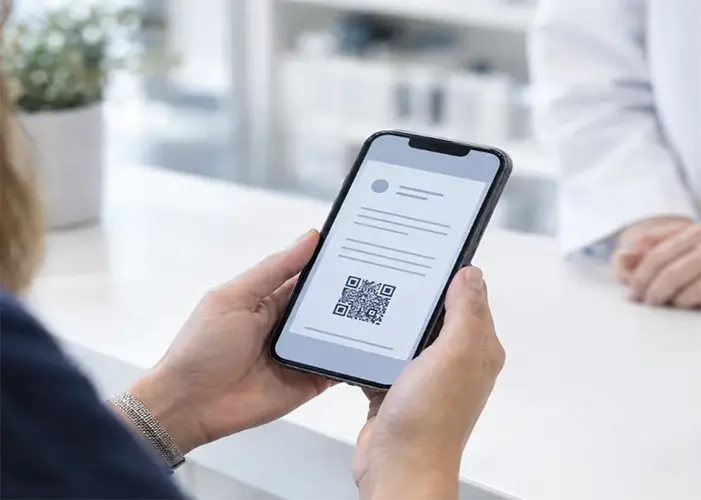
A prescription left at home or a suitcase that didn’t arrive is one of the most stressful things that can happen on a trip, but it is usually very fixable. Bring the box, a photo of the label or a copy of your last prescription. Generic names matter more than brand names, which often differ between countries. A doctor registered in Spain can review your treatment and, where appropriate, issue a local prescription. Never stop critical medicines such as anticoagulants, insulin or epilepsy treatment without advice: seek help the same day.
Five habits that make illness abroad far easier
- Carry a short list of your medicines (with generic names), doses and allergies, ideally in English and Spanish.
- Pack a small kit: oral rehydration sachets, a thermometer, plasters, antiseptic, high-factor sunscreen and insect repellent.
- Split your regular medicines between hand luggage and your main bag, with a few spare days’ supply.
- Check what your travel insurance covers before you need it, and how to make a claim.
- Save 112 in your phone, and the details of an English-speaking doctor you can reach the same day.
The bottom line
Illness on holiday is common, but it does not have to ruin your trip. If it could be life-threatening, call 112. If it is uncomfortable, worrying or simply disrupting your plans, a licensed doctor can usually help you the same day, in your own language, without you having to leave your accommodation. Knowing that before you travel is one of the best pieces of travel insurance there is.
About the author: Dr. Pedro Yelamo Vera is a General Practitioner registered with the Official College of Physicians of Bizkaia (No. 484814280). He provides bilingual English–Spanish video consultations, including same-day urgent care, for travellers and international residents across Spain. This article is for general information and does not replace a medical consultation.