

On a week-long safari, most travelers get through at least one bottle of water a day without giving it much thought.
Put three guests and a guide in a vehicle for seven days, and by the end of the trip there are close to 30 empty bottles rolling around in the back. They know this because, a few years ago, they started counting them.
That little pile is what got African Scenic Safaris rethinking how they handle drinking water. It also raises a bigger question for anyone who loves adventure travel.
These trips take people into some of the most fragile places on earth. When you’re climbing Kilimanjaro or bouncing across the Serengeti, there’s no curbside recycling waiting at the end of the day. Whatever you bring in either leaves with you or stays behind.
The good news is that single-use plastic is one of the easier problems in travel to fix, and most of the solution fits in a daypack.
How Big Is the Single-Use Plastic Problem?
The numbers are hard to picture. The United Nations Environment Programme estimates that around one million plastic drinking bottles are bought every minute worldwide.
Roughly half of all plastic made is designed to be used just once, and less than 10 percent of it ever gets recycled.
Adventure tourism adds its own complication. A lot of trips happen in remote areas where waste collection is limited or doesn’t exist at all.
A bottle thrown away in a city at least has a chance of reaching a landfill. Out in the bush or along a mountain trail, it’s far more likely to end up in a riverbed or caught in the grass.
That’s one reason Tanzania has taken such a firm stance. Since June 1, 2019, plastic carrier bags have been banned across mainland Tanzania, and the ban applies to visitors as well as residents.
Travelers are asked to leave plastic bags behind before they land, although clear ziplock bags used for airport security are still allowed.
On Kilimanjaro, park authorities run a “Trash In, Trash Out” policy, and small disposable plastic water and juice bottles aren’t permitted on the mountain.
The Reusable Travel Products That Make the Biggest Difference
You don’t need a whole new wardrobe of eco gear to cut down on plastic. A handful of well-chosen items covers most situations, and you may already own several of them.
- A sturdy water bottle, ideally stainless steel. It will last for years, and on a trek it’s essential.
- A water filter or purification tablets, which are especially handy if you’re traveling on your own before or after a guided trip.
- A couple of cloth bags or stuff sacks. With Tanzania’s bag ban, they’re the simplest way to keep dirty laundry and muddy boots away from everything else.
- A small set of reusable cutlery and a lightweight food container for packed lunches and snacks.
- Solid shampoo and soap bars, which replace the tiny hotel bottles and won’t leak in your luggage.
- Refillable travel containers for sunscreen and insect repellent, filled from larger bottles at home.
None of this is complicated. Most of it fits in a carry-on, and in our experience it usually makes travel a bit easier rather than harder.
What a Responsible Tour Operator Can Do
Travelers can only do so much on their own. If a company hands out bottled water at every stop, even the most careful guest ends up adding to the pile.
That’s why the decisions a Responsible Tour Operator makes behind the scenes count just as much as what you pack.
Here’s what changed on our own trips. In 2023, they started carrying jerricans of drinking water in our safari vehicles and gave guests reusable bottles to refill throughout the day.
In 2025, they upgraded those bottles from reusable plastic to stainless steel. Based on our booking data, they estimate the switch has kept around 350,000 plastic bottles out of landfill over two years.
They also replaced the cardboard lunchboxes on day excursions with boxes made from sugarcane bagasse, which breaks down naturally.
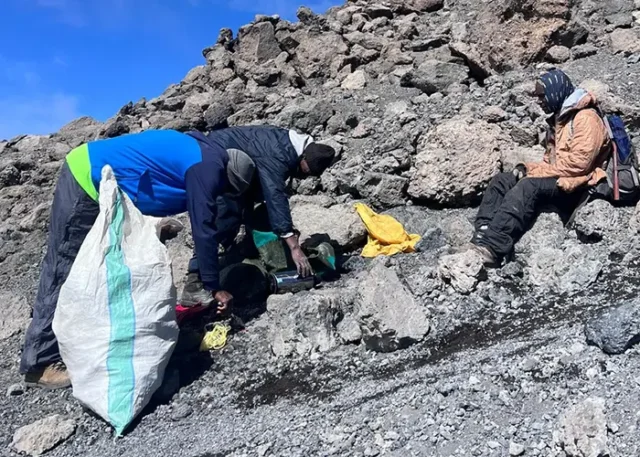
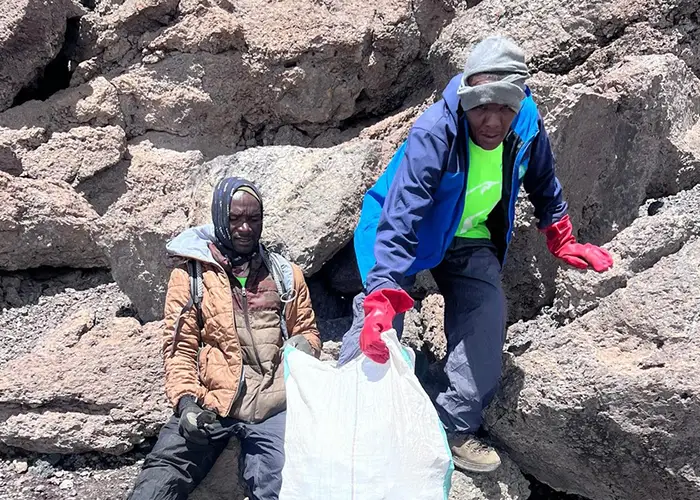
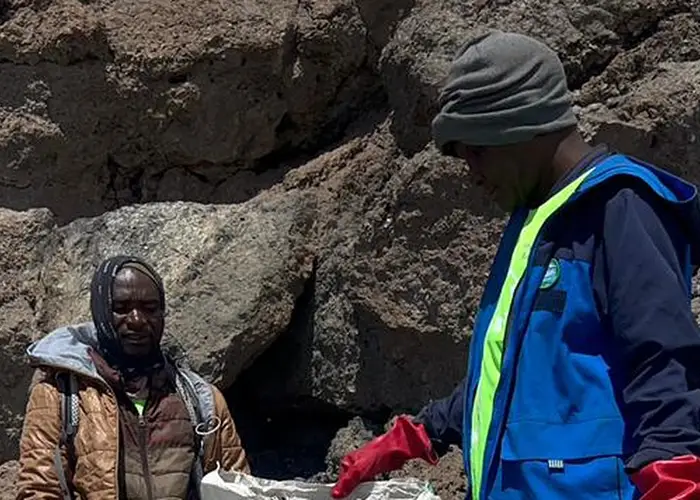
On Kilimanjaro, our porters and guides carry every bit of our waste off the mountain and pick up litter left by others along the way.
In November 2025, a team of twelve spent six days cleaning the Machame Route and brought down 262 kg of rubbish. There’s more detail about this work on our sustainable tourism page.
Plenty of other companies are making similar changes, and it’s worth asking about before you book. A few good questions to send your operator:
- Do you provide drinking water in bulk containers, or in plastic bottles?
- What happens to the waste from camping safaris and treks?
- Do you check how your partner lodges handle plastic?
Simple Habits That Help on Any Adventure
Gear helps, but habits are what make the difference over a whole trip. A few small things go a long way:
- Turn down plastic straws and bags when they’re offered, and keep a cloth bag with you for market shopping.
- Ask your lodge or hotel about refill stations before buying bottled water.
- Carry out everything you take on a hike, snack wrappers included.
- Unwrap new gear at home so the packaging doesn’t travel with you.
It also helps to see plastic as part of the bigger picture. Responsible Tourism is often discussed in terms of carbon or wildlife, but it’s also about the everyday choices you make on the road.
Plastic happens to be one of the easiest places to start, because the results are visible right away.
Why Cutting Plastic Is So Important in Tanzania
People come to places like the Serengeti and Kilimanjaro because they feel wild. That feeling doesn’t survive long if the trails are lined with bottles and wrappers.
Kilimanjaro alone sees tens of thousands of climbers a year. If each of them left even one bottle behind, the mountain would look very different.
Plastic that ends up in these landscapes can be swallowed by animals, wash into streams and take hundreds of years to break down.
As a locally owned Tanzania Tour Operator, they are based in Moshi, the town that sits right at the foot of Kilimanjaro. Keeping the mountain and the parks clean isn’t an abstract goal for our team. For many of them, it’s home.
Plan a Lower-Plastic Adventure
Cutting single-use plastic on your next trip doesn’t take much effort. Pack a good bottle and a couple of cloth bags, choose a company that refills instead of handing out plastic, and carry your waste out with you.
If you’re planning a Tanzania safari or a Kilimanjaro climb, they’re always happy to walk you through how they handle water and waste on our trips. You can get in touch with our team any time.