

You’ve landed, your first meeting is tomorrow morning, and a message from your host says to use a different entrance. The address matches your calendar invite, but the building has several gates. At the hotel, you still need to ask whether you can leave your luggage before check-in.
On the first day of an overseas business trip, these small exchanges can take more time than the meeting you flew in for. The best preparation is to separate what you can show, what you need to ask, and what you should confirm in writing. A saved address can do more than a translated explanation. A short voice exchange can settle a question at the front desk. A written recap can keep two teams from leaving a meeting with different plans.
Before You Fly: Make an Arrival Note You Can Show
Save one note with your hotel name and address in the local language, your booking reference, your host’s name and number, and the address of your first meeting. Ask your host for the entrance name or gate number, especially if you’re visiting a large office complex or exhibition venue. A map pin can get you to the right block and still leave you at the wrong door.
Keep a screenshot of the note so you can open it without a connection. If someone needs only the address, show that line on its own rather than handing over a screen full of booking and contact details.
If you plan to use a translation app, try a short exchange before departure. Can you find the right language pair quickly? Can the other person see the translation without taking your phone? If you expect to rely on offline translation, test the specific language pair with your connection turned off. It’s easier to find out what works before you’re standing at a reception desk.
At the Hotel: Use a Browser for One Quick Question
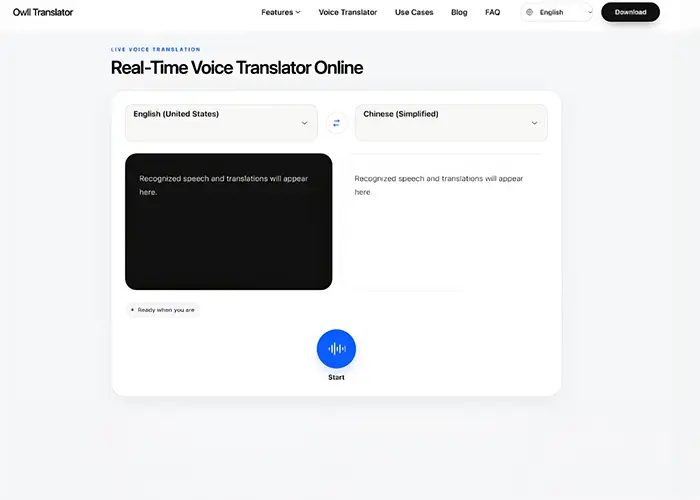
Suppose you arrive before check-in and want to ask whether the hotel can hold your bag until evening. Show the reservation first, then ask one question: “Can I leave this bag here until 6 p.m.?” It’s easier to confirm a direct answer than to sort through a translation of your full itinerary.
If you haven’t installed an app, the Voice translator online tool lets you select two languages, allow microphone access, and take turns speaking. The browser shows the recognized speech and translated captions. The free web trial offers up to one minute of use in total, so it’s suited to a quick exchange rather than an extended conversation.
Before leaving the desk, point to “6:00 p.m.” on your phone and confirm that’s the pickup time. If there’s a luggage tag, keep it somewhere you can reach without opening the bag you just checked.
At the Venue: Confirm the Entrance, Not Just the Address
When someone says “the east entrance,” check what you’ll actually see from the street. Is the entrance marked with a gate number? Is it next to a particular shop or across from a station exit? A sign, a photo, or a map pin at the door gives you something you can recognize when you arrive.
At a trade show, keep the hall and booth numbers together. At a client office, ask whether visitors check in at the main lobby or go straight to a separate building. These details also make it easier to get help if your map drops you at the wrong entrance: “I’m at Gate 2. Should I stay here or walk to Gate 4?” gives your host more to work with than “I can’t find you.”
With the Client: Translate the Conversation, Then Confirm the Details
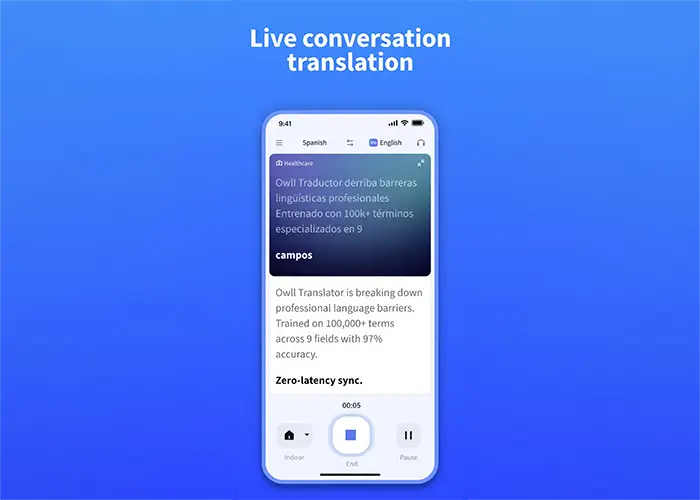
At the start of the meeting, ask whether your host is comfortable using a translation app. Place the phone where both people can see the screen and try one exchange before getting into the agenda. In a busy venue, stepping away from the crowd may help more than repeating the same sentence louder.
For face-to-face conversations, an online voice translator tool like Owll Translator lets both people take turns speaking and get translations in real time. Use it in short turns, especially when a sentence contains a date, quantity, or product name. “We can send two samples on Thursday” is easier to verify than a single long sentence covering the samples, shipping address, and delivery deadline.
Pay attention to distinctions that matter to the work. “Ship on Thursday” and “arrive by Thursday” describe different commitments. If either person hesitates, write both options down and ask which one they mean. For unfamiliar names or product codes, type them or show them on an existing document instead of repeating them into the microphone.
End with a brief written recap that both sides can check. For example: “We’ll send two samples on Thursday, November 12. You’ll confirm the delivery address by Wednesday. The arrival date is still open.” Ask your host to confirm or correct those details before anyone books a shipment or makes a promise to another team.
Frequently Asked Questions
Can I use voice translation without downloading an app?
Yes, if you have an internet connection and the browser can access your microphone. A browser tool is handy for a short exchange. If you expect several conversations during the trip, try your preferred app and language pair before you leave.
What should I confirm in writing after a translated business meeting?
Confirm the next action, who owns it, and when it’s due. Include any names, addresses, quantities, or product codes someone will act on. If a detail is still open, say so explicitly.
Your first day doesn’t need to run on translated speech alone. Show the address, ask the short question, and write down the agreement. Each method solves a different problem, and the written details are still there when you need them the next morning.