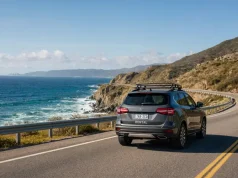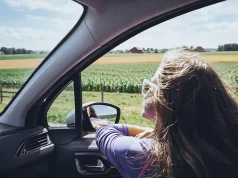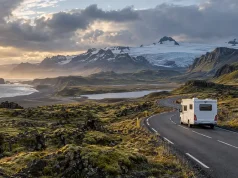
A good road trip is not defined only by hotels, restaurants, and attractions. Often, what travelers remember most are the pauses along the way: arriving at a lakeside campsite in the evening, opening the car door and hearing the wind first; waking up without passing through a hotel lobby, with a ridge, forest, or open field outside.
For modern travelers, where they stay shapes the pace of the trip and the relationship between travelers and the destination itself. A tent offers another kind of freedom for road trips: the ability to stop at the right campsite and turn a night outdoors into a closer experience with nature.
Travel Does Not Have to Follow Fixed Accommodation
Traditional travel often revolves around where people stay. Where to sleep tonight, where to leave from tomorrow, and how far the next stop is from the hotel can quietly shape the whole route. A road trip may feel more flexible, but if every night still depends on fixed lodging, the itinerary can remain tied to the destination rather than the journey.
Camping changes that relationship. It turns the overnight stay into a more flexible part of the trip. Travelers can leave time for a slower road, a quieter lake, or a campsite better suited for sunset, instead of rushing back to a room booked somewhere else. This freedom still depends on legal campsites, planning, weather judgment, and basic preparation, but it helps travel become less about checking in and more about staying well along the way.
Tents Bring Travelers Closer to the Destination
The appeal of many natural destinations is not always found at the entrance, the overlook, or the visitor center. It often appears during quieter parts of the day: the air in the morning, the light after sunset, the sound of the night. These moments are hard to experience through a quick daytime stop.
If travelers only drive through during the day and return to a place to stay far away, the destination can become little more than a background for photos. Staying at a campsite changes that. A tent allows travelers to remain inside the setting, feeling the weather shift, the light move, and the rhythm of the day unfold.
That is where inflatable tents have practical value for road-trip camping. By reducing the steps involved in traditional pole assembly, they help travelers create a usable rest space more quickly after arriving at camp. For people who have already spent the day driving, lowering the setup burden can improve the travel experience itself.
Comfort Does Not Mean Losing the Outdoors
One misunderstanding about camping is that it has to be uncomfortable. Another is that once comfort becomes a priority, the outdoor feeling disappears. Good outdoor accommodation does not have to choose between comfort and nature.
What matters is reducing unnecessary friction so attention can stay on the destination. Tent setup should not take over the whole evening. Bags and jackets need a place to go. In the morning, packing up should not mean searching through everything again.
An inflatable camping tent suited to road travel is not only about solving the question of where to sleep. It should help travelers move smoothly between arrival, rest, organization, and departure the next day. Comfort is not about moving a hotel outdoors; it is about making outdoor stays easier to enjoy.
Road Trips Need a Reliable Temporary Base
One of the best things about road travel is that people can keep moving during the day, then settle into a stable base at night. That base does not need to be complicated, but it does need to be clear: where to sleep, where to place bags, where to change clothes, and where to sit down with a warm drink.
If the tent feels too cramped, luggage spills into the sleeping area. If the interior is too low, changing clothes and organizing gear become tiring. If setup takes too long, travelers may find it hard to relax after arriving at camp.
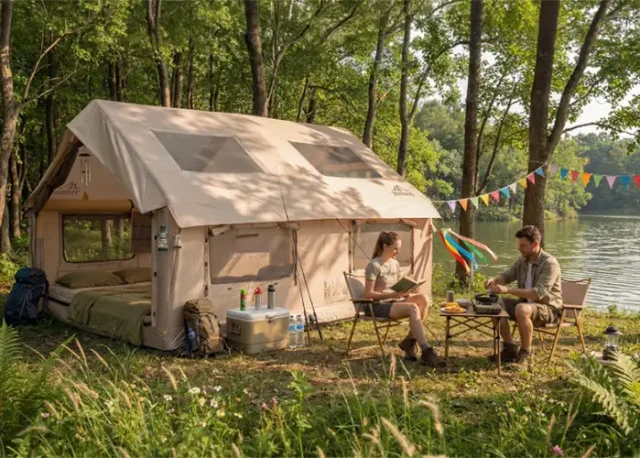
For road trips with family or friends, ZONKOO Vega shows how inflatable tents for camping can work as a temporary base rather than just a place to sleep. Its 11-minute setup helps the evening reset begin sooner, while 129 sq ft of interior space and a 7’1″ standing height make it easier to organize backpacks, change clothes, and prepare items for the next day after a long drive, instead of letting everything pile up near the entrance.
The point is not simply how large the tent is. The real question is whether it can make one outdoor night feel more orderly and help travelers continue the trip the next morning.
The Campsite Can Become Part of the Trip
Many travelers think of a campsite as an alternative to accommodation, but on a road trip, the campsite can become part of the experience. Lakeside campgrounds, forest sites, desert-edge camping areas, and campgrounds near national parks are not only places to sleep. They can become part of the memory of the journey.
In a hotel, travelers return to a space designed for them. At a campsite, they create the space themselves. Setting up the tent, placing chairs, preparing dinner, and watching the sky darken all bring travelers more directly into the destination, rather than leaving them as short-term observers.
The great appeal of a road trip is the ability to slow down at the right moment. But slowing down only works when the place to stay supports it. When setup, organizing, and packing take too much energy, travel starts to feel like another kind of work. A tent that helps travelers create a rest space quickly, organize their gear, and leave the next morning smoothly becomes a flexible form of accommodation for road travel, opening a way to move beyond fixed routes while bringing an ordinary weekend closer to nature.