
Before Las Vegas was a railroad stop, America’s gambling capital was a river. The Mississippi of the 1800s carried professional card sharps between New Orleans and St. Louis on paddlewheel steamers, a world Mark Twain chronicled so vividly that the phrase “riverboat gambler” still conjures brocade vests and aces up sleeves. What fewer travelers know is that this world staged a comeback within living memory, and that you can still drive its length today, from the Quad Cities down to the Gulf, tracing the strangest and most atmospheric casino trail in North America.
Bettendorf, Iowa: Where the Revival Began
The modern chapter starts on April 1, 1991, at seven in the morning, when a replica 1880s paddlewheeler called the Diamond Lady pushed off from Bettendorf, Iowa, with Vanna White doing the christening honors and three thousand people lining the dock. Iowa had passed the country’s first riverboat gambling law two years earlier, and that morning three boats, the Diamond Lady, the President in Davenport, and the Casino Belle in Dubuque, relaunched an American tradition, a history the Iowa Racing and Gaming Commission preserves in its official timeline. The rules feel charmingly quaint now: five-dollar maximum bets, a two-hundred-dollar loss limit per cruise, and mandatory sailing, since the law required the boats to actually cruise. Over two million people rode them in the first year, and the Quad Cities riverfront remains the natural first stop on the trail, equal parts casino stop and pilgrimage site.
Missouri: The Heartland Stop Where the River Still Matters
Follow the Mississippi south and you reach the trail’s heartland anchor. Missouri voters approved riverboat gambling in 1992, created a gaming commission the following year, and built casino districts onto the riverfronts of St. Louis and Kansas City that still define how the state plays. There is also a wonderful literary detour here: Hannibal, Twain’s boyhood hometown, sits right on the route between the Quad Cities and St. Louis, letting you visit the source material and the descendants of its steamboats in one afternoon.
What makes Missouri especially interesting for a traveling player is that the river is still, genuinely, where the action lives. As the Missouri casino guide on the PokerTube site lays out, the state has never licensed online casino play; regulated sports betting only arrived in December 2025 after a 2024 ballot measure, and the online casino options that exist for residents are offshore platforms operating outside Missouri’s own oversight, which guide author Bryan Zarpentine tested with real deposits precisely because that market demands more caution than a licensed one. For a heritage traveler, this legal quirk is almost a gift. In an era when most states have moved their gambling onto phones, Missouri’s casino culture still requires you to physically go to the water, which is exactly what a riverboat trail is for.
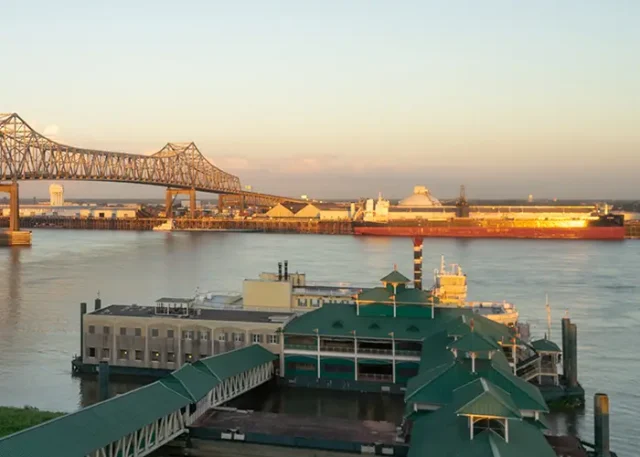
The venues themselves have evolved from the cruising paddlewheelers of the nineties into moored, resort-scale properties, but the settings remain honest: barge-based floors on the Missouri and Mississippi rivers, with the water traffic sliding past.
Downriver: Tunica, Biloxi, and the Gulf
Continue south and the trail widens into legend. Mississippi passed dockside gambling in 1990, and Bernie Goldstein, the Iowa scrap-metal magnate remembered as the father of riverboat gambling, soon sent his boats down to the Gulf Coast. What followed was the Tunica boom, when a stretch of Delta farmland briefly became the third-largest gambling market in America, and the transformation of Biloxi into a casino coast. New Orleans, the historic southern terminus of the original steamboat gamblers, closes the route with its own mix of casino floors and the French Quarter’s older, rowdier idea of a good time.
The Delta leg is also where the trail earns its atmosphere. Between casino stops you are driving through blues country, past Clarksdale’s crossroads and some of the best barbecue and tamale stands in the South, which is the real argument for doing this by car rather than flying into any single destination.
Notes for the Modern Riverboat Gambler
A few practicalities make the trip smoother. Most “riverboats” today are permanently moored or built on barges, so nobody will make you sail, and the old cruise-schedule anxiety is history. Budget your route around two or three anchor cities rather than trying to hit every landing, since the distances are honest Midwestern distances. And if you want to compare these riverside floors against the world’s other great casino destinations before committing a week to the Mississippi, our earlier look at the best casino cities for a weekend getaway offers the global short list.
But the short list is not the point of this trip. The point is that America’s gambling story did not start in the desert. It started on brown water, in Twain country, and for the price of a tank of gas you can still follow it downstream.