So you have decided to charter a yacht. You found a beautiful vessel, spotted a weekly rate, and assumed that was the number to plan around.
Here is the part nobody tells you upfront. That headline figure is the starting point, not the full story.
This does not mean charter pricing is shady. It works in layers, and once you understand them, budgeting becomes simple.
By the end, you will know what the base fee covers, what sits on top and how to plan a realistic total before you sign.

Why the Advertised Rate Is Only the Beginning
When you see a yacht listed at a price per week, that figure buys you the vessel and its crew for that time. It does not cover the cost of running the yacht while you are on board.
Think of it like renting a villa. The price gives you the house, but you still pay for the food you eat and the fuel that powers it.
What the weekly rate really reflects
The rate is shaped by the yacht itself. Its size, age, builder, and the season you travel in all push the number up or down.
A new superyacht in peak August costs far more than an older vessel in the shoulder season, and location matters too, as yacht rental costs in a hub like Antibes show. The rate reflects the boat, not your whole holiday.
Why first-timers get caught out
Most people new to chartering expect an all-inclusive figure, like a cruise or package holiday. Charters are not built that way.
That gap between expectation and reality is where careful budgeting starts. Once you know the costs are coming, none of them feel like a shock.
What the Base Fee Usually Covers
The good news is that the weekly rate gives you a great deal. You are getting far more than just the keys to a boat.
The yacht, the crew, and the insurance
Your fee covers the hire of the yacht for the agreed period. It also covers the professional crew, from the captain to the chef and deckhands, along with their wages.
The yacht’s own insurance is included too. That protects the vessel itself, so you are not responsible for insuring the boat you are staying on.
Standard equipment and onboard amenities
Most charters include the use of the toys and gear already on board. That often means tenders, paddleboards, snorkelling kits and similar water equipment.
You also get full use of the onboard spaces, from the sun decks to the lounges. A specialist broker like Ocean Independence will confirm exactly what a given yacht includes before you commit, so there are no grey areas.
The Costs That Sit on Top
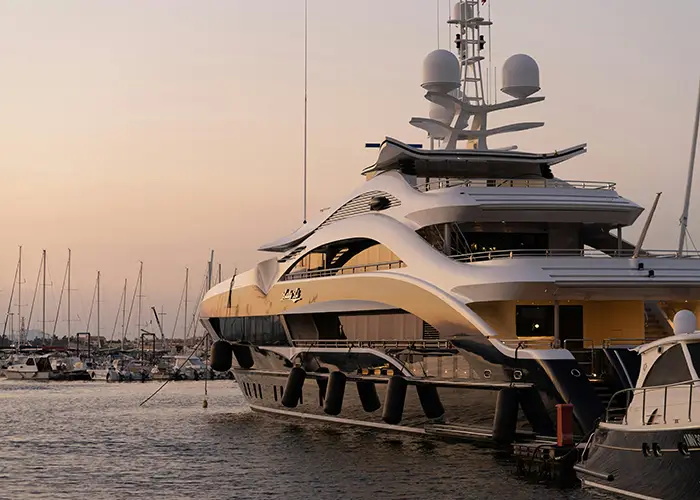
Here is where the extras come in. None of these are hidden; they are simply the normal running costs of being out on the water.
Food, drink, and fuel
You pay for what you and your guests eat and drink during the trip. The same goes for fuel, which depends entirely on how far and how fast you choose to cruise.
These are variable costs, not fixed ones. A relaxed week at anchor uses far less fuel than a fast itinerary hopping between islands daily.
Marina fees, taxes, and repositioning
When you dock in a port or marina, there are berthing fees to pay. Many cruising regions also apply local taxes on top.
Most of these running costs, including fuel, food, dockage, and often local taxes, are handled through a single fund rather than billed to you one by one. That fund is the APA, which we will come to next.
There is one cost that usually stays separate. A delivery or repositioning fee applies when the yacht has to travel from its home base to your chosen starting point, and it covers that journey.
How the APA Makes Variable Costs Simple
All those variable costs above could feel hard to track. This is where the APA comes in, and it is genuinely your friend.
What the APA actually is
APA stands for Advanced Provisioning Allowance. It is a sum you pay before the charter begins, usually a percentage of the charter rate, that the crew uses as a float.
From this pot, your crew pays for fuel, food, drinks, dockage and similar running costs. You are not pulling out your card every time the yacht refuels or the chef shops.
How it gets settled
Your crew keeps a clear record of everything they spend from the APA. At the end of the trip, they hand you the accounts.
If you have spent less than the float, the balance is refunded to you. If you have spent more, you simply top it up, so nothing is ever open-ended or vague.
Planning Your Total Budget Before You Book
Now you can put the pieces together. A realistic budget is not just the weekly rate; it is the full picture.
Building your all-in number
Start with the base charter rate. Add the APA, then factor in a customary crew gratuity, which is separate from the APA and left to your discretion.
That combined figure is your true working budget. It is almost always higher than the headline rate, and that is normal.
Knowing the full cost upfront
The whole point is to see this picture before you sign, not after the trip. A good broker lays out every cost clearly in advance, which is the difference between a relaxing holiday and a nasty surprise.
When you are ready to compare options, you can search luxury yachts for charter with pricing laid out clearly, so you always know where you stand from the very first conversation.
Conclusion
Charter budgeting is not about unpredictability. It is about visibility.
Once you understand the three layers, the base fee, the running costs on top and the APA that ties them together, the whole thing stops feeling mysterious. You are simply paying for a yacht, a crew, and the real cost of running both.
Get that picture clear before you book, lean on people who explain it honestly, and your charter becomes what it should be. A holiday you enjoy without a single eye on the bill.
FAQs
What does a luxury yacht charter fee usually include? The base fee covers the hire of the yacht, the professional crew and their wages, the vessel’s insurance, and the use of standard onboard equipment and amenities.
What is an APA, and how much should I expect to pay? The APA is an advance allowance the crew uses for variable costs like fuel, food, and dockage. It is commonly set at a percentage of the charter rate, and any unused amount is refunded.
Are gratuities included in the charter rate? No, crew gratuities are not included in the rate or the APA. They are customary and left to your discretion, usually guided as a percentage of the charter fee.
Why is the final cost different from the advertised rate? Because fuel, provisioning, marina fees, and local taxes all vary depending on your itinerary and how you use the yacht. The advertised rate covers the boat and crew, not these running costs.