
The New York exhibition may have closed, but the world of Downton Abbey remains surprisingly accessible. Across England and Scotland, many of the castles, country houses, villages and historic streets seen in the television series and films welcome visitors.
From the grand rooms of Highclere Castle to the Oxfordshire village that became Downton, these locations offer more than a collection of costumes and recreated sets. Visitors can walk through the actual rooms, gardens and streets where the Crawley family’s story was filmed.
Highclere Castle: The Real Downton Abbey
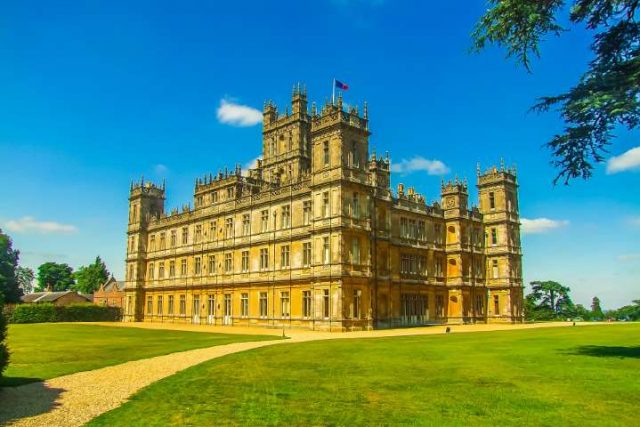
For most fans, the journey begins at Highclere Castle in Hampshire. Its honey-colored exterior, sweeping staircase and opulent state rooms are instantly recognizable as the Crawley family’s home.
Although the story places Downton Abbey in Yorkshire, Highclere is in southern England, near Newbury. The castle has been the country seat of the Earls of Carnarvon since the 17th century and remains the private home of the current Earl and Countess.
Tours typically include the Saloon, Library, Drawing Room, State Dining Room and several bedrooms featured in the series. Visitors can also explore the surrounding gardens and parkland designed by Capability Brown.
Highclere has another fascinating connection to history. The fifth Earl of Carnarvon helped finance Howard Carter’s discovery of Tutankhamun’s tomb in 1922. An Egyptian Exhibition in the castle’s cellars explores the expedition and displays replicas of objects associated with the discovery.
Highclere Castle is not open every day or throughout the entire year. Public openings, guided tours, afternoon teas and seasonal events are offered on selected dates. Most visits require advance reservations, and popular dates can sell out well ahead of time. Check the castle’s current schedule and ticket availability before planning your trip.
Bampton: The Village of Downton
Many of the outdoor village scenes were filmed in Bampton, a picturesque community in the Oxfordshire Cotswolds. Its stone buildings, churchyard and quiet lanes became the fictional village of Downton.
St. Mary the Virgin Church appeared as St. Michael and All Angels, where some of the series’ most memorable weddings, funerals and christenings took place. Nearby Churchgate House provided the exterior of Isobel Crawley’s home, while Bampton’s former grammar school became Downton Cottage Hospital.
The building now houses the Bampton Community Archive and may have displays, photographs and information related to filming. Several recognizable locations are concentrated around Church View, making the village easy to explore on foot.
Bampton is a living community rather than a purpose-built attraction. Some buildings seen in the series are private homes, so visitors should remain on public paths, avoid blocking driveways and respect residents’ privacy.
The village can be combined with Oxford or a longer trip through the Cotswolds. Travelers interested in other screen-famous destinations can also read DRIFT’s guide to UK filming locations to visit.
Alnwick Castle: Brancaster Castle
In Northumberland, Alnwick Castle appeared as Brancaster Castle in the fifth-season finale and again in the final episode of the original television series.
The Crawley family first visited Brancaster for a shooting party hosted by Lord and Lady Sinderby. It later became the home of Lady Edith and Bertie Pelham after Bertie inherited the title of Marquess of Hexham.
Filming took place in the State Rooms, on the ramparts and around the castle grounds. Nearby Hulne Abbey and Hulne Park also contributed to the fictional estate.
Visitors can tour the State Rooms and join talks exploring Alnwick’s history and screen appearances. The castle is also famous for playing Hogwarts in the first two Harry Potter films, making it an especially appealing destination for television and movie enthusiasts.
Opening is seasonal, so confirm the castle’s dates before traveling to Northumberland.
Inveraray Castle: The Scottish Highlands Episode
One of the series’ most dramatic settings appeared during the third-season Christmas special, when the Crawleys traveled to Duneagle Castle in Scotland. The real location was Inveraray Castle, the ancestral home of the Dukes of Argyll.
Its distinctive Gothic Revival architecture, conical towers and mountainous setting create a markedly different atmosphere from Highclere. Interior scenes were filmed in rooms including the State Dining Room and Armoury Hall, while the surrounding estate provided a backdrop for outdoor scenes.
Inveraray Castle sits near the shores of Loch Fyne in western Scotland. It makes a rewarding addition to a Highlands itinerary and can be reached on a day trip from Glasgow, although an overnight stay allows more time to explore the town and surrounding countryside.
Because the castle remains a family home, public access is seasonal and limited to designated areas.
Beamish: Step Into the Early 20th Century
Beamish, The Living Museum of the North offers one of the most immersive Downton Abbey experiences. Located near Durham, this large open-air museum recreates life in northeast England during several historical periods.
Its 1900s Town appeared in the original television finale and the first Downton Abbey film. More than 100 cast and crew members worked at the museum during filming. Fans may recognize the garage used for Tom Branson’s automobile business, along with historic storefronts and streets seen in the production.
Unlike a traditional film-location tour, Beamish brings the period to life with costumed interpreters, heritage trams, historic shops, a bakery and reconstructed homes. It is easy to spend most of a day exploring the museum.
Lacock: A Village Preserved in Time
The National Trust village of Lacock in Wiltshire appeared twice in Downton Abbey. Its historic streets were transformed into a 1920s livestock market for the final season, complete with animals, market stalls and period vehicles.
Much of the village is remarkably free of modern visual intrusions, making it a frequent location for period productions. Lacock Abbey and the surrounding streets have also appeared in Harry Potter, Pride and Prejudice, Wolf Hall and Fantastic Beasts.
Visitors can explore the village, tour Lacock Abbey and learn about William Henry Fox Talbot, whose experiments at the property played an important role in the development of photography.
Harewood House and Wentworth Woodhouse
The first Downton Abbey film expanded the story beyond the familiar estate as the Crawleys prepared for a royal visit. Several scenes were connected to two magnificent Yorkshire properties.
Harewood House appeared as itself, representing the country home of Princess Mary and Viscount Lascelles. Its imposing exterior and landscaped grounds provided the setting for the royal household’s arrival.
Interior ballroom scenes were filmed at Wentworth Woodhouse in South Yorkshire. The house is known for its exceptionally long façade and grand state rooms, including the Marble Saloon seen in the movie.
Both estates welcome visitors, although accessible rooms, tours and opening schedules vary throughout the year.
Planning a Downton Abbey Filming-Locations Trip
The locations are spread across Britain, so visiting all of them requires a multi-day itinerary. Highclere Castle is the easiest major location to reach from London, while Bampton works well as part of an Oxford and Cotswolds trip.
Lacock can be incorporated into an itinerary through Wiltshire and Bath. Alnwick Castle and Beamish can be paired on a journey through northeast England, while Harewood House and Wentworth Woodhouse fit naturally into a Yorkshire itinerary. Inveraray Castle is best treated as part of a separate Scottish journey.
Check opening dates directly with each property before booking transportation or accommodations. Many of these locations remain private homes or working historic estates, and access can change for events, conservation work or filming.
The New York exhibition offered fans a temporary glimpse behind the scenes. Britain’s filming locations provide something more enduring: the opportunity to stand inside the real houses, castles and villages that gave Downton Abbeyits unmistakable sense of place.