

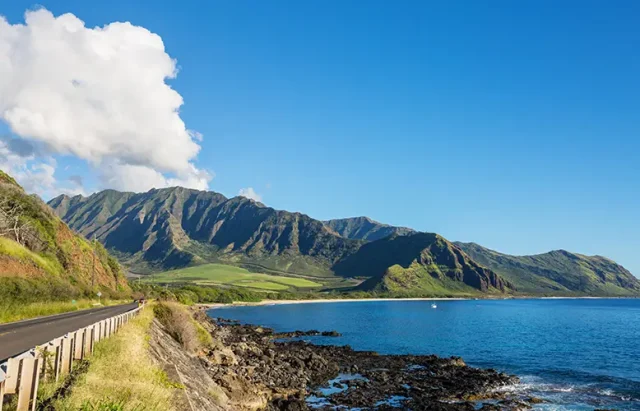
Getting around Hawaii requires more planning than the typical mainland vacation. The Hawaiian Islands may appear close together on a map, but there are no bridges connecting them, and regular passenger ferries operate on only a limited number of routes. Once you arrive, transportation options also vary considerably from island to island.
Oʻahu has Hawaii’s most extensive public transportation system, while Maui, Kauaʻi, and the Island of Hawaiʻi are generally easier to explore with a rental car. Airport shuttles, taxis, rideshare services, guided tours, and private transfers can fill the gaps for travelers who prefer not to drive.
The best option depends on where you are staying, which attractions you want to visit, and how much flexibility you need.
Traveling Between the Hawaiian Islands
Flying is the primary way to travel between Hawaii’s major islands. Interisland flights are short, but travelers should still account for airport check-in, security, baggage claim, and ground transportation at both ends of the journey.
Hawaiian Airlines and Southwest Airlines connect Honolulu, Kahului, Līhuʻe, Kona, and Hilo. Mokulele Airlines uses smaller aircraft to serve communities and airports that are not always included in the larger airlines’ networks, including Molokaʻi, Lānaʻi, Kapalua, Hāna, and Waimea.
Some routes require a connection in Honolulu, particularly when traveling between smaller islands. When planning an island-hopping itinerary, avoid scheduling important activities immediately after arrival. Weather, baggage handling, and short operational delays can affect even a brief flight.
Are There Ferries Between the Hawaiian Islands?
There is no general passenger ferry system connecting Oʻahu, Kauaʻi, Maui, and the Island of Hawaiʻi. Most interisland travel requires a flight.
The principal exception is the Expeditions Maui–Lānaʻi Passenger Ferry, which operates between Māʻalaea Harbour on Maui and Mānele Harbor on Lānaʻi. The crossing takes approximately 70 minutes, and advance reservations are recommended.
Ferry schedules can change because of weather and sea conditions, so travelers should confirm departure times before heading to the harbor.
Getting Around Oʻahu
Oʻahu is the easiest Hawaiian island to explore without renting a car. Waikīkī has a high concentration of hotels, beaches, restaurants, stores, and tour pickup locations, making it possible to walk for much of a stay.
TheBus and Skyline
TheBus operates an extensive network across Oʻahu, connecting Honolulu and Waikīkī with destinations including Pearl Harbor, Downtown Honolulu, Ala Moana, Kailua, and communities around the island.
Oʻahu’s Skyline rail system serves communities west of Honolulu and includes a station at Daniel K. Inouye International Airport. Skyline and TheBus share the same HOLO payment system, allowing passengers to transfer between rail and bus services.
Travelers can purchase and load a HOLO card for use on both systems. Those heading from the airport to Waikīkī should check the latest journey options, as a bus or rail-to-bus connection may be required depending on the route.
Public transportation is practical for travelers with compact luggage, but bus baggage rules may make an airport shuttle, taxi, or rideshare more convenient for passengers carrying large suitcases.
Airport Shuttles and Private Transfers
Travelers who want a direct airport-to-hotel transfer can book a shared or private shuttle. Roberts Hawaii provides airport transportation on Oʻahu and several neighboring islands.
The State of Hawaii’s Honolulu airport ground transportation page also lists authorized taxis, shuttles, rideshare pickup areas, public transportation, and rental-car services.
Uber and Lyft operate on Oʻahu, although fares and waiting times can increase during conventions, major events, and peak travel periods.
When to Rent a Car on Oʻahu
A car is rarely necessary for an entire Waikīkī stay. A better approach may be to rent one for a day when visiting the North Shore, windward beaches, or multiple attractions outside Honolulu.
Before booking, check your hotel’s overnight parking charges. Waikīkī parking can be expensive, and daily parking costs sometimes exceed the rental rate itself.
Guided circle-island tours are another practical alternative. They allow visitors to see several parts of Oʻahu without navigating traffic or searching for parking.
Getting Around Maui
Maui’s resorts and attractions are spread across several distinct areas, including South Maui, West Maui, Central Maui, Upcountry, and East Maui. A rental car provides the greatest flexibility, particularly for travelers planning to explore beyond their resort area.
Maui Bus
The county-operated Maui Bus serves communities in Central, South, West, and Upcountry Maui. Routes connect areas such as Kahului, Wailuku, Kīhei, Wailea, and parts of West Maui.
The bus can be useful for travel between major communities, but it is not designed as a comprehensive sightseeing service. Schedules and luggage restrictions should be reviewed before relying on it for airport transportation.
Shuttles, Taxis, and Rideshare
Taxis, Uber, Lyft, and prearranged transfers operate from Kahului Airport. The airport’s official transportation information provides links to approved shuttles, taxis, rideshare pickup areas, public buses, and rental companies.
Some resorts operate their own local shuttles between the property, nearby beaches, golf courses, and shopping areas. Travelers should ask what is included before renting a car, particularly if most of the vacation will be spent at the resort.
The Road to Hāna and Haleakalā
Travelers planning to drive the Road to Hāna should be comfortable with narrow roads, frequent curves, one-lane bridges, and limited parking. A guided tour allows everyone in the group to enjoy the scenery and eliminates the stress of driving.
A tour can also be a good choice for visiting Haleakalā, especially for sunrise excursions that require an extremely early departure. Independent visitors should confirm current park reservations and access requirements before setting out.
Getting Around the Island of Hawaiʻi
The Island of Hawaiʻi—often called the Big Island—is much larger than the other main Hawaiian islands. Attractions are widely dispersed, and driving times can be substantial.
A rental car is the most practical option for visitors who want to combine Kona, Hilo, Hawaiʻi Volcanoes National Park, the Kohala Coast, and other regions. Travelers should not assume that two places appearing close together on a map can be visited quickly.
Hele-On Bus
The county’s Hele-On bus system operates routes between major communities, including Hilo, Kona, Waimea, Pāhoa, and several resort areas.
Hele-On is valuable for residents and budget-conscious travelers, but service frequency and stop locations may not suit a tightly scheduled sightseeing itinerary. Many beaches, trailheads, and scenic locations remain difficult to reach without a vehicle.
Tours and Private Transportation
Guided tours are useful for destinations such as Hawaiʻi Volcanoes National Park, waterfalls near Hilo, coffee farms around Kona, and stargazing experiences near Maunakea. Some excursions include hotel pickup, eliminating the need for a rental car on the day of the tour.
Airport shuttles, taxis, and rideshare services are available at both Kona International Airport and Hilo International Airport. Confirm transportation in advance when staying at a vacation rental or property outside the principal resort districts.
Getting Around Kauaʻi
Kauaʻi rewards travelers who have the freedom to stop at beaches, overlooks, small towns, and roadside attractions. Renting a car is generally the most convenient way to explore the island, particularly for trips to Waimea Canyon, Kōkeʻe State Park, the North Shore, and quieter beaches.
The Kauaʻi Bus
The Kauaʻi Bus operates routes between Hanalei, Līhuʻe, Kapaʻa, Kōloa, Kekaha, and other communities.
The service can work well for travel between towns, accommodations, stores, and some beaches. However, it does not reach every hiking trail, scenic overlook, or remote attraction. Visitors should study the route map before deciding whether a car-free Kauaʻi vacation is realistic.
The service does not normally operate on Sundays, making advance planning especially important.
Airport Transportation
Taxis, rideshare services, rental cars, and prearranged shuttles operate at Līhuʻe Airport. Visitors staying in Poʻipū, Princeville, or another area far from the airport should reserve transportation before arrival.
Some North Shore locations have access controls, parking reservations, or shuttle requirements. Check current rules before traveling rather than assuming that a rental car guarantees access.
Getting Around Lānaʻi
Lānaʻi has limited public transportation and relatively few rental vehicles. Visitors can arrive by air through Lānaʻi Airport or take the passenger ferry from Maui.
Resorts may provide transportation for registered guests, while local shuttle and tour operators offer transfers to Lānaʻi City, Hulopoʻe Beach, and other accessible destinations. Off-road locations may require a suitable vehicle or guided excursion.
Because transportation capacity is limited, arrange ground transportation before arriving rather than trying to organize it at the ferry terminal or airport.
Getting Around Molokaʻi
Molokaʻi is reached primarily by air, with Mokulele Airlines serving the island’s small airport.
Transportation options are more limited than on the four largest visitor islands. Rental vehicles should be booked well ahead, particularly during holidays and local events. Taxis and prearranged transfers may be available, but travelers should not expect the same on-demand availability found in Honolulu.
Molokaʻi is best approached with a carefully planned itinerary and an understanding that local services may operate on a smaller scale.
Rental Cars in Hawaii
Major rental companies operate at Hawaii’s principal airports. Availability can tighten during school holidays, winter escapes, and major events, so booking early is advisable.
Before reserving, consider:
- Hotel or resort parking charges
- Whether a car is needed every day
- Fuel availability in rural areas
- Vehicle requirements for the planned route
- Rental-company rules for unpaved or restricted roads
- Pickup and return times for interisland flights
Travelers should never assume that a standard rental vehicle can be taken on every road. Rental agreements often prohibit driving on unpaved, poorly maintained, or restricted routes.
Official airport websites provide current lists of on-site and off-site rental companies. For example, travelers arriving on Maui can consult the Kahului Airport rental-car directory.
When a Private Transfer Makes Sense
A private car or prearranged shuttle can be worthwhile after a long flight, when traveling with children, carrying substantial luggage, or arriving late at night. It may also be more practical for a group that would otherwise need several taxis or rideshare vehicles.
Private transportation is particularly useful for:
- Airport transfers with multiple suitcases
- Groups traveling together
- Wedding parties and special events
- Travelers with mobility requirements
- Resort transfers over long distances
- Custom sightseeing itineraries
Use transportation providers listed by the airport, hotel, tourism authority, or another reliable source. Confirm the total cost, luggage allowance, cancellation terms, accessibility requirements, and pickup instructions before booking.
Choosing the Best Hawaii Transportation Option
There is no single transportation strategy that works for every island.
Oʻahu is the easiest island to explore using public transit, rideshare services, and organized tours. Maui and Kauaʻi offer some bus service, but a car is useful for travelers who want to explore independently. On the Island of Hawaiʻi, the distances between major attractions make a rental car or guided tour especially valuable. Lānaʻi and Molokaʻi require more advance planning because rental fleets and local services are limited.
A hybrid approach often works best: use an airport shuttle on arrival, rent a car only for dedicated sightseeing days, and book guided tours for routes where driving or parking would be stressful. This reduces unnecessary rental and parking expenses while preserving the freedom to experience Hawaii beyond the resort.