

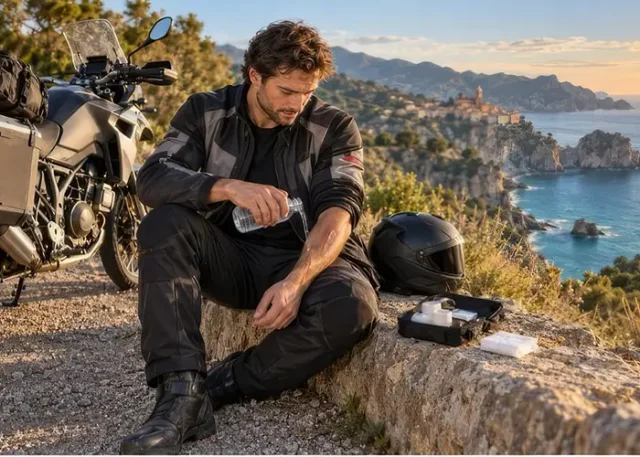
When a low-speed slide leaves you with motorcycle road rash, even a carefully planned tour can end, with unfamiliar medical options and no clear idea of what to do next. For U.S. traffic crashes during 2024, the National Highway Traffic Safety Administration estimated that 86,887 motorcyclists were injured, up 5.2% from 2023, in its July 2026 publication.
Only if moving is safe, get yourself out of traffic before doing anything else. For serious bleeding or major injury signs such as confusion or breathing trouble, call 911. If only scraped skin seems injured, use clean water to rinse it, then put on a sterile nonstick dressing. Get medical care if rinsing won’t clean the wound or if it’s large or deep.
Size doesn’t tell you enough. Watch for lost sensation or bleeding that won’t stop, not just a deep or contaminated wound. Beyond the skin, other injuries can show up through symptoms you notice after crashing.
How should you treat motorcycle road rash at the roadside?
Once you’re clear of danger and have checked for more serious crash injuries, begin roadside treatment. Internal trauma isn’t ruled out by first aid.
Mayo Clinic’s first-aid guidance recommends rinsing gently when cleaning road rash on a motorcycle trip. For wounds, hydrogen peroxide and iodine can cause irritation, it warns.
- Move clear of traffic if you can do it safely, not before. With possible neck or back trauma, nobody should be forced to stand. Any embedded object needs to stay put.
- Call 911 when breathing’s difficult, bleeding’s uncontrolled, consciousness is altered or pain’s severe. Suspected spinal, chest or abdominal injuries need emergency help, as does suspected head or neck trauma. Mention numbness or limb weakness, plus any deformity.
- Control minor bleeding with clean gauze or cloth, using gentle pressure directly on it. Get emergency help when bleeding won’t stop, or blood has soaked through.
- Wash your hands first; for what looks like a minor abrasion, rinse the wound under potable running water. For embedded gravel, avoid aggressive scrubbing; don’t use harsh antiseptics. If water quality’s uncertain, don’t use it.
- Cover the wound using a sterile nonstick dressing, secured without restricting circulation. Once wet, dirty or out of place, the dressing needs to be replaced.

What happens to the body after a motorcycle accident?
Friction can strip away skin layers, with impact capable of injuring the brain or spinal cord, according to Giovannini et al., 2024. The chest and abdomen can suffer internal injuries. Damage can reach bones and joints as well. Because adrenaline may temporarily hide pain, check your whole body, not just the visible scrape.
When does road rash need professional medical care?
For large, deep or heavily contaminated road rash, or wounds over joints, get an urgent assessment. For continued bleeding or numbness, get assessed too. Symptoms of another crash injury can mean you need emergency care.
You’ll sometimes hear road rash described in degrees. For wound depth, rely on a clinician’s assessment, not those labels, which serve only as informal descriptions.
| Appearance | Possible depth | Recommended response |
| Red and tender surface; minor oozing without embedded debris | Superficial abrasion, sometimes called first degree | Clean and cover; monitor and seek care if symptoms worsen |
| Raw pink or red tissue; possible blistering or weeping; marked pain or visible debris | Deeper partial-thickness injury, sometimes called second degree | Get prompt medical evaluation for cleaning and an appropriate dressing |
| Exposed fat or deeper structures; missing tissue; numb areas or severe contamination | Deep or full-thickness injury, sometimes called third degree | Seek emergency care; specialists may consider surgery or skin grafting |
Have a professional promptly evaluate any large abrasion on your leg. Alongside irrigation and debris removal, treatment may require debridement to remove tissue that’s been damaged. Pain control may also be needed, with a nonadherent dressing and a check of your tetanus protection. If pain or swelling stops you bearing weight, let the clinician know.
Don’t scrape out deeply embedded gravel.
Under CDC wound-management guidance, tetanus vaccination decisions depend on the wound type and your vaccination history. Your clinician needs the date of your last tetanus-containing vaccine. Don’t remember? Rather than guessing a date, check your own records.

How should you document the injury after receiving care?
Treatment comes first, before you take photos or gather paperwork. After treatment, take dated photos as the wound changes and store them with your discharge instructions and medical bills. Back home, you’ll need original image files, not just edited copies.
When Massachusetts travelers research road rash from motorcycle accident, their useful post-care records include photographs and receipts, plus insurer correspondence.
Damaged protective equipment belongs with your pharmacy receipts, not in the trash. With your saved police incident information, file the towing records. Alongside notes on where you got care, record the crash location and approximate time, including road conditions and symptoms you noticed.
In that same folder, put the witnesses’ contact details with your records. If your phone’s lost or damaged, keep digital backups accessible without it; file follow-up appointment details with dressing instructions. While you rest at your lodging, have a traveling companion help sort the records.
What are the signs of infected road rash?
Spreading redness, increased warmth or swelling, worsening pain or pus can signal infection, so ask a clinician promptly about them. Watch for red streaks or foul-smelling drainage, which are concerning. If Fever or feeling generally unwell develops, have it assessed promptly, too.
When a wound’s still new, it can be tender or drain clear fluid. If symptoms worsen instead of settling, Mayo Clinic’s first-aid guidance on infection warnings says to have them checked. Just looking at the wound won’t tell you whether it’s infected. Leftover antibiotics: hands off.
Gravel or other debris left in a wound makes infection more likely and can leave the skin permanently discolored. If the wound still feels gritty after cleaning, tell your clinician rather than trying to pick out debris with tweezers.
If a dressing’s stuck, follow your clinician’s instructions instead of yanking it off. Feeling feverish calls for checking your temperature; between dressing checks, note wound changes. If you’ve got a fever with confusion or rapid worsening, get emergency help. Deal with worrying wound changes while you’re traveling instead of waiting to reach your usual doctor. You can get help nearby or by contacting the clinic that treated you.
Can you keep riding with road rash?
Stay off the motorcycle if road rash is large or deep, or pain limits your movement. When the dressing won’t stay clean, stop riding, and don’t continue if bleeding persists or gear presses against the wound. If you’re dizzy or confused, don’t ride the motorcycle. With weakness or numbness, don’t ride; stop if you suspect another crash injury, too.
With only a tiny, superficial abrasion, you don’t have to call off your tour. If pain medication impairs you, stay off the motorcycle.
Besides getting dirty from rain or dust, your dressing can loosen in heat or when you sweat. Under your riding gear, the wound can reopen from repeated movement and rubbing.
In rural New England, don’t count on finding the next reliable medical facility close by. Rather than another full day on the motorcycle, consider a short trip back to lodging or medical care. If you need an assessment, get someone to drive you. The motorcycle isn’t for testing what you can manage.
Does road rash fully heal?
Superficial road rash often heals completely when you give it proper care. After a deeper wound, you can have scars or discolored skin, with changed feeling or difficulty moving, especially when infection develops or the wound crosses a joint.
In the depth table, second- or third-degree labels describe how wounds commonly given those names look, rather than letting you diagnose your own wound. Damaged tissue needs a clinician to assess it.
Size and depth alone don’t determine how your wound heals if it’s contaminated or infected. Healing takes different amounts of time for riders because circulation and overall health affect how a wound heals. Along with persistent drainage or a reopened wound, increasing pain or trouble moving calls for follow-up care.
Make the next decision about safety, not mileage
A different route is still an option. An injury you’ve missed is harder to undo. Let a full assessment guide your plans, keeping clean dressings and follow-up instructions where you can reach them. If you’ve kept your post-care records together, a clinician at your next stop can see what happened. If you can’t care for the wound safely while traveling, pause the trip or end it early. Find the nearest appropriate clinic before you get back on the motorcycle.
Sources
National Highway Traffic Safety Administration: motorcyclist injury estimates for 2024, published August 2026.
Mayo Clinic: Cuts and scrapes: First aid.
Centers for Disease Control and Prevention: Clinical Guidance for Wound Management to Prevent Tetanus.