
For most of its history, climbing Kilimanjaro has come with an unspoken trade-off. Travelers who wanted to stand on the Roof of Africa accepted a week of sleeping on the ground, washing with wet wipes and eating whatever survived the journey up in a porter’s pack. That bargain is changing. A small number of operators now treat comfort as part of the strategy for reaching the top, not as an indulgence.
At 5,895 meters (19,341 feet), Kilimanjaro needs no technical climbing skills. Even so, many climbers turn back before the summit, usually because of the altitude rather than the terrain. How well you sleep, eat and recover on the way up matters as much as how fit you are when you arrive. That idea is behind a newer, slower way to climb Kilimanjaro.
Why the route and the pace come first
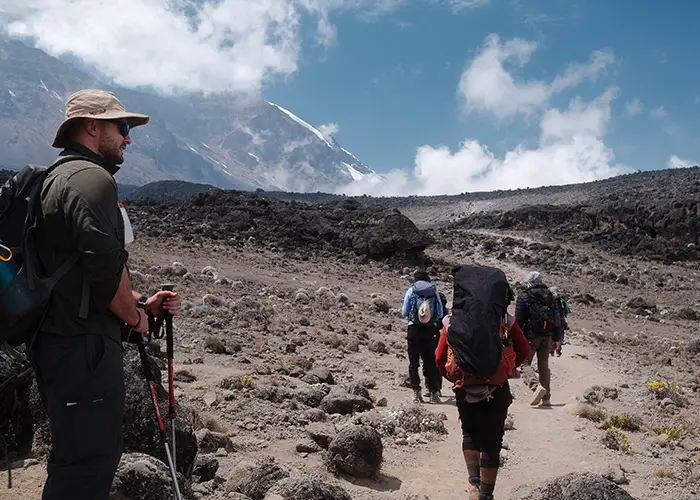
Kilimanjaro has several established routes. DRIFT has already covered the remote Northern Circuit, but the Lemosho route is widely regarded as the best balance of scenery, solitude and acclimatization. It starts on the mountain’s western side at Lemosho Gate, 2,250 meters (7,380 feet) up in dense rainforest. From there it runs roughly 70 kilometers (43 miles) through cloud forest, heather moorland, the open Shira Plateau and high alpine desert before the final push to the summit.
The length is the point. An eight-day itinerary lets the body adapt gradually, with “climb high, sleep low” days built in. One day includes lunch at the 4,630-meter Lava Tower, followed by a descent into the Barranco Valley to sleep. Tanzania-based operator Legend Expeditions runs its group climbs over eight days on the Lemosho and reports a 98.9% summit success rate on it.
What comfort looks like at 4,000 meters
On a Legend climb, each camp is set up before the group arrives. Climbers sleep in stand-up tents on raised cot beds with mattresses and pillows. This matters more than it sounds. Sleep quality falls sharply at altitude, and lying on cold, hard ground makes it worse. A raised bed keeps climbers off the frozen earth and helps them get the rest their bodies need to adapt.
Every camp also has private flush toilets and hot showers. Hygiene is a quiet factor in summit success, because stomach illness ends more climbs than most people expect. Meals are cooked by the team’s own chefs and served in a heated mess tent. Fresh supplies are carried up partway through the trek, so dinner on day six is as good as dinner on day one. Each morning starts with a hot drink brought to the tent.
Safety that runs quietly in the background
Comfort is only half of it. Guides carry out oxygen-saturation and wellness checks every evening, and they hold Wilderness First Responder certification. Oxygen travels with every group, and teams have round-the-clock access to doctors and paramedics who specialize in altitude through a partnership with Endura Medical.
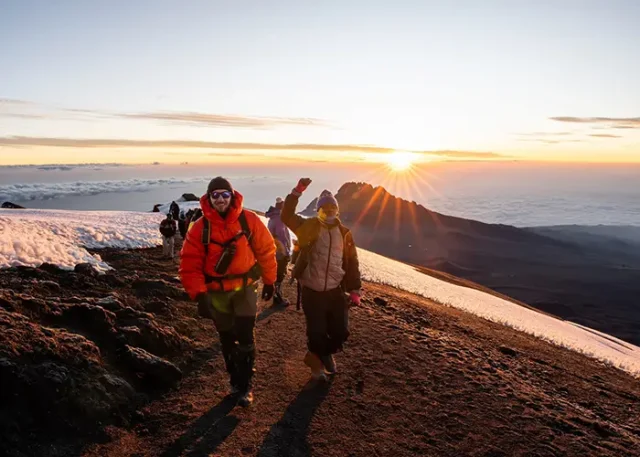
Summit night is where the approach matters most. The final push begins around midnight from Barafu Camp. Each climber is paired one-to-one with a guide who sets their pace and checks on them throughout. Most reach Stella Point on the crater rim (5,756 meters) as the sun rises, and then walk the last stretch to Uhuru Peak.
The people behind the climb
Behind each climber is a team of six: guides, porters, cooks and camp crew. Legend is KPAP-certified and pays its mountain crew above the standard rate, which is an important ethical consideration on a mountain where porter welfare has long been a concern.
The company is run by its founders rather than a sales desk. Jack Fleckney is a former Royal Marines Commando. Jackson Masanja started out as a porter on Kilimanjaro and went on to become a co-founder. Prospective climbers can speak with the founders directly before they book.
Bookending the adventure
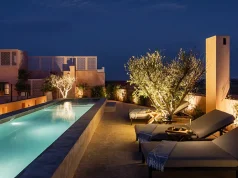
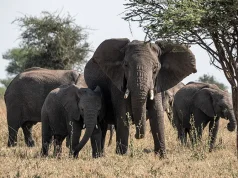
The climb is framed by two nights at the Maridadi Hotel in Moshi, with a pool and rooftop views of the peak. Many travelers extend the trip with a safari. Options range from a single day of walking and game drives in Arusha National Park beneath Mount Meru, to two days among the baobabs and elephant herds of Tarangire, to three days that add the Ngorongoro Crater and a chance to see black rhino.
Planning your climb
The best conditions are from January to early March and from June to October, when the weather is driest. No mountaineering experience is needed. A few months of steady cardio training and long weekend hikes will make the biggest difference.
Legend’s group departures run for 10 days, with eight days on the mountain, and start from $4360. The price covers park and rescue fees, hotel nights and private airport transfers. Flights, visas and travel insurance are extra.
Kilimanjaro will always be hard; summit night is meant to be. But the idea that it has to be miserable is fading. For travelers who would rather spend their energy on the climb than on surviving camp, the slow, comfortable route may be the smartest way up.