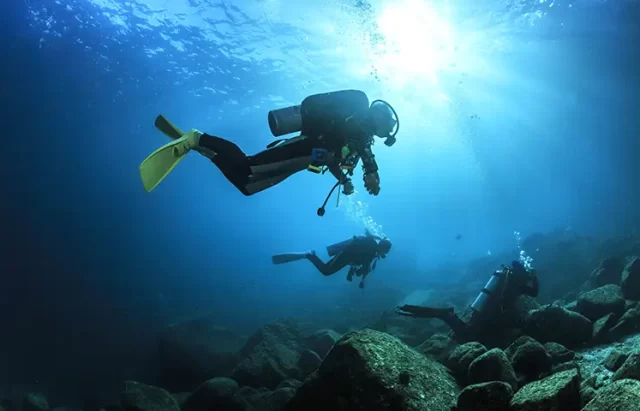
Along the eastern coast of Baja California Sur, the waters surrounding Loreto reveal a spectacular underwater landscape where volcanic islands, thriving reefs and abundant marine life converge. Protected within Bahía de Loreto National Park, divers can access more than 100 distinct dive sites across a vast marine reserve spanning over 450,000 acres in the Gulf of California.
Long celebrated for its biodiversity and famously described by explorer Jacques Cousteau as the “Aquarium of the World,” the Gulf of California hosts an extraordinary range of marine species. Loreto serves as one of the region’s premier gateways to this ecosystem, where divers regularly encounter sea lions, sea turtles, rays, dolphins and hundreds of colorful reef fish.
The marine park protects five dramatic islands – Isla Coronados, Isla del Carmen, Isla Danzante, Isla Montserrat, and Isla Santa Catalina – all formed by ancient volcanic activity that created rugged underwater formations, steep walls and reef systems that now support vibrant marine habitats.
- Isla Coronados: Just a short boat ride from the marina in Loreto, Isla Coronados is one of the most popular dive locations in the region. The island’s volcanic origins have produced a fascinating underwater terrain of lava rock formations, swim-throughs and rocky ledges. Divers are frequently joined by curious sea lions from the island’s resident colony, making for some of the most memorable wildlife encounters in the park.
- Isla del Carmen: The largest island in the reserve, Isla del Carmen, offers a variety of dive profiles that appeal to different skill levels. Here, underwater pinnacles rise from sandy seafloors while dramatic drop-offs reveal deeper reef structures. Sites such as Palo Blanco and Los Picachos are known for sightings of eagle rays, schools of jacks and seasonal pelagic visitors.
- Isla Danzante: Nearby Isla Danzante features some of the park’s most visually striking dive environments. Colorful reef systems and steep walls create excellent conditions for marine life, while the Agustín Melgar shipwreck – an approximately 180-foot vessel resting beneath the surface – has become an artificial reef that attracts a wide range of species.
Beyond the islands’ signature dive sites, Loreto’s waters hold dozens of lesser-known reefs, pinnacles and drift routes where divers may encounter everything from macro life and reef fish to larger pelagic species. Seasonal visitors – including manta rays, whale sharks and migrating whales – further enhance the region’s reputation as one of Mexico’s most dynamic marine ecosystems.
Local dive operators such as Blue Nation Baja, Dolphin Dive Baja and Loreto Sea and Land Tours provide guided excursions and PADI certification courses, helping divers of all experience levels safely explore the protected waters of the marine park.
While diving is possible year-round, the most favorable conditions typically occur between late spring and fall when water temperatures rise and visibility improves. During summer months, divers often encounter large schools of fish and manta rays in warm, clear waters. Winter brings a different spectacle as migrating whales – including blue whales and humpbacks – pass through the surrounding Gulf of California.
Above the surface, Loreto offers its own sense of discovery. Founded in 1697, the town was once the capital of the Californias and remains home to Misión de Nuestra Señora de Loreto Conchó, the first mission established in Baja California Sur. Today, its historic center, waterfront malecón and relaxed atmosphere provide a welcoming base for travelers seeking both adventure and culture.
With a protected marine environment, exceptional biodiversity and easy access to dozens of dive sites just minutes offshore, Loreto continues to stand out as one of Mexico’s most rewarding – and refreshingly uncrowded – destinations for scuba diving.