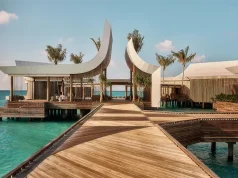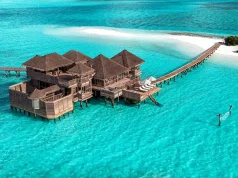

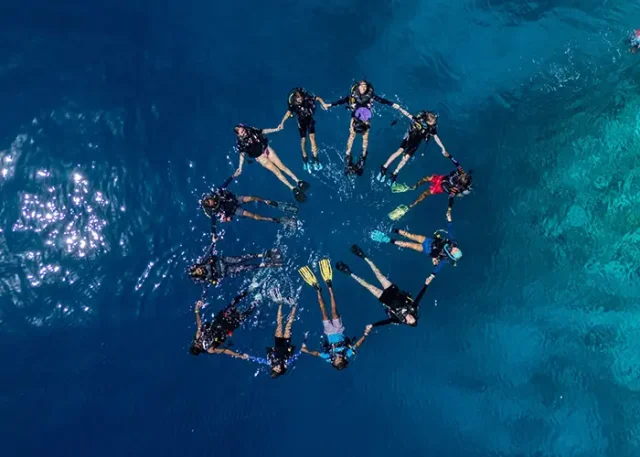
Nova Maldives brought together diving professionals, marine advocates, resort guests and local schoolgirls for a three-day Women’s Dive Day program focused on greater inclusion in scuba diving and the protection of the Maldives’ marine environment.
Held from July 17 to 19, 2026, the program combined conversations about the gender gap in professional diving with introductory scuba experiences, career guidance and hands-on coral restoration.
Among the participating experts were Zoona Naseem, the first Maldivian woman to become a PADI Course Director; Nova Maldives resident marine biologist Jenna Lehocki; and PADI AmbassaDiver, underwater photographer and content creator Maëlly Faure.
Set in the marine-rich waters of South Ari Atoll, the event demonstrated how diving can create opportunities for mentorship, education and conservation both above and below the surface.
Women Leading the Conversation
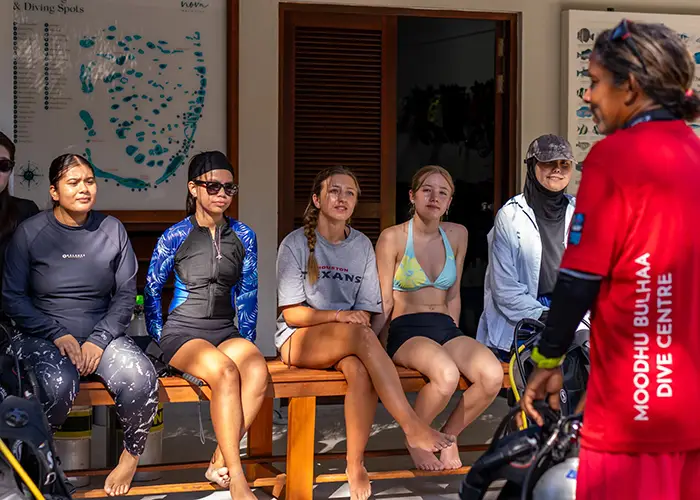
The program opened with a fireside discussion featuring Naseem, Lehocki and Faure. Rather than focusing solely on the technical aspects of diving, the conversation explored the culture surrounding the sport and the challenges women can encounter as they advance into professional roles.
One of the central messages was that the gender gap in diving is influenced by a lack of visible role models rather than a lack of interest. Creating opportunities for women to see themselves represented as instructors, photographers, marine scientists and dive-center leaders can help establish a stronger sense of belonging.
Programs such as PADI Women’s Dive Day also provide an opportunity for participants to build supportive networks and meet women who have turned a passion for the ocean into a career.
The discussion demonstrated that marine careers rarely follow a straight path. Science graduates may become educators, instructors may establish dive centers, and recreational divers can develop careers in underwater photography or conservation. For young women considering their futures, the message was to remain open to the many ways those interests can intersect.
Changing Perceptions of Marine Life
The speakers also considered how social media and underwater photography are helping to change perceptions of marine species.
Sharks and rays, once commonly portrayed as animals to fear, are increasingly being presented as essential and fascinating parts of marine ecosystems. Images and videos from divers allow wider audiences to observe their behavior and better understand their ecological importance.
Citizen-science programs provide another way for recreational divers to contribute. By recording sightings and sharing observations, divers can support researchers working to monitor and protect marine populations.
For resorts in the Maldives, where the surrounding ocean is central to the visitor experience, combining marine education with diving can encourage travelers to see reefs and wildlife as ecosystems requiring protection rather than simply attractions.
First Scuba Experiences for Seven Women
On July 18, seven women participated in Discover Scuba Diving sessions, with five completing the full experience.
For many, it was their first opportunity to breathe underwater and experience the calm, confidence and sense of discovery commonly described by experienced divers.
Group introductory sessions can provide an accessible entry point into scuba diving. Participants can learn fundamental skills, become comfortable with equipment and experience the underwater environment without immediately committing to a complete certification course.
At Nova Maldives, the experience also introduced participants to the waters of South Ari Atoll, an area celebrated for its whale sharks, manta rays, turtles and coral reefs.
The resort is home to the Aquaholics PADI Five Star Dive Center and has access to dozens of nearby dive sites. This marine setting has allowed Nova to incorporate underwater exploration into its wider conservation efforts, which DRIFT previously explored in How This Maldives Resort Is Protecting Wildlife and Our Beloved Ocean.
Inspiring Students from Dhangethi
The program expanded beyond resort guests by welcoming 15 students from Dhangethi School for a career-guidance workshop.
Led by Naseem, the session gave students an opportunity to learn about her journey to becoming the Maldives’ first female PADI Course Director. Her experience offered a practical example of how a personal interest in the ocean can develop into a professional career.
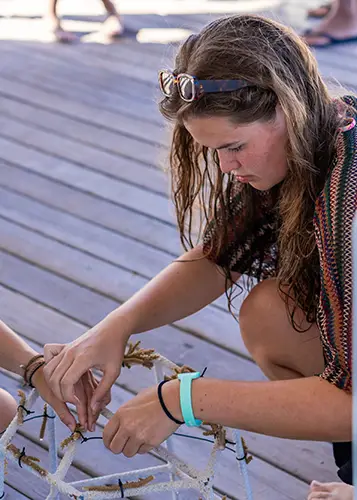
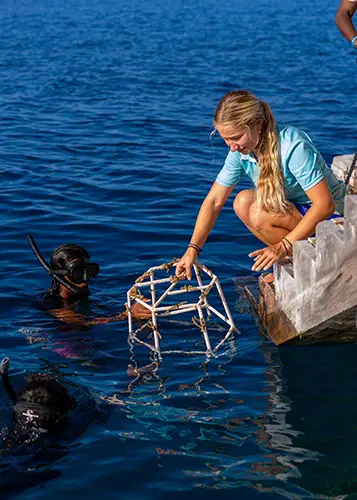
The workshop was followed by a coral-planting activity with Nova’s dive and marine team. Students and guests helped attach coral fragments to metal frames before members of the dive team transported the frames to the resort’s house reef.
The activity connected the earlier career discussion with practical conservation work taking place close to the students’ own community. It also demonstrated how marine science, resort operations, diving and environmental stewardship can overlap.
Supporting Coral Restoration in the Maldives
Coral restoration has become increasingly important across the Maldives following several significant bleaching events, including episodes in 1998, 2016 and 2024.
Frame-based coral planting is one of the restoration methods used by resorts and marine organizations throughout the archipelago. Coral fragments are secured to underwater structures, giving them a stable base from which to grow while restoration teams monitor their progress.
Although coral planting cannot address the wider causes of warming oceans, carefully managed restoration projects can support damaged areas of reef while providing opportunities for research, education and guest participation.
Connecting Diving with Community and Conservation
Nova Maldives’ Women’s Dive Day program placed female empowerment, community involvement and marine conservation within a single weekend.
For first-time divers, it offered an introduction to the underwater world. For students from Dhangethi, it provided access to female role models and potential marine career paths. For participating guests, the coral-planting activity created a tangible connection to the reef surrounding the resort.
The event also reinforced the idea that dive tourism can contribute to a destination beyond recreational experiences. Through education, mentorship and carefully managed conservation programs, resorts and dive centers can help travelers develop a more informed relationship with the ocean.
Nova plans to continue its marine programming with PADI AWARE Week in September. The upcoming initiative is expected to include Dive Against Debris sessions in the lagoon, guided snorkeling for non-divers and educational workshops.
More information on booking and future events is available from Nova Maldives