
When camping outdoors, dealing with emergencies at home, or embarking on long journeys, we often encounter terms like “power bank,” “portable power stations,” and “generator.” While these devices may seem functionally similar, they differ significantly in technical principles and practical applications. This article begins with the most common charging devices, systematically breaking down their distinctions to help you make informed choices for various scenarios.
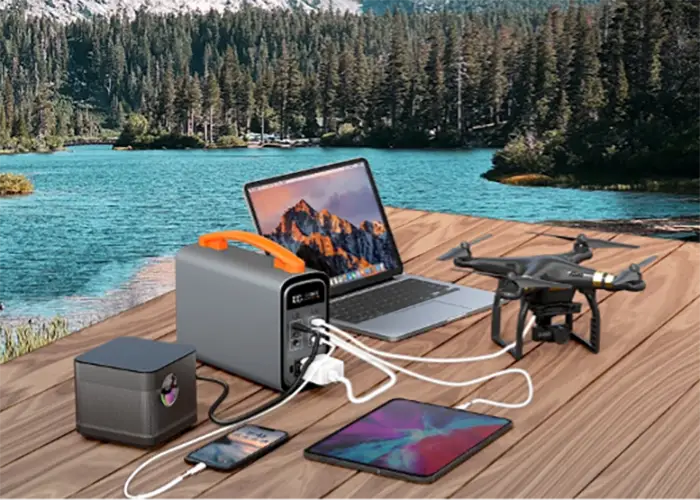
I. Power Bank vs Outdoor Power Station
Many people mistakenly think outdoor power stations are just ‘larger power banks,’ but that’s not the case.
| Characteristic | Power bank | Outdoor power station |
| capacity | Typically 5,000-30,000mAh | Typically above 100,000mAh |
| output power | 5W-45W (USB charging) | 300W-3000W+ (AC output) |
| output interface | USB-A/USB-C | AC sockets, USB ports, car charging ports, etc. |
| main application | Charge your phone or tablet | Notebooks, small household appliances, camping gear, car refrigerators, etc. |
| Charging method | USB charge | Wall charging, car charging, solar panel charging |
In short: Power banks fix ‘dead phone batteries,’ while portable power station tackle ‘life’s power shortages. ‘This naturally leads to the next question: How can these devices integrate into larger systems when you’re trying to go off the city grid?
II. Power Grid vs Power Station
This is the difference between micro and macro.
Grid: A sophisticated power transmission network that connects millions of households, powered by large-scale power plants (including nuclear, coal, and wind energy).
Power Station : This term typically refers to a ‘mobile energy storage station,’ functioning as an independent unit. To put it simply, the power grid is like a water supply network, while a mobile power station serves as your ‘storage tank.’
This reminds me that when power outages occur, many people turn to generators. Let’s see who can do it better.
III. Portable Power Station vs Generator
Generator: A type of energy conversion equipment that generates electricity by consuming gasoline, diesel, or natural gas.
Outdoor Power Station (Power Station): A type of energy storage device that stores electricity in lithium batteries for on-demand use.
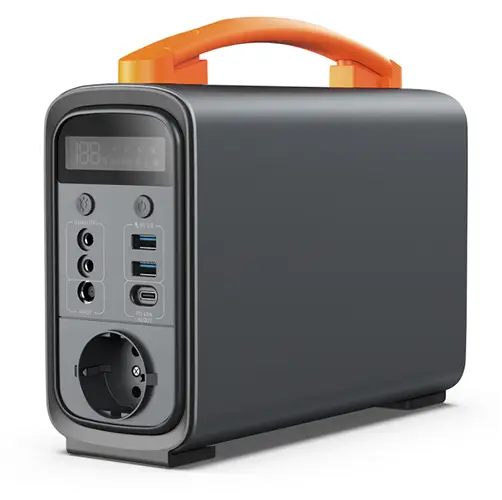
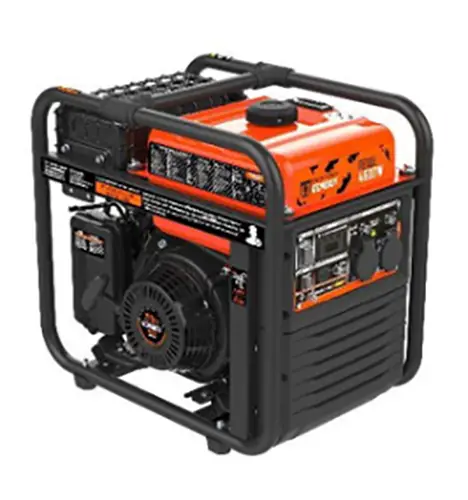
| Characteristic | Portable power station | Generator |
| energy sources | Storing electrical energy (batteries) | combustion fuel |
| Environmental protection | High (zero emissions, zero noise) | Low (emissions, noise) |
| noise | Low (very quiet) | High (very loud) |
| smell | not have | Yes (fuel combustion exhaust) |
| portability | High (easy to transport) | Medium (heavier for high-power models) |
| operational complexity | Low (Plug and Play) | Medium (requires startup and connection) |
| output power | Medium (for household appliances, low-power devices) | High (can drive high-power devices, even entire houses) |
| performance period | Depends on battery capacity, requires charging | Continuous operation is possible depending on the fuel tank capacity and fuel quantity. |
| maintenance | Low (almost no) | Medium (requires regular maintenance) |
| initial cost | higher | secondary |
| running cost | Low (solar)/electricity | fuel cost |
| main application | Outdoor activities, emergency response, mobile office | construction sites, remote areas, high-power equipment |
There’s also a concept called “emergency generator”?
A generator typically refers to a portable fuel-powered unit. In contrast, an Emergency Generator is usually an outdoor standby system installed on a house. It automatically activates when the power grid fails, connects directly to the household circuit, and delivers high power output. However, these generators are expensive and not portable.
The fundamental difference lies in their operation: generators ‘burn oil to produce electricity on the fly’, whereas portable power banks ‘store electricity in advance for use’. This also relates to battery storage—many people ask how to select a battery pack.
IV. Differences Between Battery Box and Portable Power Station
Some users may encounter products labeled as ‘battery case’ or ‘battery pack,’ which are not identical to portable power stations.
| Contrast item | Battery box / Battery pack | Portable power station |
| Does it come with an inverter? | Usually not | have |
| Plug and play | deny | yes |
| User threshold | on the high side | close friend |
| application scenarios | DIY system | Finished product usage |
If you prefer not to handle wiring or install inverters yourself, opting for a portable power station is a more hassle-free choice. Our market research indicates that 80% of urban users choose Portable power stations due to their quiet and eco-friendly nature, while rural users favor generators for their extended runtime. Personal recommendation: For limited budgets and frequent outdoor use, a portable power station is advisable; for heavy industrial applications, a generator provides stable performance.
This reminds me of power capacity—when purchasing a solar power station, should I choose 200W,500W,1000W,1500W, or 2000W?
V. Power Selection for Portable Power Station
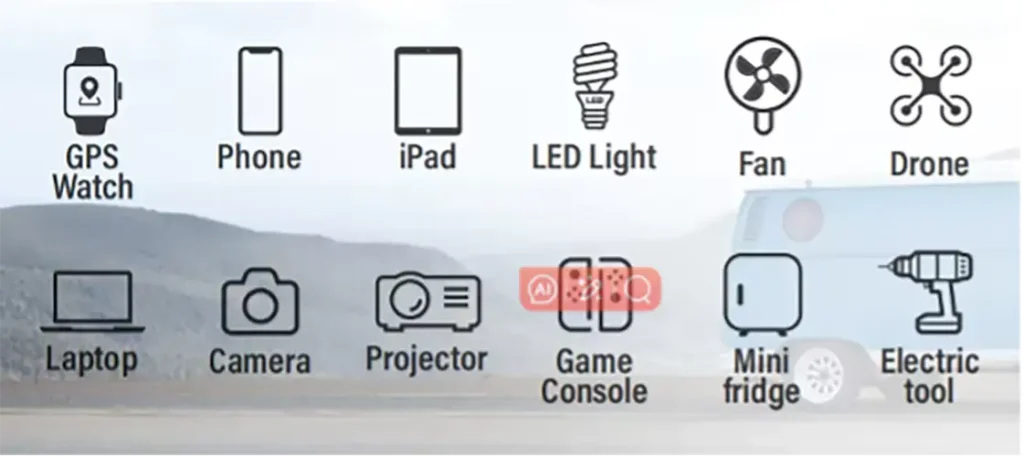
First, determine which devices you need to power: a smartphone, a laptop, or a refrigerator and large air conditioner. Calculate the total power consumption and ensure your electrical capacity is sufficient.
Capacity calculation formula:
Required capacity (Wh) = Device power (W) × Usage time (h) × 1.2 (safety margin)
Example table (refrigerator example):
| Equipment | power (W) | time (h) | safety margin | Required capacity (Wh) | Recommended power supply |
| ice box | 150 | 8 | ×1.2 | 1440 | 1500Wh+ |
VI. Future Trend of Traditional Generator and Portable Power Station
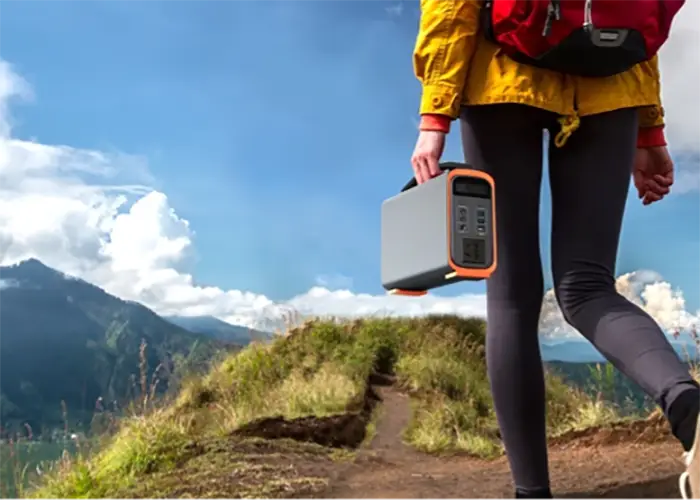
As electricity usage scenarios gradually shift from construction sites to households, outdoor activities, and emergency situations, traditional fuel-powered generators are facing significant limitations in application. Noise, exhaust emissions, maintenance costs, and dependence on fuel have progressively reduced their suitability for camping, community backup power systems, and indoor environments.
In contrast, the development trajectory of portable power stations is more clearly defined. Advances in battery energy density, maturation of inverter technology, and the widespread adoption of solar charging have transformed portable power stations from “temporary power solutions” into “lightweight power solutions.” Quiet operation, safety, and plug-and-play functionality are becoming key criteria for users when selecting power equipment.
In the foreseeable future, generators will continue to be utilized in high-power, continuous operation scenarios. However, portable power stations will gradually become the mainstream choice for applications such as household backup, power emergencies, and outdoor use. This shift essentially reflects users’ natural preference for cleaner and more flexible electricity consumption methods.
VII. FAQ
Q1: Which is better for camping—inverters, generators, or portable power stations?
Portable power stations are the preferred choice. Camping values quiet operation and convenience. Conventional generators produce excessive noise and exhaust emissions, leading many campsites to prohibit them outright. Inverters require vehicle ignition, and even minor mishandling can drain the battery, rendering the vehicle inoperable. In contrast, portable power stations are plug-and-play, noiseless, and emission-free, representing the most mature solution available today.
Q2. Which is faster, a 25W or 45W charger for portable power stations?
45W is significantly faster. When supported by devices like smartphones or computers, 45W charging theoretically speeds up the process by nearly 80% compared to 25W.
Q3: Can I charge a portable power station using solar panels?
Indeed, many modern portable power stations feature solar charging capabilities, transforming them into solar-powered systems. This allows charging at any sunny location, making them ideal for off-grid adventures or emergencies.
VIII. Summary
The key to selecting a suitable power solution lies in evaluating your total electricity consumption and appliance power. For most modern households and camping enthusiasts, a high-quality portable power station can effectively replace bulky generators, addressing over 90% of power outage concerns.
This article aims to help you clarify your thoughts. No matter which approach you choose, safe electricity usage and enjoying freedom remain our shared goal.