Birdwatching is enjoying a new moment. Mobile identification apps, nature photography and growing interest in outdoor travel have introduced a broader audience to an activity once associated mainly with dedicated field-guide enthusiasts.
In Washington’s Skagit Valley, newcomers and experienced birders alike can witness one of the Pacific Northwest’s most impressive seasonal migrations. Beginning in late fall, thousands of birds settle into the valley’s fields, wetlands, rivers and coastal waters, creating exceptional viewing opportunities through early spring.
Located between Seattle and the Canadian border, Skagit Valley sits along the Pacific Flyway, an important migration route connecting northern breeding grounds with winter habitats farther south.
Why Birds Gather in Skagit Valley
Skagit Valley’s importance to migratory birds comes from its unusual mix of habitats.
The Skagit River flows from the North Cascades into the Salish Sea, passing through forests, wetlands and agricultural land. Farmland around the river delta provides feeding areas for swans and geese, while tidal flats, bays and protected shoreline support waterfowl and shorebirds.
The result is a relatively compact destination where visitors may see large flocks of geese in farm fields, raptors hunting over open grassland and sea ducks gathering near the coast—all within the same day.
Nearly 362 bird species have been recorded in the region, according to the Skagit Tourism Bureau. The most dramatic viewing period generally extends from November through March, although birding continues year-round.
Trumpeter Swans and Snow Geese
Trumpeter Swans are among Skagit Valley’s most recognizable winter visitors.
Approximately 10,000 to 12,000 swans may gather across the valley during the season, with Trumpeter Swans forming the majority and Tundra Swans accounting for part of the total population. They are often seen feeding in agricultural fields or resting around wetlands and shallow waterways.
Their movements can be unpredictable, as the birds frequently shift between feeding locations. Early morning and late afternoon tend to provide good viewing opportunities when swans leave or return to their overnight areas.
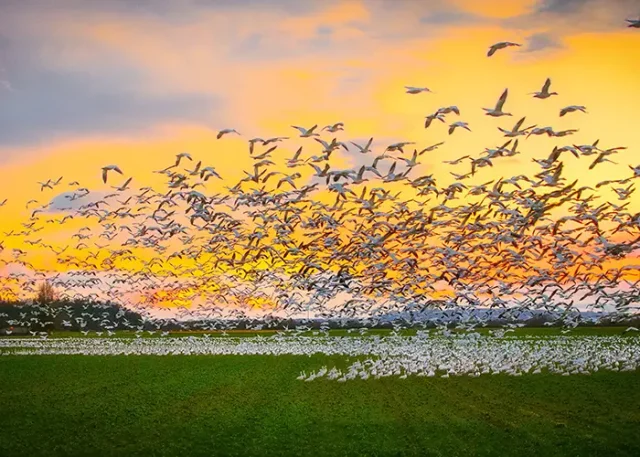
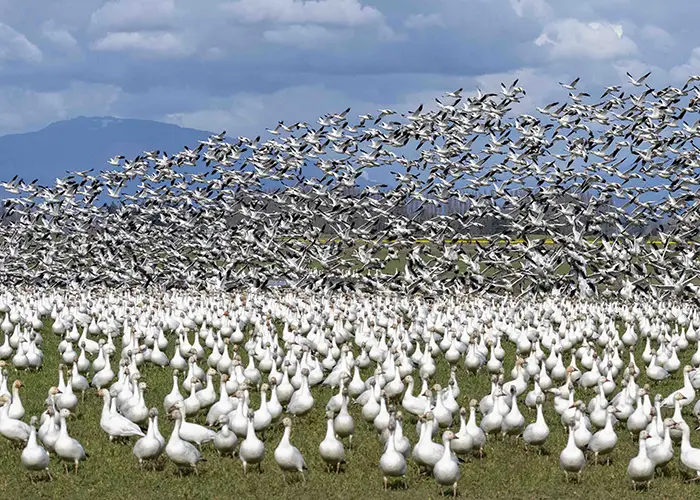
Snow Geese arrive in even greater numbers. Flocks may contain thousands of birds, creating a memorable spectacle when they rise from a field together and fill the sky with white wings.
Fir Island, located between the north and south forks of the Skagit River, is one of the most reliable areas to begin looking for both Snow Geese and swans.
Where to Go Birding in Skagit Valley
Fir Island
Fir Island’s farmland, wetlands and estuary habitats attract large concentrations of Snow Geese, Trumpeter Swans and Tundra Swans throughout the winter.
The Fir Island Farm Reserve and Wylie Slough units of the Skagit Wildlife Area offer established public access, parking and trails. At times, thousands of Snow Geese feed in the surrounding fields, drawing Bald Eagles, Northern Harriers and other birds of prey.
Because the birds move frequently, visitors should be prepared to explore several public viewing areas rather than expecting them to remain in one location.
A Washington Discover Pass is required when parking on Washington Department of Fish and Wildlife land, including the Fir Island Farm Reserve Wildlife Area.
Samish Flats
North of Fir Island, the Samish Flats are known for winter raptor viewing.
Rough-legged Hawks migrate south from Arctic breeding grounds and can sometimes be seen perched on utility poles or hovering above open fields. Northern Harriers fly low over grassland, while Peregrine Falcons may appear when large numbers of waterfowl are present.
The flats are also a good place to watch Short-eared Owls. These ground-nesting owls often become active around dusk, flying low above fields while searching for small mammals.
Snowy Owls occasionally move into northwestern Washington during years when some members of the Arctic population travel unusually far south. Their presence varies considerably, so visitors should never assume they will be in the valley during a particular winter.
Upper Skagit River
The Skagit River near Rockport and Marblemount is one of the region’s best-known winter Bald Eagle viewing areas.
Eagles gather along the river when spawning salmon provide a seasonal food source. They may be seen perched in riverside trees, flying above the water or gathering around gravel bars.
Public viewpoints and guided outings can help visitors explore the area without disturbing feeding birds. The Skagit River Bald Eagle Natural Area extends along the river between Marblemount and Rockport.
Viewing conditions change with salmon runs, weather and water levels, making each winter slightly different.
Padilla Bay and March Point
Padilla Bay’s protected estuary provides habitat for shorebirds, waterfowl and marine species.
The shoreline and surrounding wetlands may produce sightings of grebes, loons, scoters, mergansers and other sea ducks. The Padilla Bay Shore Trail offers an accessible route along the estuary with wide views across the tidal landscape.
Nearby March Point provides additional opportunities to scan the water and shoreline. A spotting scope can be helpful here because many birds remain some distance from land.
Deception Pass
Deception Pass connects Skagit Bay with the Strait of Juan de Fuca through a narrow channel between Fidalgo and Whidbey islands.
Strong currents and open coastal water attract seabirds and marine wildlife. Visitors may see loons, grebes, cormorants, diving ducks and alcids from shoreline viewpoints.
The dramatic bridge, forested headlands and turbulent water also make Deception Pass worthwhile even when bird activity is quiet.
Birding Is More Accessible Than Ever
Travelers do not need extensive equipment or years of experience to begin birdwatching in Skagit Valley.
Many productive locations are accessible by car, and a basic pair of binoculars is sufficient for most field viewing. Mobile tools such as the Cornell Lab of Ornithology’s Merlin Bird ID can help identify birds by appearance or sound, while eBird allows users to review recent sightings.
Recent reports can be helpful because swans and geese move between fields from one day to the next. However, visitors should avoid stopping on narrow roads or entering private farmland to reach a reported sighting.
Local guides also offer birding and wildlife tours. Their knowledge can help visitors locate public viewing areas, recognize different species and understand how seasonal weather influences the birds’ movements.
Beyond the Birds
Skagit Valley has enough small towns, restaurants and scenic landscapes to turn a birding excursion into a weekend getaway.
La Conner sits beside the Swinomish Channel and has a walkable waterfront lined with restaurants, galleries and independent shops. Its location provides convenient access to Fir Island and the western side of the valley.
Mount Vernon and Burlington make practical central bases, with easy routes toward the Skagit River, Samish Flats and coastal viewing areas.
Farther west, Anacortes offers waterfront accommodations and access to Fidalgo Island, Deception Pass and the Salish Sea. To the east, Concrete, Rockport and Marblemount place travelers closer to Bald Eagle viewing along the upper Skagit River and the foothills of the North Cascades.
The region becomes best known for colorful fields during spring. Readers planning a return visit can also explore DRIFT Travel’s coverage of Tulip Town in Skagit Valley.
For a wider Washington itinerary, Why Washington Should Be Your Next Travel Destination highlights additional outdoor and cultural experiences around the state.
Tips for Responsible Birdwatching
Large flocks are impressive, but the birds depend on these habitats for feeding and rest during migration. Visitors can help protect them by following a few basic practices:
- Observe wildlife from a respectful distance using binoculars or a spotting scope.
- Remain on designated roads, paths and public access areas.
- Never enter private farmland without permission.
- Avoid loud noises or sudden movements that could cause resting birds to take flight.
- Do not use recorded bird calls to attract or disturb wildlife.
- Keep dogs leashed where permitted and away from feeding flocks.
- Park only in designated or safely accessible areas.
- Follow all posted closures and wildlife-area regulations.
Winter conditions can be wet, windy and muddy. Waterproof footwear, warm layers and rain protection will make longer viewing sessions more comfortable.
Planning a Winter Birding Trip
Peak birding season generally begins in November and continues through March. December, January and February provide particularly good opportunities to see swans, geese, raptors and wintering waterfowl.
Dawn and dusk are often productive, but midday can still offer excellent viewing, especially along the coast. Tides also influence activity around Padilla Bay and other shoreline locations.
Because wildlife movements and access conditions can change, travelers should consult the Skagit Valley birding guide and Washington Department of Fish and Wildlife updates shortly before visiting.
With enormous flocks, accessible viewing areas and landscapes stretching from the Salish Sea to the North Cascades, Skagit Valley offers one of the Pacific Northwest’s most rewarding introductions to winter birding.