

Uluwatu has a reputation for some of Bali’s most impressive waves. From the clifftops, you can watch experienced surfers race across steep reef breaks, disappear into barrels and navigate crowded lineups with remarkable ease.
It’s an incredible place to watch surfing. But if you’ve never stood on a surfboard, it might also leave you wondering whether Uluwatu is somewhere you can actually learn.
The answer is yes. And one of the best places to start looking is Balangan.
Set along the western side of Bali’s Bukit Peninsula, Balangan offers more than the long left-hand wave that experienced surfers come to ride. With the right conditions and local guidance, it can also be an excellent setting for beginners taking their first steps into surfing.
For travelers planning surf lessons in Uluwatu, understanding the different sides of Balangan can open up a much more approachable experience than the area’s reputation might suggest.
Uluwatu Isn’t Just for Experienced Surfers
When people talk about surfing in Uluwatu, they often mean the famous reef breaks beneath the cliffs or the famous left-hand barrel at Padang Padang.
These are iconic surf spots, but they don’t represent every wave on the Bukit Peninsula.
The wider region offers a variety of conditions, from challenging reef waves to smaller, more manageable sections where beginners can practice with an instructor.
The important distinction is between a beach’s reputation and the waves available on a particular day.
A surf spot known for powerful waves can behave very differently with a smaller swell and a suitable tide. Equally, a normally approachable area can become challenging when conditions change.
This is why choosing the right place to learn is rarely as simple as picking the beach with the best photos or the shortest drive from your accommodation.
For beginners, local knowledge makes a real difference.
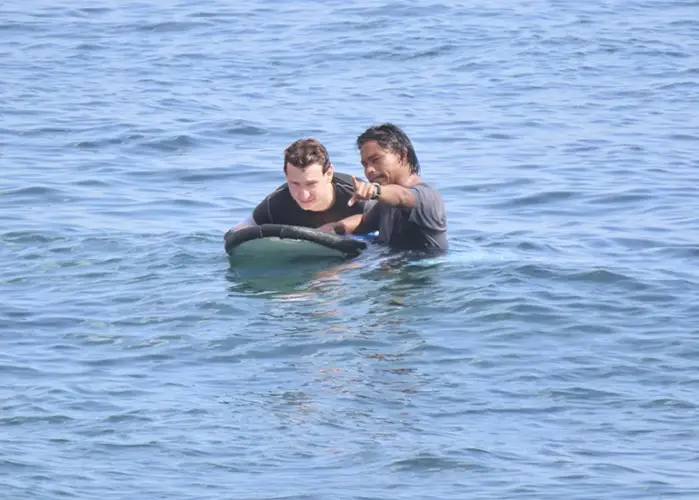
An instructor points across the water beside a learner on a surfboard.
Why Balangan Is a Great Place to Learn
Balangan is often associated with its long, peeling left-hand wave. It’s a favorite among surfers who already know how to catch and ride unbroken waves.
What first-time visitors may not realize is that Balangan also has a gentler side.
Different sections of the beach offer different surfing possibilities, depending on the swell, tide and wind. Under suitable conditions, beginners can find manageable waves where they can practice their first takeoffs, develop balance and start understanding how to move with the ocean.
That variety is part of Balangan’s appeal.
A first-time surfer might begin with small, forgiving waves and plenty of assistance from an instructor. Someone who has already learned to stand up may be ready to work on catching waves more independently or making their first turns.
More experienced surfers, meanwhile, can enjoy the longer and more demanding waves for which the beach is known.
It’s this range of possibilities that makes Balangan particularly interesting as a coaching location.
The beach itself is another reason to visit. Backed by limestone cliffs, with golden sand and a relatively laid-back atmosphere, it offers a beautiful setting for a morning in the water.
You don’t need to arrive as an experienced surfer to enjoy being here.
Of course, Balangan is still a reef-influenced surfing environment, and not every section is suitable for beginners at every tide. Strong swell, shallow reef, currents or crowded conditions can change what is appropriate.
The difference between a good learning experience and an overwhelming one often comes down to knowing where, when and how to surf.
The Right Wave Matters More Than the Famous Wave
It’s easy to think that a great surf lesson starts with a great surf spot.
In reality, it starts with the right wave for the person learning.
Someone who has never surfed needs time to become comfortable with their board, understand basic positioning and experience the feeling of catching a wave. A surfer with a few lessons behind them may need something different: longer rides, better timing or a wave that encourages them to turn.
Those two surfers shouldn’t necessarily be taken to the same place at the same time.
Balangan’s changing conditions allow an experienced local instructor to make those distinctions. A different tide, a smaller swell or another section of the beach can completely change the learning experience.
That doesn’t mean there will always be suitable conditions. Sometimes the right decision is to change the lesson plan, choose an alternative location or reschedule.
Knowing when not to surf a particular wave is just as valuable as knowing when to paddle out.
For travelers, this takes much of the guesswork out of the experience. Instead of trying to interpret surf forecasts themselves, they can focus on learning with someone who understands the area.
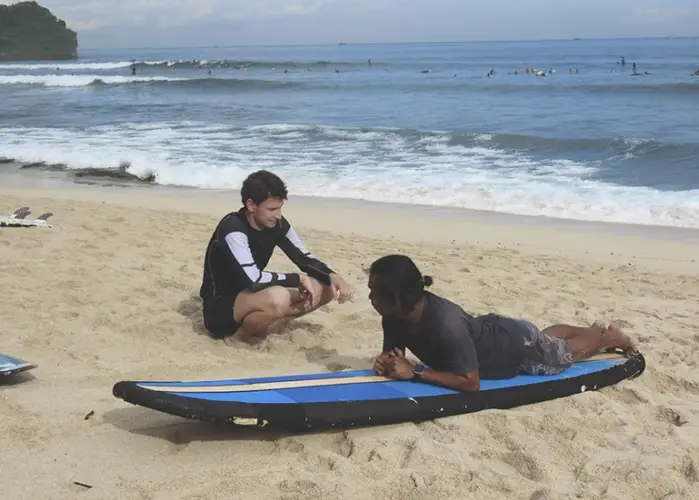
A surf coach demonstrates body position on a board during a beach lesson.
What to Expect From Your First Surf Lesson
Your first surf lesson doesn’t need to be complicated.
Most sessions begin on the beach, where your instructor introduces the equipment, explains basic ocean safety and shows you how to position yourself on the board.
You’ll practice paddling, getting to your feet and finding your balance before bringing those movements into the water.
Once you’re surfing, the experience becomes much more individual.
Some people find their feet almost immediately. Others need more time to get comfortable with the movement of the board or the feeling of an approaching wave.
A good instructor adjusts the lesson accordingly.
That might mean spending extra time on positioning, helping you recognize the right moment to paddle or offering simple corrections between waves.
The goal isn’t to guarantee that everyone stands up within a particular number of minutes. It’s to help each person progress at a pace that builds confidence and enjoyment.
And while catching your first wave is often the highlight, there’s something equally rewarding about beginning to understand the ocean.
Why Smaller Surf Lessons Make a Difference
For beginners, the amount of individual attention you receive can shape your entire experience.
In a large group, surfers may spend more time waiting for their turn or trying to keep up with a pace that doesn’t suit them.
A private lesson allows the instructor to focus entirely on one person’s confidence, technique and goals. Semi-private sessions can work especially well for couples or friends who want to share the experience while still receiving individual feedback.
Small groups can also be an enjoyable option, particularly for friends with similar surfing abilities.
The key is that the lesson should be organized around the people taking part, rather than expecting everyone to follow an identical approach.
At Balangan-based Soulflow Surf Bali, this philosophy shapes the coaching experience.
The locally led surf school offers private, semi-private and small-group lessons, with no more than three surfers per coach. Small-group sessions are designed primarily for friends with compatible levels, while private coaching gives surfers more room to work on individual needs.
Between waves, the coach has time to explain in English why a takeoff felt rushed, give the surfer one thing to try, and watch their next attempt.
From Your First Wave to Your Next Challenge
One of the most rewarding things about learning to surf is how quickly your goals can change.
On your first day, simply getting to your feet might feel like a major achievement.
A few sessions later, you may be thinking about paddling into waves on your own, improving your timing or learning how to ride along the wave rather than straight toward shore.
The same stretch of coastline can offer very different experiences as your skills develop.
For someone staying in Uluwatu or the surrounding Bukit Peninsula, Balangan can be more than a place to try surfing once. With the right guidance and suitable conditions, it can also be somewhere to build confidence and work toward the next stage.
There’s no need to rush that process.
Good surfing is about making better decisions, understanding the waves and gradually becoming more comfortable in the water.
A Different Side of Uluwatu
Uluwatu will always be associated with powerful waves and world-class surfing. That’s part of what makes the region special.
But you don’t need years of experience to enjoy surfing on Bali’s Bukit Peninsula.
Balangan shows a different side of the area: one where first-time surfers can discover the sport, developing surfers can build confidence and more experienced riders can continue to challenge themselves.
The key is finding the right conditions, the right coaching and a pace that works for you.
Your first wave in Uluwatu might be much more accessible than you think.