
Many riders start looking at accessories after a small annoyance repeats itself: a grocery bag swinging from the handlebar, a backpack that feels heavy by the end of the commute, or a lock with no convenient place to carry it. The most useful change is rarely the flashiest one. It is the piece of equipment that removes friction from a trip you already take.
Begin with one recurring inconvenience
Before buying anything, think through a normal week. Do you bring a laptop to work, pick up food on the way home, park outside a shop, or ride after sunset? A commuter who needs dry storage has a different priority from a rider who wants better awareness at intersections. Separating those jobs prevents an expensive pile of accessories that never leaves the garage.
One helpful exercise is to recreate the moment that caused the problem. Place the items you normally carry beside the bike and decide where each would sit. If the answer requires a strap near a spoke or forces your hand away from the brake, the equipment is not solving the original inconvenience. A quick dry run is often more revealing than a promotional photo.
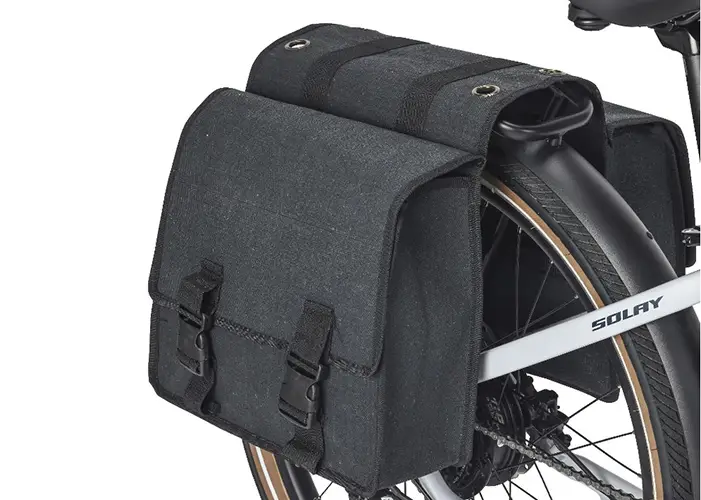
Storage is an obvious example. A properly mounted pannier moves weight off your shoulders and onto the bike, making a short errand easier to repeat. A front rack can free up space for other items, but its load limit and mounting points must be checked. Avoid hanging heavy bags from the handlebar, where they can interfere with steering.
Build around the bike you own
An accessory is only helpful when it works with the model and the rest of its setup. Rack hardware, bag mounts, lights, batteries, and passenger equipment can compete for the same physical space. Check the specific bike model, the mounting method, the weight of the item itself, and any separate rack limit before ordering.
For riders planning daily errands, TLG ebike accessories include carrying equipment, a rear-view mirror, and a battery security lock. These do different jobs. A pannier helps with errands, a mirror can support awareness of traffic behind you, and a lock addresses an unattended bike. None should be treated as a substitute for attentive riding or a complete security plan.
Think about the whole stop, not just the ride
The parking moment often determines whether a bike replaces a car trip. Imagine arriving at a grocery store with two bags and no safe place to secure them. If carrying gear is awkward, the errand still feels difficult even when the ride itself is pleasant. The right bag or rack turns that stop into a routine rather than a workaround.
Likewise, a useful security setup should reflect where the bike will wait. A component lock may help protect an accessory or battery, but the bike still needs an appropriate frame lock and a suitable place to secure it. Confirm any electronic feature against the model and configuration you own; connected tools do not guarantee theft prevention.
Add only what the route justifies
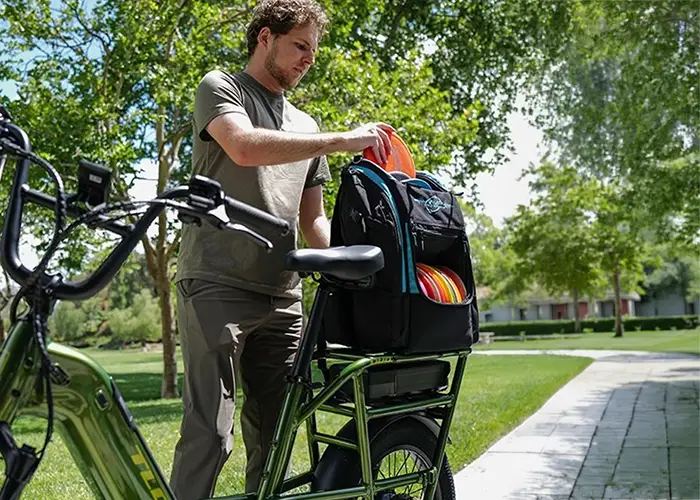
Carrying more can change how a bicycle steers and brakes. Pack heavier items low and securely, and give yourself extra space when stopping. If a rack or bag hides an existing light, move or supplement the light before riding in traffic. A shop can help confirm that a mirror, cargo piece, or bottle cage sits where it will not interfere with controls or cables.
It also helps to inspect the bike after the first few rides with a new accessory. Verify that bolts remain tight, straps cannot reach the wheel, and the load does not shift in turns. An add-on that makes an unloaded bike look prepared but creates a loose or obstructed setup has missed the point.
Consider the cost of the whole arrangement rather than one attractive item. A bag may need a compatible carrier; a mirror may need a particular handlebar mount. Buying the pieces in the right order can save money and frustration. When uncertain, the manufacturer or an authorized shop can identify the model-specific hardware before ordering.
Prioritize repeatable convenience
Well-chosen ebike upgrades can keep grocery bags stable, make water easier to reach, and give the rider a clearer view behind the bike. Choose the inconvenience first, verify compatibility second, and only then choose the accessory. Extra speed is not the point when the everyday trip is already hard to repeat.