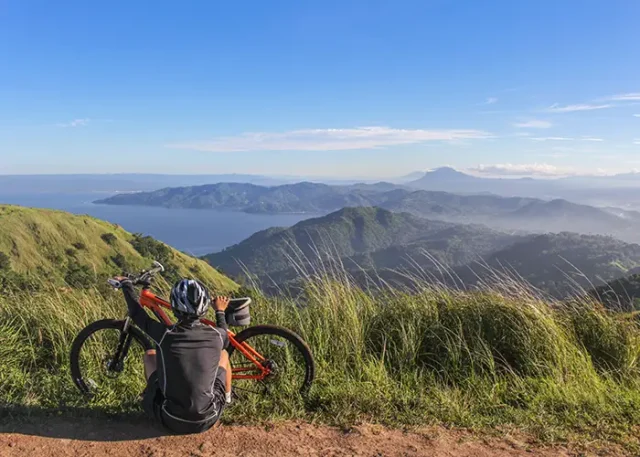
Few European countries offer the same mix of terrain, cycling infrastructure, and reliable winter sunshine as Spain. While many northern routes become difficult to ride between November and March, Spanish roads remain dry, smooth, and largely free of heavy traffic. Smooth tarmac, considerate drivers, and dedicated bike-friendly accommodation attract everyone from amateur club riders to WorldTour professionals. The country’s mountains include paved climbs rising above 3,000 metres, while coastal roads along the Mediterranean and Atlantic provide long, uninterrupted endurance rides.
From the medieval lanes of Catalonia to the Atlantic cliffs of Euskadi, each region suits a different style of riding, whether that’s tackling sustained mountain ascents, building endurance, or exploring quieter back roads.
Girona, Where the Professional Peloton Trains All Winter
Girona sits between the Pyrenean foothills and the Costa Brava and has become one of Europe’s leading road cycling hubs. More than a hundred professional riders base themselves in this Catalan city, drawn by quick access to technical climbs and flatter coastal routes. The classic local test piece, Rocacorba, climbs 9.9 kilometres at an average gradient of 7.3 per cent, making it a popular benchmark for sustained climbing efforts without heavy traffic. Nearby, the gentler slopes of Els Àngels provide an ideal warm-up loop that returns directly to the medieval old town.
For travellers planning cycling trips in Spain, Girona’s cycling infrastructure includes specialised mechanic workshops, premium bike hire services, and cafés geared towards pre-ride nutrition. The city also offers well-established support services, including custom route planning, experienced mechanics, and vehicle support for longer rides into the surrounding countryside. Winter temperatures average around 13°C, creating reliable conditions for long training blocks while much of northern Europe remains too cold for consistent riding.
Mallorca, Spring Base for Cycling Clubs Across Northern Europe
Every spring, Mallorca attracts thousands of club cyclists to the Serra de Tramuntana. This UNESCO-listed mountain range forms the island’s north-west backbone, where limestone peaks rise above turquoise bays and winding coastal roads. The island’s signature climb, Sa Calobra, descends through 26 hairpin bends to the shoreline before turning into a demanding 9.5-kilometre ascent with an average gradient of 7 per cent.
Longer rides link the Coll de Femenia and Coll de Puig Major, reaching the island’s highest accessible roads. The central plain around Sineu offers flatter, quieter lanes bordered by dry-stone walls, making it a popular choice for recovery rides and group training. Across the island, dedicated cycle paths connect many of the main riding areas, while specialised bike hotels provide secure storage, workshop facilities, bike washing stations, and rider-focused meal options. Those facilities make it easier to spend several consecutive days riding without worrying about maintenance or logistics.
Sierra Nevada, Home to Spain’s Highest Paved Climb
Rising behind Granada, the Sierra Nevada range is home to the highest paved road in mainland Europe. The ascent to Pico Veleta reaches an altitude of 3,398 metres and climbs for more than 40 continuous kilometres from the valley floor. Altitude training camps return here every summer, as the thinner air at higher elevations provides conditions valued by endurance athletes.
The lower slopes follow wide, well-maintained roads with consistent gradients of 6 to 8 per cent, climbing through increasingly barren alpine scenery. Temperatures can change dramatically during the ascent, with warm conditions in the valley giving way to near-freezing air close to the summit. Riding to Pico Veleta is one of southern Europe’s toughest road climbs, combining sustained elevation, high altitude, and more than 40 kilometres of continuous climbing.
The Camino de Santiago, an 800-Kilometre Route Across Northern Spain
Stretching across northern Spain, the French Way of the Camino de Santiago follows an 800-kilometre route through changing landscapes and historic regions. Beginning at the foot of the Pyrenees in Saint-Jean-Pied-de-Port, it passes through the vineyards of Navarra, the high plains of the Meseta, and the wooded hills of Galicia. Mountain bike and gravel riders can follow sections of the traditional pilgrimage trail, while road cyclists use quieter parallel roads linking many of the same villages, monasteries, and Romanesque churches.
The route presents a variety of physical challenges, including the steep climb to the O Cebreiro Pass at around 1,300 metres. Bike shops, luggage transfer services, and accommodation geared towards Camino travellers make longer cycling journeys easier to organise. Reaching the Cathedral of Santiago de Compostela brings the ride to a close after crossing one of Spain’s most historically significant long-distance routes.
Basque Country, Cliff Roads Above the Bay of Biscay
The Basque Country’s rugged coastline is defined by steep green hills overlooking the Bay of Biscay. Its roads are known for short, steep climbs, many of them referred to locally as muros, which have become a defining feature of Basque cycling. Routes along the N-634 between Zarautz and San Sebastián alternate between sweeping coastal views and a succession of sharp ascents that demand repeated bursts of power and confident bike handling.
Many riders take on the Jaizkibel climb, a regular feature of the Clásica San Sebastián, which rises for 8 kilometres through coastal forests. The maritime climate keeps temperatures mild throughout the year, although Atlantic showers can quickly change road conditions, particularly on descents. Well-maintained roads and a considerate driving culture make the region especially rewarding for experienced cyclists, with Atlantic headlands and open sea rarely far from view.
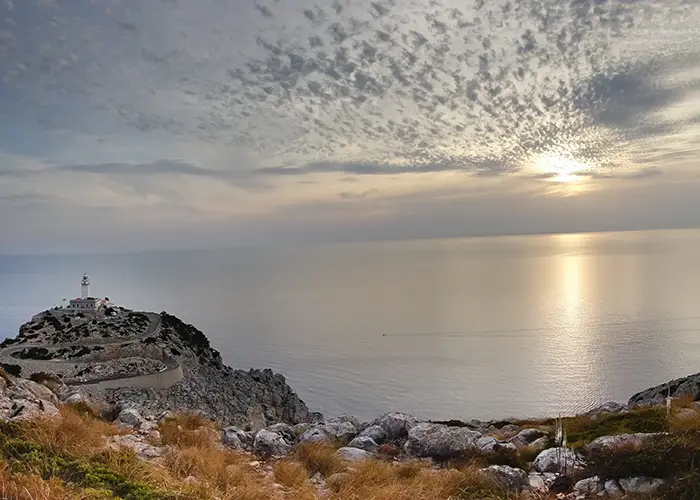
Which Spanish climb would you tackle first?
Spain’s cycling landscape changes noticeably from one region to the next. Girona has become a base for professional riders, Mallorca draws clubs looking for long spring miles, the Sierra Nevada centres on sustained climbing at altitude, the Camino de Santiago rewards multi-day touring, and the Basque Country is known for its short, steep coastal ascents.
Choosing between them comes down to the type of cycling experience you’re looking for. Some cyclists head for long mountain ascents, while others prefer quieter inland roads or multi-day routes linking historic towns and changing landscapes. Together, these regions show just how varied road cycling in Spain can be.