The Tyranny of the Itinerary
There is a version of holiday planning that begins as a reasonable attempt to make the most of limited time and ends as a schedule so densely packed that the trip itself becomes an exercise in logistics management. Every hour accounted for, every restaurant pre-booked, every museum timed to avoid the queues. It is efficient in the way that a spreadsheet is efficient — everything fits, nothing overlaps, the numbers add up — and it produces a holiday that runs exactly as planned and feels, somehow, like it missed the point.
The problem with a fixed itinerary is not the planning itself but what the planning prevents. It prevents the afternoon you spend longer than expected in a town you almost didn’t stop in. It prevents the conversation with a stranger that changes your understanding of a place. It prevents the weather-enforced rest day that turns out to be the one you remember most clearly. These things require gaps, and gaps are precisely what the fixed itinerary eliminates in the name of efficiency.
The Formats That Build Freedom In
The travel formats that produce the best unplanned moments are the ones where some degree of openness is structurally built into the experience rather than left to the traveller to impose on a pre-planned schedule. Slow travel by car through unfamiliar country, with accommodation booked only a day ahead. A walking trip with a loose daily framework but no fixed endpoint for each stage. And perhaps most effectively of all, a sailing holiday — where the day’s destination is determined each morning by wind, weather, and inclination rather than by anything decided in advance.
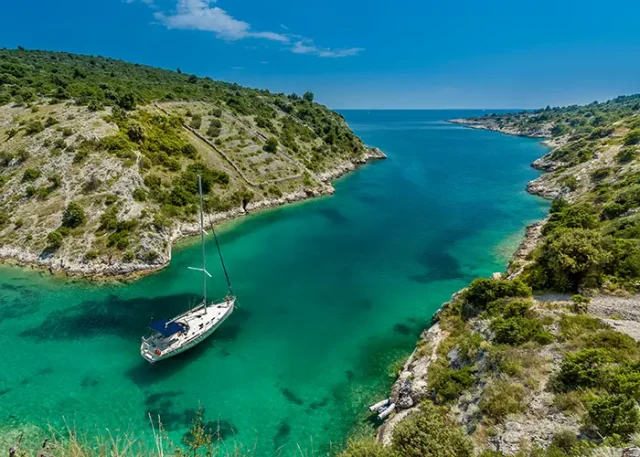
A Croatia gulet holiday works on exactly this principle. The vessel has a captain who knows the Dalmatian coast in depth, a general direction of travel, and a set of possible anchorages for each night — but the specific choices are made in real time, responsive to the conditions of that particular day. If the wind favours a longer passage to a quieter island, you go. If a bay that was not on any plan turns out to be exactly right, you stay. The itinerary exists as a framework rather than a fixed commitment, and the flexibility within it is where the best of the week tends to happen.
“The holiday that goes exactly to plan is the one you forget first. The one that went sideways in all the right ways is the one you tell for years.”
What Unplanned Time Actually Produces
The value of unplanned time on a holiday is not simply the absence of obligation. It is the presence of a different kind of attention — one that is responsive to what is actually in front of you rather than directed towards what is supposed to come next. When the next hour is not already spoken for, you notice more. A market that would have been a ten-minute tick-box becomes an hour of genuine engagement. A walk that started as a way to fill time before dinner becomes the best part of the day.
This quality of attention is what people are actually trying to recover when they go on holiday, and it is the first thing that a fixed itinerary destroys. The mind that is always oriented towards the next thing on the list cannot be fully present to the current thing, and the current thing is where all the actual experience is located. Leaving the schedule loose is not laziness. It is the precondition for the kind of presence that makes a trip feel genuinely different from ordinary life.
The Practical Case for Looseness
There is also a purely practical argument for building flexibility into a holiday that has nothing to do with philosophy. Travel goes wrong in small ways constantly — a restaurant is closed, a trail is flooded, the weather makes the planned activity unpleasant. The traveller with a fixed itinerary experiences each of these as a disruption to be managed. The traveller with a loose one experiences them as an invitation to do something different, which frequently turns out to be better than the original plan.
The best holidays are not the ones where everything went according to plan. They are the ones where the plan was good enough to provide a structure and loose enough to be abandoned when something better presented itself. Getting that balance right is less a matter of planning technique than of attitude — a willingness to treat the unexpected not as a problem but as the part of the trip most worth paying attention to.