The Yellowstone National Park map reveals a park built from steam, cold water, cliffs, and wildlife corridors. NPS divides this huge area into developed districts linked by the Grand Loop. That structure explains why each exotic corner feels like a separate world.
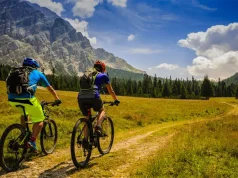
The park looks wild, but downtime still matters on long trail days. During a midday pause, Casino Peaches lets hikers play slots from a smartphone. That is an easy way to relax during a hiking trip. Back in Yellowstone, that contrast between exertion and rest shapes the best itineraries.
Yellowstone National Park lodging near terraces, steam, and quiet roads
Mammoth Hot Springs serves as the weirdest northern entrance to the national park. These springs are not geysers, but flowing travertines formed due to the passage of hot water through limestone. Pale layers, orange lines, and changes are observed when walking on walkways and upper terrace drive routes. Elk commonly roam around here.
For travelers comparing Yellowstone National Park lodging, Mammoth works well because history and geology sit in one compact zone. The Yellowstone National Park map places Mammoth beside the North Entrance, Albright Visitor Center, and several easy waterfall stops. Rustic Falls, Wraith Falls, and Undine Falls add quick detours without demanding a full day hike. Fort Yellowstone and the Roosevelt Arch deepen the stop with real park history.
Yellowstone National Park photos get their wildest colors in the thermal core
The most shocking view is near Midway Geyser Basin, where Grand Prismatic Spring can be seen in hues of colors starting from blue all the way to orange due to thermophilic microorganisms. According to the NPS, there are more than 10,000 hydrothermal systems that are currently active.
Nearby, Old Faithful and the Upper Geyser Basin offer density rather than one single icon. Within one square mile, this basin holds at least 150 hydrothermal features. Morning Glory Pool, Castle, Grand, Daisy, and Riverside keep Yellowstone National Park photos busy long after the main eruption ends. The boardwalk network makes the area accessible without draining away its raw energy.
Where steam turns the road trip strange
Norris and Madison contribute an edge to the geothermal theme with a more rugged approach. This section features Norris Geyser Basin, Steamboat Geyser, Grand Prismatic Spring, Fountain Paint Pot, and Great Fountain Geyser. The Firehole Canyon and Firehole Lake drives keep the sights coming at you at full speed. The Fairy Falls provide the region’s finishing touch after all the heat and sulfur.
Yellowstone National Park vacation starts getting exotic south of the busiest stops
A serious Yellowstone National Park vacation should not stop at the famous basins. The Yellowstone National Park map opens a wilder southern arc around West Thumb, Grant Village, and Yellowstone Lake. West Thumb contains the biggest geothermal area on the shores of Lake, and some geothermal activity exists beneath the water surface. This is also an area within a volcano’s crater that was formed 174,000 years ago.
Now comes Yellowstone Lake to lift your spirits once more. The NPS says that this is the largest high-elevation lake in North America above 7,000 feet. This lake is at an elevation of 7,733 feet, remains fiercely cold, and has a mean temperature of around 41 degrees Fahrenheit.
Yellowstone National Park vacation plans get even more exotic near Shoshone Lake and the Bechler region. Second only to Heart Lake in size, Shoshone is possibly the largest roadless lake in the lower 48 states. Motorboats are not permitted, making the area extremely tranquil. Located on the southwest entrance to the park, Bechler receives the least traffic and is more humid than the other areas.
Yellowstone National Park hotels work best near canyon rims and wildlife valleys
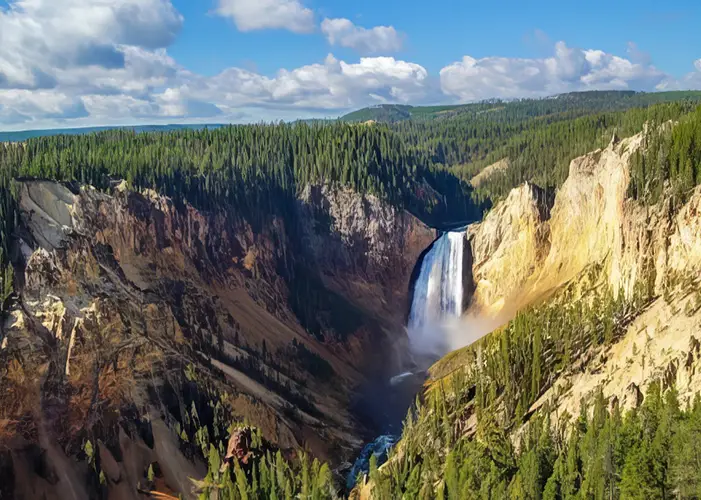
Travelers who want easier access between day trips usually focus on canyon country. The Yellowstone National Park map shows why this central zone works so well for logistics. The Grand Canyon of the Yellowstone stretches for about 20 miles and features the 308-foot Lower Falls. Views from the Artist Point, Lookout Point, and South Rim Trail can be spectacular without venturing too far into the wilderness.
The phrase Yellowstone National Park hotels matters most here because overnight bases shape dawn wildlife drives. Canyon Lodge, Lake Yellowstone Hotel, Old Faithful Inn, Roosevelt Lodge, and Grant Village Lodge sit in different strategic pockets. NPS lists nine in-park lodging options overall, and operating dates vary by season. The right base can save hours of road time across a single trip.
Hayden Valley transforms such a practical foundation into a tangible benefit for oneself. The bison can be seen at all times within the open plains throughout the warm period. Grizzly bears can also be seen during the spring and early summer seasons particularly around the calves.
The northeast offers the park’s most cinematic wildlife country. The Yellowstone National Park map sends patient travelers toward Lamar Valley, where bison and elk draw in wolves and grizzlies. The broader northern range also supports coyotes, bighorn sheep, hawks, falcons, and occasional cougars. It feels less like a viewpoint and more like a living documentary set.
Roosevelt Lodge and the Lamar Buffalo Ranch add history to that animal drama. The ranch helped protect Yellowstone bison from extinction in the early twentieth century. Specimen Ridge and volcanic formations give the drive a harder geological edge. Even the roadside cliffs feel active and alert.
The change of seasons alters all these locations far beyond the expectations of many travelers. Yellowstone Lake freezes entirely every winter, typically by late December or early January. It typically unfreezes by late May or early June. This schedule may totally alter an itinerary, a base camp, and even a week-long schedule.
This is the reason Yellowstone never feels like a single postcard picture. The thermal basins bubble, the canyon cliffs boom, the lakeshores chill with frost, and the northern valleys pulse with predators. The magic of the place lies in blending multiple terrains within a single day. Few national parks shift between scales and moods so rapidly, and this is the secret of Yellowstone’s allure.