
Hawaii has all the ingredients of a memorable family vacation: welcoming beaches, extraordinary wildlife, volcanic landscapes, cultural experiences, and outdoor adventures for almost every age.
The challenge is deciding where to spend your time. Each Hawaiian island offers a different family experience. Oʻahu has the greatest variety of attractions, Maui combines beaches with scenic drives and wildlife, Kauaʻi is ideal for families who love nature, and the island of Hawaiʻi delivers volcanoes, stargazing, and unusual coastlines.
Rather than trying to visit every island in one trip, most families will have a better vacation by choosing one or two islands and leaving time for unscheduled beach days. Here are some of the best family activities to consider.
Family Activities on Oʻahu
Oʻahu is often the easiest Hawaiian island for a first family vacation. Honolulu has a wide selection of accommodations and restaurants, while the island’s museums, beaches, historic sites, and outdoor attractions offer options for children, teenagers, parents, and grandparents.
Learn to Surf at Waikīkī Beach
Waikīkī is one of the most approachable places in Hawaii for a first surfing lesson. The long, rolling waves are often gentler than those found on the North Shore, and numerous established surf schools operate along the beachfront.
Lessons typically begin on the sand before moving into shallow water. Minimum ages vary, so families should confirm requirements directly with the surf school. Younger children who are not ready to surf can still enjoy swimming, paddling, or building sandcastles along the protected sections of Waikīkī.
Ocean conditions can change quickly, even at familiar beaches. Choose an area with lifeguards, check the day’s conditions, and speak with a lifeguard before entering the water.
Explore Hawaiian History at Bishop Museum
The Bernice Pauahi Bishop Museum is one of the best places for families to learn about Hawaiian and Pacific history.
Hawaiian Hall introduces visitors to the people, traditions, beliefs, and history of the islands through artifacts and detailed exhibits. The Richard T. Mamiya Science Adventure Center explores subjects such as volcanology, oceanography, biodiversity, and coral reefs through family-friendly displays.
The museum also operates a planetarium with programs about Polynesian navigation, astronomy, and the night sky. Because much of the experience is indoors, Bishop Museum is an especially useful option on a rainy or unusually hot day.
Visit Pearl Harbor
Older children and teenagers may appreciate a visit to the Pearl Harbor National Memorial, where exhibits explain the events surrounding the attack on December 7, 1941, and the United States’ entry into the Second World War.
The USS Arizona Memorial program is free, although advance reservations are strongly recommended. Security restrictions limit the types of bags visitors may bring into the site, so review the current rules before arriving.
Families should allow enough time for the exhibits rather than treating Pearl Harbor as a quick photo stop. The stories presented here can be emotional, making the experience most suitable for children old enough to understand the historical context.
Combine a North Shore Drive With Haleʻiwa
Haleʻiwa offers a relaxed base for exploring Oʻahu’s North Shore. Families can browse local shops, stop for shave ice, visit food trucks, and watch experienced surfers from shore.
The North Shore’s famous waves can become extremely powerful, particularly in winter. Beaches that appear calm in summer may be unsafe for swimming at other times of year. Families should never assume that a well-known surf beach is also a suitable swimming beach.
The paved Makapuʻu Point Lighthouse Trail on southeastern Oʻahu is another good family outing. The uphill route provides sweeping coastal views without the rough terrain found on many island hikes. There is little shade, so start early and bring water and sun protection.
Snorkel at Hanauma Bay
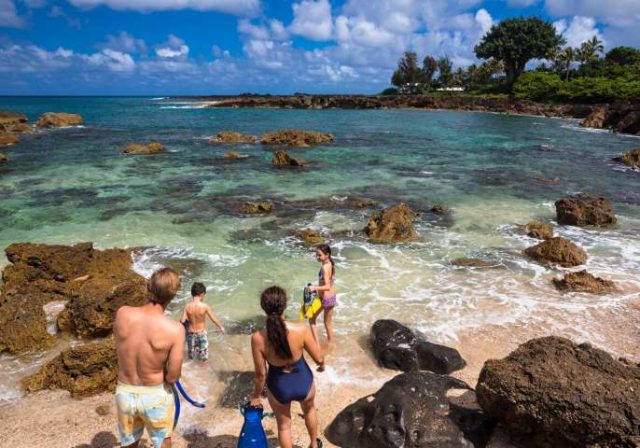
Hanauma Bay Nature Preserve is one of Oʻahu’s best-known snorkeling destinations. Its protected setting and abundant marine life can make it suitable for families with older children who are comfortable in the water.
Advance reservations are highly recommended, and the preserve is closed on certain days to give the ecosystem time to recover. Visitors must watch an educational video before entering.
Children should never stand on coral or chase marine animals. Reef-safe behavior is just as important as sunscreen: keep fins away from the reef, give sea turtles plenty of space, and leave shells, rocks, and marine life where they belong.
Family Activities on Maui
Maui combines resort conveniences with mountain scenery, marine life, farms, and road-trip experiences. Families can spend one day at the beach and the next above the clouds at Haleakalā.
Travelers should remember that recovery from the 2023 Lahaina wildfire remains ongoing. Respect closures and residential areas, avoid entering restricted parts of the historic town, and support locally owned businesses that have reopened throughout the island.
Discover Marine Life at Maui Ocean Center
The Maui Ocean Center in Māʻalaea introduces families to the marine ecosystems surrounding the Hawaiian Islands.
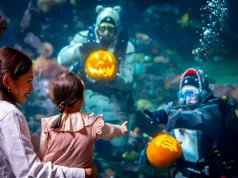
Exhibits feature tropical fish, sharks, rays, sea turtles, coral, and other species found in Hawaiian waters. A walk-through tunnel provides an underwater perspective, while presentations by marine naturalists help children understand how Hawaii’s ocean habitats are connected.
The aquarium is stroller-friendly and can usually be explored in approximately two hours, making it easy to combine with another activity.
Watch Humpback Whales
Humpback whales migrate to Hawaiian waters to mate, give birth, and care for their young. Whale season generally runs from November through May, with sightings often peaking between January and March, according to the Hawaiian Islands Humpback Whale National Marine Sanctuary.
Maui is one of the most popular islands for whale-watching excursions because whales gather in the relatively shallow waters between Maui, Molokaʻi, Lānaʻi, and Kahoʻolawe.
Choose an established operator that follows federal wildlife-viewing regulations. Boats may not approach within 100 yards of a humpback whale, although whales sometimes choose to swim closer on their own.
Families with very young children should ask about vessel size, shade, restrooms, trip length, and minimum-age policies before booking.
See the Summit of Haleakalā
The summit of Haleakalā National Park rises more than 10,000 feet above sea level, revealing a landscape of volcanic cinder cones, shifting clouds, and vast views.
Sunrise is famous, but it requires a vehicle reservation for entry between 3 a.m. and 7 a.m. The early departure and high elevation can be difficult for younger children. Sunset or a daytime visit may be a more relaxed family alternative and does not currently require the special sunrise reservation.
Temperatures at the summit can be at least 20 degrees colder than at sea level and may fall below freezing. Bring warm layers, sturdy shoes, food, water, and a full tank of gas. Families should also be aware that the high elevation can affect people with certain health conditions.
Take a Thoughtful Road Trip Toward Hāna
The Road to Hāna is known for rainforests, coastal views, waterfalls, and narrow bridges. For families, however, the drive should not become a race to check off every roadside stop.
Choose a few legal, established places to visit and avoid parking on the highway or entering private property. Many unofficial waterfall access points cross private land or create dangerous roadside conditions.
One worthwhile stop is Waiʻānapanapa State Park, known for its black-sand shoreline and coastal scenery. Advance parking and entry reservations are required for nonresidents.
Families prone to motion sickness may find the winding road challenging. Allow plenty of time, bring snacks and water, and consider turning around before Hāna rather than committing to an exhausting full-day loop.
Family Activities on Kauaʻi
Kauaʻi is an excellent choice for active families interested in hiking, gardens, waterfalls, beaches, and small towns. Its landscapes are spectacular, but the island’s rain, currents, and rugged terrain require flexibility.
See Waimea Canyon
Often described as the “Grand Canyon of the Pacific,” Waimea Canyon stretches across western Kauaʻi in a series of cliffs, ridges, and deeply carved valleys.
Families can enjoy the scenery from roadside overlooks without committing to a difficult hike. Older children may enjoy one of the area’s established trails, but conditions can become muddy and slippery after rain.
Continue into Kōkeʻe State Park for additional overlooks and walks through upland forest. Temperatures are cooler at higher elevations, so bring an extra layer even when the coast is warm.
Ride the Kauaʻi Plantation Railway
The Kauaʻi Plantation Railway travels through the historic Kilohana property near Līhuʻe.
The narrated train ride passes fields and orchards growing tropical fruits and other crops. A stop to feed farm animals makes the experience particularly appealing to younger children.
The ride lasts approximately 40 minutes, so it can fit easily into a day that also includes a beach, garden, or visit to Līhuʻe.
Enjoy a Family Beach Day
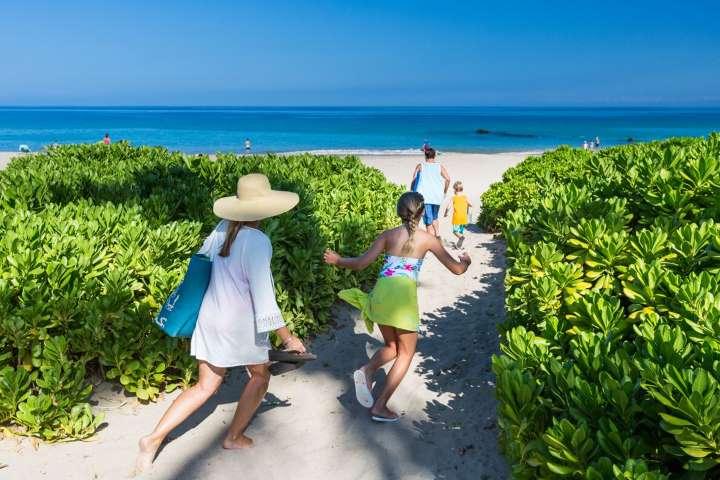
Poʻipū Beach Park on the South Shore and Lydgate Beach Park on the eastern side of the island are popular with families, but no Hawaiian beach is safe in every condition.
Lydgate has protected swimming areas that can be useful for younger children. Poʻipū offers snorkeling opportunities when the water is calm and is also known for Hawaiian monk seal sightings.
Monk seals are protected animals and need considerable space to rest. Follow posted instructions and remain behind any barriers established by wildlife volunteers.
Kauaʻi’s North Shore can have powerful surf during winter, while southern beaches can experience larger waves during summer. Check current conditions through Hawaii Beach Safety before setting out.
Explore Kauaʻi From the Water
Older children may enjoy a guided kayak trip on the Wailua River or a seasonal boat tour along the Nāpali Coast. These experiences reveal parts of Kauaʻi that cannot be seen from the road.
Conditions along the Nāpali Coast can be rough, and operators may have age, mobility, or health restrictions. Families should select a trip based on the youngest traveler’s abilities rather than choosing the fastest or most adventurous boat.
Family Activities on the Island of Hawaiʻi
The island of Hawaiʻi—often called the Big Island—offers the state’s most varied landscapes. Families can encounter volcanic craters, rainforests, black-sand beaches, ranch country, and sunny resort areas during the same vacation.
Because the island is large, driving distances are often longer than they appear on a map. Families may want to divide their stay between the Kona or Kohala coast and the Hilo or Volcano area.
Explore Hawaiʻi Volcanoes National Park
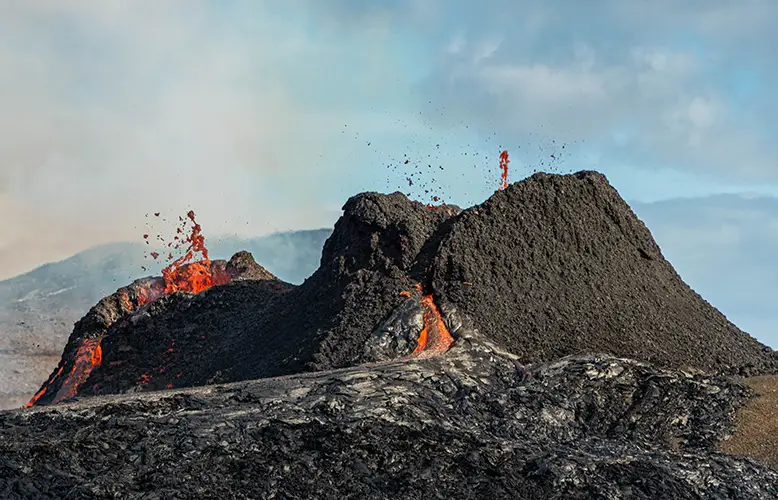
Hawaiʻi Volcanoes National Park protects the summits of Kīlauea and Mauna Loa along with rainforests, lava fields, cultural sites, and dramatic coastal landscapes.
Families can visit overlooks around Kīlauea, walk through native forest, see steam vents, and explore Nāhuku, also known as the Thurston Lava Tube. Shorter trails and roadside viewpoints allow visitors to experience the park without undertaking a demanding hike.
Volcanic activity, air quality, road access, and trail closures can change with little notice. Check the park’s current alerts before leaving your accommodations and never cross a barrier or enter a closed area.
Junior Ranger activities can make the geology and cultural history more engaging for school-age children.
Visit a Black-Sand Beach
Punaluʻu Black Sand Beach provides a striking look at the volcanic forces that formed the island. Hawaiian green sea turtles are sometimes seen resting along the shoreline.
Families should observe turtles from a respectful distance and never touch, feed, surround, or block them from returning to the ocean. Black sand and lava rocks should also remain on the island.
Punaluʻu is better suited to sightseeing than casual family swimming when conditions are rough. Ask a lifeguard or local authority before entering the water.
Spend a Day on the Kona or Kohala Coast
The sunnier western side of the island offers beaches, snorkeling, paddling, and boat excursions.
Hāpuna Beach State Recreation Area has a broad sandy shoreline, but shore break and currents vary. Younger swimmers may be more comfortable at a protected beach or lagoon when the surf is elevated.
Nighttime manta-ray snorkeling is one of the island’s signature experiences, but it is best for confident swimmers and older children. Minimum ages and swimming requirements vary by operator. Families that would rather stay dry can ask about manta-viewing boat trips that do not require entering the water.
Learn About Astronomy and Hawaiian Navigation
The island’s high mountains and clear skies have made it an important center for astronomy. Families can explore the relationship between Hawaiian navigation, culture, and the night sky through interpretive programs and guided stargazing experiences.
Visitors should use permitted tour operators and avoid driving beyond authorized public areas on Maunakea. The summit’s extreme elevation, cold temperatures, and limited oxygen make it inappropriate for young children and some adults.
Lower-elevation stargazing experiences can be more comfortable while still offering memorable views of the sky.
Tips for Planning a Hawaii Family Vacation
A successful family trip to Hawaii depends as much on pacing as it does on choosing attractions.
Try to schedule no more than one major outing each day. A morning hike followed by an afternoon at the beach is usually more enjoyable than trying to combine a volcano, aquarium, scenic drive, and evening show in a single itinerary.
Reserve popular experiences early. Depending on the island, advance arrangements may be required for Haleakalā sunrise, Waiʻānapanapa State Park, Diamond Head, Hanauma Bay, Hāʻena State Park, Pearl Harbor programs, and certain boat tours.
Families should also:
- Choose lifeguarded beaches whenever possible.
- Check ocean and weather conditions every morning.
- Use only legal, maintained trails.
- Carry more water than expected on hikes and scenic drives.
- Keep children away from cliff edges, blowholes, and wet lava rocks.
- Never turn your back on the ocean.
- Give sea turtles, monk seals, whales, and other wildlife plenty of space.
- Avoid touching coral or removing sand, rocks, plants, or shells.
- Support locally owned restaurants, guides, farms, and shops.
- Learn the cultural importance of a place before visiting it.
Families can also participate in the Mālama Hawaiʻi approach to responsible travel. Volunteer opportunities such as beach cleanups, native planting projects, and cultural restoration programs can help children understand that visiting Hawaii also brings a responsibility to care for its land, ocean, communities, and living culture.
Making Hawaii Meaningful for the Whole Family
The most memorable family experiences in Hawaii are not necessarily the most expensive or elaborate.
Children may remember seeing a sea turtle from a respectful distance, walking through a lava tube, tasting shave ice after a beach day, or looking up at a sky filled with stars. Parents may appreciate the rare opportunity to slow down and share those discoveries without the usual distractions of everyday life.
By choosing activities carefully, respecting local communities, and allowing time to enjoy each island’s natural rhythm, families can experience Hawaii as much more than a tropical beach destination.