
There are places where the scenery seems almost too dramatic to be real. Madeira is one of them.
Rising from the Atlantic Ocean roughly 600 miles southwest of mainland Portugal, this spectacular island combines towering volcanic peaks, lush green valleys, cascading waterfalls, and rugged coastlines. Add charming villages, subtropical gardens, exceptional food, and a remarkably mild climate, and it’s easy to understand why Madeira has become one of Europe’s most compelling island destinations.
Often called the Island of Eternal Spring, Madeira is a destination where visitors can hike above the clouds in the morning, enjoy lunch overlooking the Atlantic, and spend the afternoon swimming in volcanic rock pools.
But Madeira is much more than beautiful scenery. Its history, culture, gastronomy, and increasingly sophisticated hospitality scene make it equally appealing to adventure travelers, couples, families, and visitors seeking a relaxing escape.
For travelers planning a Portugal vacation, Madeira deserves more than a passing glance.
Why Visit Madeira, Portugal?
Madeira is the main island of an autonomous Portuguese archipelago that also includes Porto Santo and the protected Desertas and Selvagens island groups.
Although geographically small, Madeira packs an extraordinary variety of landscapes into its mountainous terrain.
The island’s southern coast is generally warmer and sunnier, with terraced hillsides, banana plantations, vineyards, and picturesque fishing villages. In contrast, the northern coast is greener and more rugged, where mountains plunge toward the ocean and waterfalls emerge from forest-covered cliffs.
Inland, volcanic peaks rise more than 6,000 feet above sea level, creating hiking opportunities and panoramic viewpoints that rival some of Europe’s most famous mountain destinations.
And despite the island’s rugged appearance, modern highways and tunnels make it possible to explore many of its regions within a relatively short drive.
The result is a destination that offers remarkable diversity without requiring travelers to spend days moving between locations.
Discover Funchal, Madeira’s Charming Capital

Most visitors begin their Madeira adventure in Funchal, the island’s attractive capital and its main cultural and hospitality center.
Built along a natural amphitheater of hills overlooking the Atlantic, Funchal combines traditional Portuguese architecture with contemporary restaurants, lively markets, gardens, and luxury hotels.
The historic Old Town, known as Zona Velha, is a wonderful place to explore on foot.
Narrow cobblestone streets lead past small restaurants, traditional buildings, and the colorful painted doors of Rua de Santa Maria. The neighborhood is especially atmospheric in the evening when outdoor tables fill with visitors enjoying fresh seafood and local wine.
For a taste of everyday island life, visit the Mercado dos Lavradores, Funchal’s famous farmers market. Its stalls display tropical fruits, flowers, fresh produce, and locally caught fish.
Funchal is also home to several attractive museums, churches, and waterfront promenades.
One of the most memorable experiences is the cable car ride from the city center to Monte, high above the capital.
The journey offers spectacular views over Funchal’s red-tiled rooftops, the surrounding mountains, and the Atlantic Ocean.
Once in Monte, visitors can explore the beautiful Monte Palace Tropical Garden, known for its exotic plants, ornamental ponds, artwork, and landscaped pathways.
For something completely different, try Madeira’s traditional wicker toboggan ride.
These famous basket sledges are guided downhill through the streets by two attendants dressed in traditional white clothing and straw hats. It’s a quirky island tradition that has become one of Madeira’s most recognizable attractions.
Hike Madeira’s Spectacular Mountains and Levadas
For outdoor enthusiasts, Madeira is exceptional.
The island’s network of hiking routes passes through mountain landscapes, dense forests, deep valleys, and dramatic coastal scenery.
Some of the best-known routes follow levadas, historic irrigation channels originally constructed to carry water from wetter parts of the island to agricultural communities.
Today, walking alongside these waterways is one of Madeira’s signature experiences.
Many levada trails pass through beautiful forests, alongside waterfalls, and through narrow tunnels carved into the mountainside.
Among the most popular are Levada das 25 Fontes, Levada do Caldeirão Verde, and Levada do Rei.
For travelers seeking a more challenging adventure, Madeira’s mountainous interior offers extraordinary high-altitude hiking.
Pico do Areeiro and Pico Ruivo
Pico Ruivo, standing approximately 6,109 feet above sea level, is Madeira’s highest mountain.
Nearby Pico do Areeiro is another celebrated viewpoint, particularly popular at sunrise when clouds sometimes settle below the surrounding mountain peaks.
The famous Vereda do Areeiro (PR1) connects the two mountain areas through a spectacular landscape of rocky ridges, steep pathways, and dramatic viewpoints.
The full trail reopened in May 2026 following extensive restoration, with revised access and walking-direction rules.
The section from Pico do Areeiro to Pedra Rija viewpoint allows walking in both directions. Beyond that point, the route toward Pico Ruivo operates one-way, requiring hikers to arrange their onward descent and return transportation.
Important hiking update for 2026: Madeira requires advance reservations for its official classified hiking trails through the SIMplifica booking system. Standard individual trail access generally costs €4.50, while the complete PR1 route has a separate fee of €10.50. Availability, access restrictions, and fees can change.
Before planning a hike, consult the official Madeira hiking guide for the latest trail conditions and reservation requirements.
Travelers who want to experience Madeira’s hiking opportunities outside the busiest summer months can also explore DRIFT Travel’s feature on Madeira as a shoulder-season adventure destination.
Explore the UNESCO-Listed Laurissilva Forest
One of Madeira’s greatest natural treasures is its remarkable Laurissilva Forest.
Recognized as a UNESCO World Heritage Site in 1999, this ancient subtropical laurel forest represents a surviving example of the vegetation that once covered large areas of southern Europe.
Today, Madeira protects approximately 15,000 hectares of this extraordinary ecosystem.
Walking through the Laurissilva feels like entering another world.
Moss-covered trees, ferns, twisting branches, and dense greenery create an atmosphere that can seem almost prehistoric.
One of the most atmospheric places to experience this landscape is Fanal, in the northwestern part of the island.
Here, centuries-old laurel trees stand across an open green landscape, often surrounded by drifting mountain mist.
It’s a favorite destination for photographers, nature lovers, and travelers seeking a peaceful escape from busier tourist attractions.
The surrounding area also provides access to scenic viewpoints and hiking opportunities.
For the best experience, allow time to explore the forest slowly and appreciate its unusual vegetation, changing light, and quiet atmosphere.
Swim in the Volcanic Pools of Porto Moniz
Madeira may not have the extensive sandy beaches associated with some Mediterranean destinations, but its coastline offers something equally memorable.
At Porto Moniz, on the island’s northwestern coast, natural swimming pools formed by volcanic lava have become one of Madeira’s most celebrated attractions.
The dark rock formations create natural basins that fill with clear Atlantic seawater.
A developed bathing complex offers visitor facilities, while other nearby rock pools provide a more natural setting.
Swimming here, surrounded by dramatic coastal scenery and the open Atlantic Ocean, is an experience unlike a conventional beach day.
Nearby Seixal is another destination worth visiting.
Its black-sand beach, framed by lush green mountains and steep cliffs, is among the island’s most photogenic coastal locations.
The surrounding area also features natural pools, waterfalls, and viewpoints.
For travelers exploring the north coast, combining Seixal and Porto Moniz makes an excellent day trip.
Ocean conditions can affect swimming access, especially during periods of rough seas, so always follow local safety guidance.
Discover Madeira’s Dramatic Eastern Peninsula
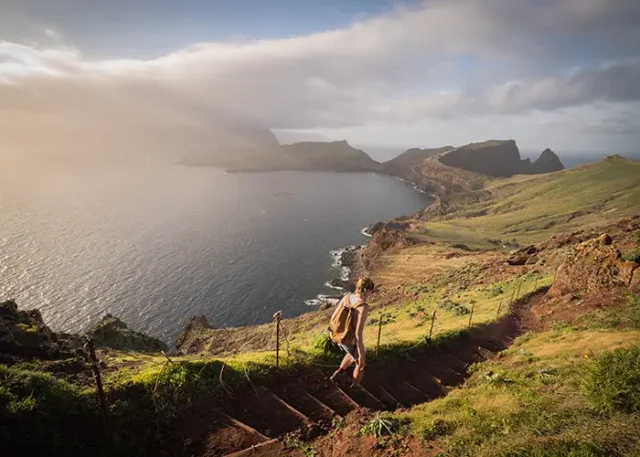
At Madeira’s easternmost point, Ponta de São Lourenço offers scenery that feels completely different from the island’s lush interior.
Here, the landscape becomes dry, rugged, and windswept.
Reddish volcanic cliffs rise above brilliant blue water, while narrow paths lead across an exposed peninsula with views of the Atlantic on both sides.
The area’s popular hiking route, Vereda da Ponta de São Lourenço (PR8), offers spectacular coastal scenery and opportunities to observe unusual plants and seabirds.
Unlike Madeira’s forested trails, this landscape has very little shade.
Visitors should carry drinking water, wear appropriate footwear, and prepare for changing wind and weather conditions.
The area is particularly appealing to photographers, who will appreciate the contrast between the rust-colored volcanic rock and turquoise ocean.
Check official trail access conditions before visiting, as sections may be restricted or temporarily diverted.
Explore Madeira’s Traditional Villages
Some of Madeira’s most memorable experiences happen away from its major attractions.
Throughout the island, small villages preserve a sense of place shaped by centuries of agriculture, fishing, and maritime history.
Câmara de Lobos
Just west of Funchal, Câmara de Lobos is a picturesque fishing village famous for its colorful boats and attractive waterfront.
British statesman Winston Churchill famously painted scenes of the village during a visit to Madeira, helping establish its reputation as one of the island’s most charming coastal communities.
Today, visitors can enjoy waterfront restaurants, local cafés, and views across the sheltered harbor.
It’s also a great place to try poncha, a traditional Madeiran drink generally made with sugarcane spirit, honey or sugar, and citrus juice.
Santana
On Madeira’s north coast, Santana is best known for its distinctive traditional triangular houses.
With steep thatched roofs, whitewashed walls, and brightly colored doors, these small buildings have become iconic symbols of the island.
Several preserved examples can be visited, offering an insight into traditional Madeiran architecture and rural life.
The wider Santana region is also known for its landscapes, hiking routes, and rich biodiversity.
Curral das Freiras
Hidden among dramatic mountains in Madeira’s interior, Curral das Freiras—often called the Valley of the Nuns—is another fascinating destination.
Surrounded by steep peaks, the village feels remarkably isolated despite being accessible by modern roads.
The nearby Eira do Serrado viewpoint provides an unforgettable panorama across the valley and its surrounding mountains.
The region is particularly associated with chestnuts, which appear in local dishes and seasonal specialties.
Experience the Spectacular Cabo Girão Skywalk
For one of Madeira’s most dramatic coastal views, head to Cabo Girão.
Standing approximately 1,903 feet above the Atlantic, this towering cliff overlooks the southern coastline near Câmara de Lobos.
Its famous glass-floored skywalk allows visitors to look down toward the steep cliff face and the small agricultural terraces far below.
The panoramic views extend along the coastline toward Funchal and surrounding villages.
Cabo Girão has become one of Madeira’s most photographed attractions, and the experience is especially memorable on a clear day.
Access is ticketed, so check current admission requirements before visiting.
Whale Watching and Ocean Adventures
Madeira’s marine environment is another important part of its appeal.
The deep Atlantic waters surrounding the archipelago provide opportunities to observe dolphins, whales, and other marine wildlife throughout the year.
Boat excursions depart from locations including Funchal, Calheta, and Machico.
Depending on the season and conditions, visitors may encounter bottlenose dolphins, common dolphins, pilot whales, and other cetacean species.
Sightings are never guaranteed, but a boat excursion is an excellent way to appreciate Madeira’s coastline from a different perspective.
Travelers can also enjoy kayaking, snorkeling, diving, surfing, and sailing.
For a responsible experience, choose operators that follow wildlife-viewing guidelines and prioritize the well-being of marine animals.
Learn more through Visit Madeira’s official whale-watching information.
Take a Side Trip to Porto Santo
While Madeira is famous for its towering cliffs and dramatic mountains, neighboring Porto Santo offers a different kind of island experience.
Often called the Golden Island, Porto Santo is best known for its magnificent nine-kilometer stretch of golden sand.
The beach is particularly attractive to travelers seeking a relaxing seaside getaway, with clear turquoise water, open coastal views, and a quieter atmosphere.
Porto Santo also offers golf, hiking, diving, and opportunities to explore its history and local culture.
Travelers can reach the island by air or by ferry from Madeira, subject to operating schedules and sea conditions.
Although a day trip is possible with suitable connections, spending a night or two provides more time to enjoy the island’s beaches and relaxed pace.
For anyone combining outdoor adventures with a traditional beach vacation, Madeira and Porto Santo make an appealing pairing.
Taste Madeira: From Traditional Cuisine to Michelin-Starred Dining
Madeira’s food scene has become another compelling reason to visit.
Traditional island cuisine is built around fresh seafood, locally grown produce, and recipes influenced by the archipelago’s maritime history.
One signature dish is espetada, skewers of beef traditionally seasoned with garlic, salt, and bay leaves, then grilled over an open flame.
Another local favorite is bolo do caco, a round, flat bread often served warm with garlic butter.
Seafood lovers should try black scabbardfish, frequently accompanied by banana, a combination that has become one of Madeira’s most recognizable specialties.
The island is also famous for Madeira wine, a fortified wine produced in a range of styles from dry to sweet.
Wine tastings and visits to local producers provide an opportunity to learn about the traditions behind this internationally recognized product.
Beyond its traditional restaurants, Madeira now boasts a thriving fine-dining scene.
At The Cliff Bay in Funchal, Il Gallo d’Oro has earned two Michelin stars, while William at Reid’s Palace and Desarma at The Views Baía also hold Michelin recognition.
The island’s culinary development is explored further in DRIFT Travel’s feature, Madeira Shines at the Michelin Guide Portugal Gala.
For travelers who enjoy combining authentic regional cuisine with sophisticated dining, Madeira offers plenty of memorable experiences.
Madeira’s Growing Appeal for Remote Workers
Madeira is no longer simply a destination for conventional vacations.
In recent years, the island has attracted international remote workers seeking a combination of reliable digital infrastructure, attractive scenery, and a relaxed lifestyle.
The Digital Nomad Village initiative in Ponta do Sol helped establish Madeira as a destination for location-independent professionals.
Coworking opportunities, community events, and networking activities have contributed to a growing international remote-working community.
For travelers considering a longer stay, Madeira offers the opportunity to combine working remotely with hiking, outdoor adventures, and exploring the island’s cultural attractions.
DRIFT Travel has also explored this growing trend in Discover Madeira: The World’s First Digital Nomad Village and a Gateway to Flexible Living.
Where to Stay in Madeira
Madeira’s accommodation scene ranges from intimate boutique properties and traditional quintas to sophisticated oceanfront resorts.
For visitors seeking a memorable hotel experience, several established luxury properties deserve consideration.
Savoy Palace — Contemporary Luxury in Funchal
Located in Funchal, Savoy Palace combines contemporary architecture, extensive leisure facilities, and Atlantic Ocean views.
The hotel offers stylish rooms and suites, swimming pools, wellness experiences, and multiple dining options.
Its convenient location makes it a good choice for travelers who want to enjoy luxury accommodations while remaining close to Funchal’s restaurants, shopping, and attractions.
View Savoy Palace on Booking.com
Reid’s Palace, A Belmond Hotel — Timeless Island Elegance
One of Madeira’s most iconic hotels, Reid’s Palace has welcomed generations of international travelers.
Set among subtropical gardens overlooking the ocean, this historic property is celebrated for its elegant atmosphere, exceptional service, and spectacular coastal location.
Guests can enjoy beautiful gardens, fine dining, swimming pools, and a classic afternoon tea experience.
It’s particularly appealing to couples and travelers who appreciate traditional luxury hospitality.
View Reid’s Palace on Booking.com
Les Suites at The Cliff Bay — Oceanfront Luxury
For an intimate luxury experience, Les Suites at The Cliff Bay offers sophisticated accommodations overlooking the Atlantic.
Part of the PortoBay hospitality collection, the all-suite property features landscaped gardens, attractive outdoor spaces, and access to exceptional dining experiences.
Its location provides a peaceful setting while keeping Funchal within convenient reach.
View Les Suites at The Cliff Bay on Booking.com
Saccharum Resort & Spa — A Stylish Retreat in Calheta
Travelers looking to stay outside Funchal may enjoy Saccharum Resort & Spa, located in the southwestern coastal community of Calheta.
Inspired by Madeira’s sugarcane heritage, the resort blends contemporary design with ocean views, spa facilities, and an atmosphere suited to relaxation.
The location also makes it a convenient base for exploring Madeira’s western coastline.
View Saccharum Resort & Spa on Booking.com
Best Time to Visit Madeira
One of Madeira’s greatest attractions is its generally mild climate throughout the year.
However, the best time to visit depends on what you want to experience.
Spring (March to May): An excellent season for flowers, gardens, sightseeing, and hiking. The island’s landscapes are especially attractive during the spring flowering season.
Summer (June to August): Warmer and generally drier conditions make summer popular for swimming, boat excursions, and coastal activities. This is also a busier travel period.
Fall (September to November): An appealing season for travelers seeking warm conditions, outdoor adventures, and a potentially quieter experience after the summer rush.
Winter (December to February): Madeira remains relatively mild compared with much of Europe, making it attractive for a winter escape. Rain and cooler temperatures are more likely in the mountains and along the north coast.
Conditions can vary significantly between coastal areas and higher elevations, so travelers planning outdoor activities should be prepared for rapid weather changes.
Planning Your Madeira Vacation
For first-time visitors, five to seven days provides an excellent introduction to Madeira.
A week allows enough time to explore Funchal, visit the north coast, experience mountain scenery, enjoy a scenic drive, and relax at the hotel.
Travelers interested in extensive hiking or a Porto Santo side trip may prefer a longer stay.
Madeira’s international airport, located near Santa Cruz, receives flights from numerous European destinations. Travelers arriving from North America will typically connect through Portugal or another European airport, although seasonal direct services may be available from selected cities.
Renting a car is one of the easiest ways to explore the island independently, particularly when visiting smaller villages, viewpoints, and trailheads.
However, Madeira’s roads can be steep and winding, so travelers who prefer not to drive may find organized tours or private drivers a more comfortable alternative.
Be sure to allow flexibility in your itinerary, especially when visiting mountain areas where weather conditions can change quickly.
For official destination information, visit Madeira’s tourism website.
Frequently Asked Questions About Visiting Madeira
Is Madeira worth visiting?
Yes. Madeira is particularly appealing to travelers seeking dramatic scenery, hiking, ocean adventures, cultural experiences, and comfortable accommodations. Its diverse landscapes make it an excellent alternative to more conventional European island destinations.
How many days do you need in Madeira?
Five to seven days is recommended for a first visit. This provides enough time to explore Funchal, experience the mountains, visit coastal villages, and enjoy the island’s natural attractions.
Does Madeira have sandy beaches?
Yes, although much of Madeira’s coastline is rocky or volcanic. Seixal has a striking black-sand beach, while neighboring Porto Santo is famous for its extensive golden-sand shoreline.
Is Madeira expensive to visit?
Madeira offers a range of accommodation and dining options, from relatively affordable guesthouses and casual restaurants to luxury hotels and Michelin-starred dining. Travel costs depend on the season, accommodation preferences, and activities.
Do you need a car in Madeira?
A rental car is useful for independent exploration, especially when visiting remote viewpoints and smaller coastal communities. However, visitors can also use guided tours, taxis, and public transportation to reach many popular attractions.
What is Madeira most famous for?
Madeira is known for its dramatic volcanic landscapes, UNESCO-listed Laurissilva Forest, levada hiking trails, natural swimming pools, Madeira wine, botanical gardens, and mild climate.
Is Madeira suitable for a winter vacation?
Yes. Madeira’s relatively mild winters make it a popular destination for travelers seeking an escape from colder weather. However, mountain conditions may be cooler, wetter, and more unpredictable than those along the coast.
Madeira: A Different Kind of Portugal Vacation
Portugal has no shortage of remarkable destinations, from Lisbon’s historic neighborhoods to Porto’s celebrated wine culture and the Algarve’s famous beaches.
But Madeira offers something altogether different.
It’s a place where mountain trails rise above the clouds, ancient forests create an almost mystical atmosphere, and volcanic cliffs meet the deep blue Atlantic.
It’s also an island where traditional fishing villages coexist with luxury resorts, sophisticated restaurants, and a growing international community.
Whether you’re looking for adventure, romance, relaxation, or simply a beautiful place to explore, Madeira delivers an experience that feels distinctly its own.
For travelers ready to discover another side of Portugal, Madeira deserves a prominent place on the itinerary.