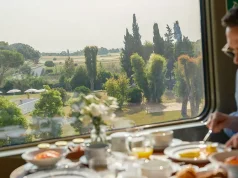

What stays with you after travelling through Scandinavia isn’t just the beauty — it’s the feeling of space. The kind that opens in your mind as much as in the landscape.
You think of Bergen’s rain, Oslo’s quiet precision, Stockholm’s light rippling across the water, and it all fits together like a memory that refuses to fade.
This part of the world doesn’t rush to impress; it unfolds, softly, until you realise you’ve changed pace too. You start noticing the silence between sounds, the weight of light on the sea, the ease of people who live close to nature.
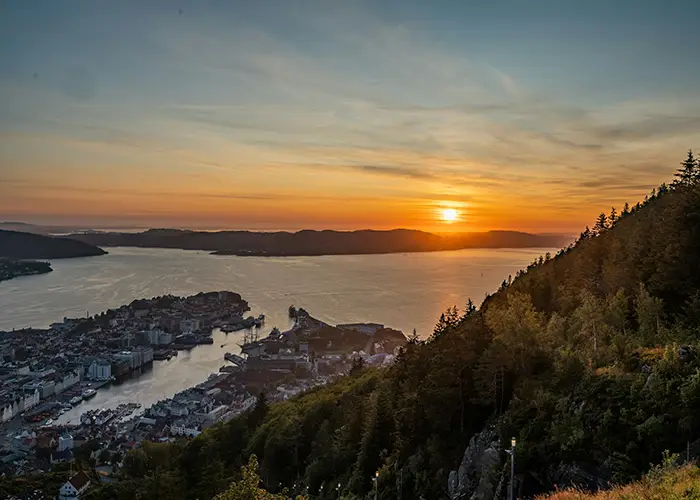
Bergen: The Heart of the Fjords
Bergen looks as though it was painted in watercolour and then left to dry in the rain. The houses along Bryggen shimmer in red, yellow, and ochre, leaning slightly toward each other like old friends sharing a secret. The sea glints nearby, and the air smells of pine and salt.
You can wander for hours here. Up the cobbled lanes, past cafés where candles burn even at midday, or to the top of Mount Fløyen where the city stretches beneath you like a map. There’s a softness to Bergen — even when it rains, which it often does, the droplets feel gentle, not hurried.
When it’s time to move on, the train from Bergen to Oslo offers a journey worthy of its own destination. It snakes through fjords and over high plateaus, past tiny red cottages and glassy lakes that mirror the sky. Every window view looks like a postcard, yet the rhythm of the rails gives it a grounding calm — a reminder that even beauty can be quiet.
Oslo: Calm by Design
Oslo has a confidence that doesn’t need to announce itself. The city’s edges are neat, but its heart feels open. You notice the calm first — the sound of footsteps on clean pavements, the hum of a tram, the way people pause to greet each other before moving on.
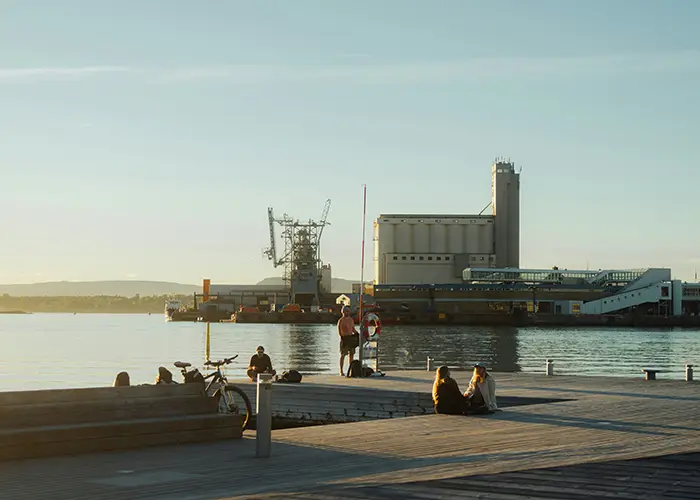
The Oslofjord wraps around the city like a silver thread, connecting life on land and water. Locals gather at Aker Brygge, drinking coffee on terraces even in the chill, faces turned toward the pale northern light.
There’s art everywhere — in museums, yes, but also in how space is used. The Vigeland Park sculptures hold human emotion in their carved granite bodies; the Opera House rises like a sheet of ice beside the water, and people walk across its roof as if it were a natural hill. Oslo manages something rare — it’s modern, yet never cold.
The Journey East
The train from Oslo to Stockholm is where the landscape begins to soften. The mountains give way to forest, the fjords to lakes that seem to hold the sky. Birch trees flash by in slender white lines. Villages appear and vanish, leaving only the memory of smoke curling from chimneys.
Travelling between these capitals isn’t about distance — it’s about transformation. Each mile feels like a slow exhale, a deepening into stillness. You begin in a world of rock and water, and arrive in one of light and reflection.
Stockholm: Where Water Shapes the City
If Oslo feels like quiet confidence, Stockholm feels like grace. Built across fourteen islands, it’s a city that floats — poised between land and sea, old and new.
In Gamla Stan, the old town, narrow alleys twist between ochre and saffron walls. The scent of cinnamon drifts from bakeries; bells mark the hours. It’s easy to lose yourself here, in the kind of wandering that feels less like getting lost and more like remembering something you once forgot.
Cross one of the bridges and the scene changes. Modern Stockholm hums with energy. Cafés spill out toward the water; design shops glow with pale wood and warm light. Everywhere you go, you see reflections — in the windows, in the water, in the quiet way people move through space.
It’s a city that seems to breathe with its surroundings. Even in its busiest hours, the air feels clean, and the pace feels kind.
A Life in Balance
To travel through Scandinavia is to understand that nature here isn’t something separate. It’s part of the design, part of the rhythm of daily life.
Hiking trails start where suburbs end. Commuters catch ferries instead of buses. Even in winter, when the world turns blue with cold, people light candles in windows and lean into the season instead of resisting it.
There’s a humility in that way of living — a quiet awareness that the land sets the terms, and people have simply learned to listen.
And it shows. In the architecture, in the food, in the way conversations linger just a little longer than expected. Scandinavia isn’t in a hurry to be anywhere else.
Evening Reflections
As the sun dips low — never quite disappearing in summer — Scandinavia changes colour. In Bergen, the rain stops and the mountains turn violet. In Oslo, the fjord catches the last light like molten silver. In Stockholm, the sky stays pale for hours, the city lights flickering to life one by one.
Evening here doesn’t mean ending. It means slowing down, holding the day a little longer. Locals gather outdoors, wrapped in blankets, talking softly while boats glide across the water. It’s everyday life, but it feels like ceremony.
Conclusion: The Beauty of Enough
Scandinavia stays with you in fragments — a cool breath, a quiet train ride, the sound of rain on a wooden pier. It doesn’t dazzle or overwhelm; it settles.
The lesson, perhaps, is that beauty doesn’t have to be grand to matter. It can live in small gestures: the curve of a bridge, the warmth of light against glass, the way nature is never pushed aside but invited in.
By the time you leave, you realise that what you’ve found isn’t escape — it’s equilibrium. A way of living that values space, silence, and intention.
Scandinavia shows that the modern world can still move gently, that progress can exist without noise, and that peace, once felt, is something you carry home with you.